
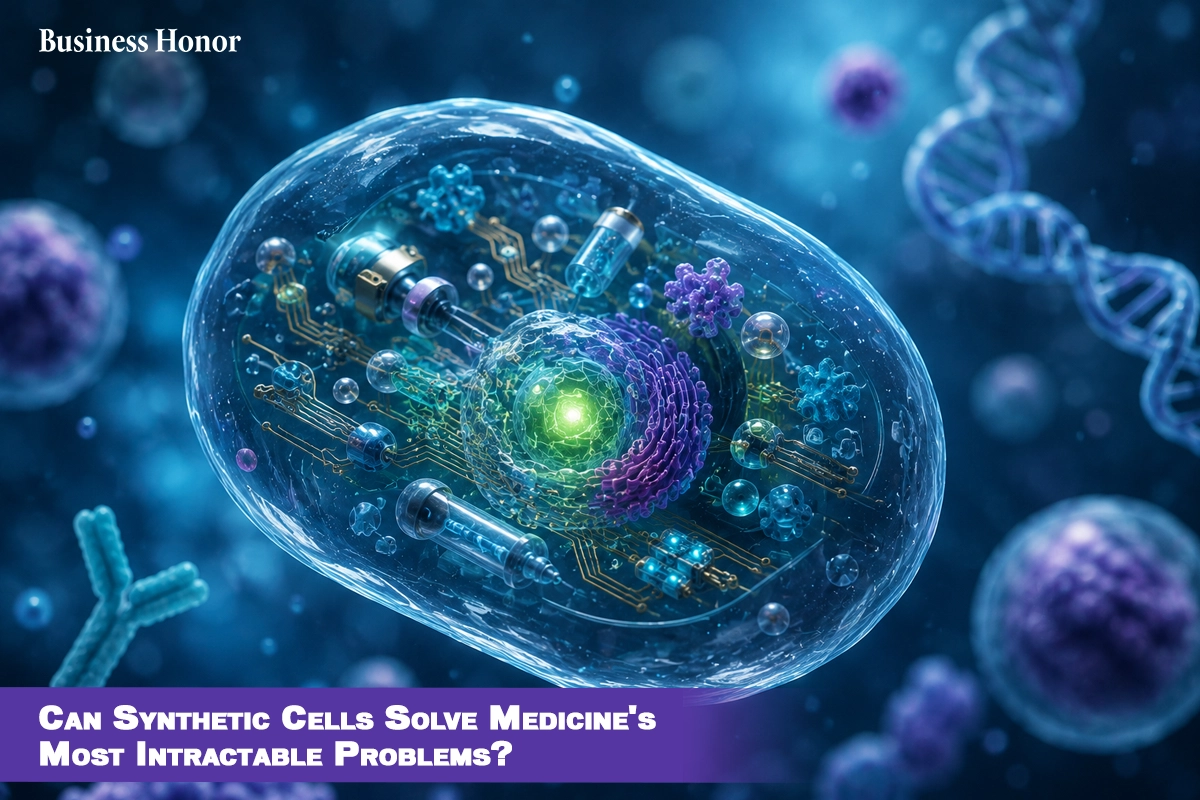
Researchers unveil world's first synthetic cell with complete life cycle, promising revolutionary breakthroughs in drug development and sustainable manufacturing technologies.
|
Scientists from the University of Minnesota have made a momentous discovery in the field of biological engineering with the introduction of SpudCell, a new type of synthetic cell. Being the first instance of a synthetic cell with an entirely non-organic composition, the invention represents a major milestone not only in synthetic biology and in represents a breakthrough as far as the potential applications of synthetic cells for various purposes, including medicine and other industrial uses are concerned.
SpudCell becomes the first artificially created cell to undergo all the vital functions of a living cell such as energy consumption, cellular growth, reproduction of cells, as well as development. The invention proves that scientists have been mistaken for decades regarding the notion that life on this planet can only arise from biological materials. The invention enables the unification of all the basic functions of life, which are usually carried out by cells, through simple chemical processes.
Instead, SpudCell employs fusion proteins that crowd together on the membrane surface until mechanical stress causes the membrane to split, circumventing a major bottleneck that has challenged synthetic cell research for years. The research team also demonstrated that evolutionary principles operate within their synthetic system. When researchers introduced a genetic modification that increased fusion protein production, resulting cells grew faster and generated more offspring. After five generations, the faster-growing variant had entirely outcompeted the original strain. This selection and competition mechanism proved even more pronounced under nutrient scarcity, establishing that Darwinian evolution functions in fully synthetic chemical systems.
|
"This is likely the most exciting project I've ever worked on," Adamala stated. "We've replicated in chemistry what only used to be possible in biology: the complete set of behaviors of a cell. It proves that the most fundamental functions of life, like growth and replication, do not need a mysterious magical spark." |
With this breakthrough, Adamala and partners are launching Biotic, a public-benefit research institution dedicated to building shared technical infrastructure for synthetic cell engineering. The organization aims to establish open protocols and shared standards that enable researchers worldwide to collaborate on increasingly complex synthetic organisms. The practical implications span medicine, materials science, and manufacturing. Synthetic cells could produce precise therapeutic molecules, including drugs incorporating amino acids that natural evolution never created. They could enable growth-based materials manufacturing rather than energy-intensive chemical synthesis, and facilitate industrial processes operating at biological temperatures instead of harsh industrial conditions. Significant challenges remain, including consolidating SpudCell's seven plasmids into a single stable genome and developing additional molecular machinery. Nevertheless, researchers emphasize that synthetic cell engineering represents a genuinely engineerable platform for the first time in history, with transformative applications ahead.
Business Honor is of the view that the University of Minnesota's SpudCell development represents a transformative advancement in synthetic biology's operational feasibility and commercial viability prospects.
FAQs:
Q: What is SpudCell?
A: SpudCell is the world's first synthetic cell built entirely from nonliving chemical components with complete life cycle capabilities.
Q: How does SpudCell divide without a cytoskeleton?
A: Fusion proteins crowd on the membrane surface until mechanical stress causes the membrane to split naturally.
Q: What is SpudCell's genome size compared to natural cells?
A: SpudCell's genome contains only 90 kilobase pairs, smaller than previously theorized biological minimum requirements for living organisms.
Q: What is Biotic and why was it launched?
A: Biotic is a research institution establishing shared standards and protocols for synthetic cell engineering collaboration worldwide.
Q: What real-world applications could synthetic cells provide?
A: Synthetic cells could produce precise therapeutic drugs, enable sustainable manufacturing, and create materials at biological temperatures.





























.webp)

.webp)




.webp)



Comments
0 Comments