
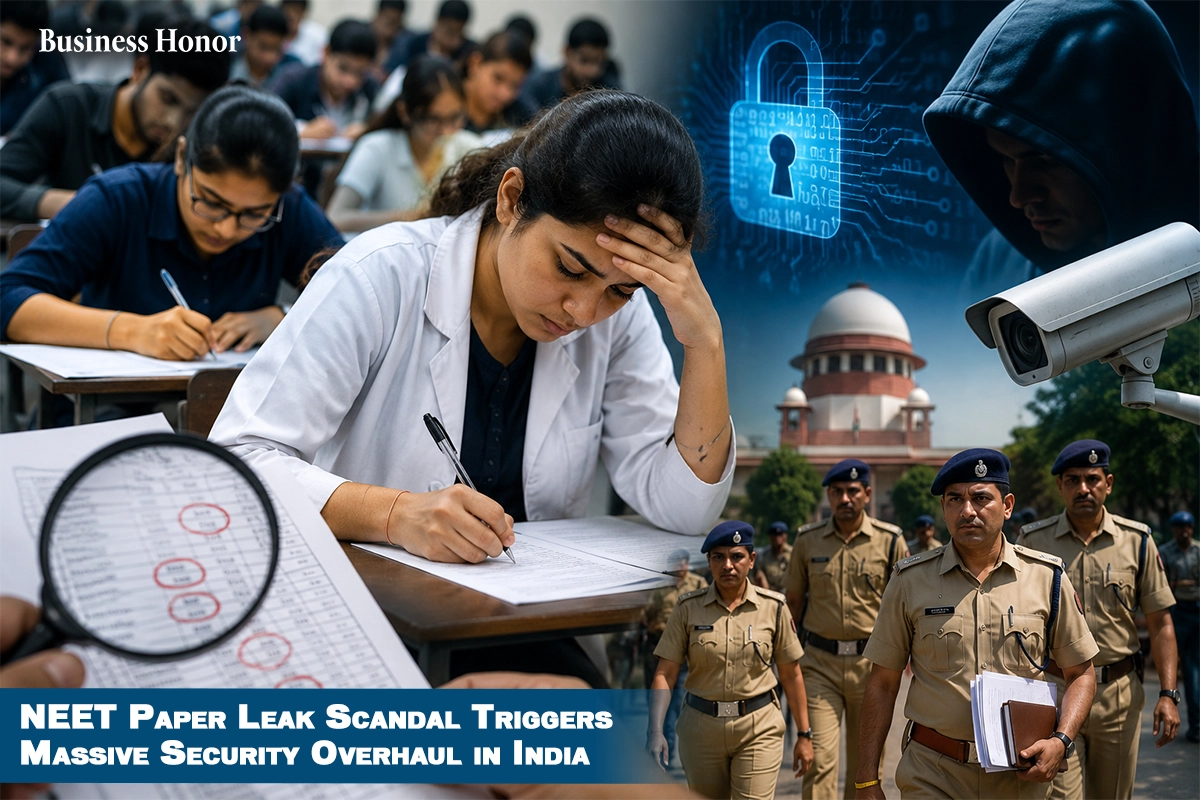
Millions of medical aspirants return for the NEET exam under unprecedented security after allegations of an exam paper leak forced a retest.
The NEET paper leak scandal has affected one of the most secure examinations in India, with many medical students appearing for a retest amid allegations that the previous exam was compromised by the leak. The NEET-Undergraduate (NEET-UG) examination has been held in more than 5,400 examination centers across the country through a highly secure process to ensure the safety and security of candidates and prevent another NEET paper leak scandal.
Students had to go through biometric verification, use of a metal detector, frisking, camera surveillance, and security personnel among others before entering the examination hall. A re-test was conducted due to allegations that the previous medical entrance test had been marred by the NEET paper leak scandal, causing anxiety among students who had prepared for one of the toughest examinations in India. The incident also made students protest against the NEET paper leak scandal.
There was a deployment of advanced security systems to avoid the occurrence of the same scandal again. National Testing Agency used over one million cameras at the examination centers, used signal-blocking devices, and increased monitoring at centers, among others. In certain places, the Indian Air Force assisted in the movement of exam papers to centers. These new precautions follow growing concerns about exam paper leak cases in India, which have affected various competitive examinations over the years. The authorities noted that rigorous monitoring was necessary to safeguard the students' efforts.
Despite these precautions, many students complained about the stress of studying again in a short period of time. Some candidates said the retest would be necessary to ensure fairness, but revealed that the uncertainty regarding the paper leak had also caused them stress. The investigation of these claims is now under the jurisdiction of the Central Bureau of Investigation (CBI) of India. The authorities are investigating allegations of malpractice, including organized crime groups that benefit financially from these competitive examinations.
The NEET scandal has raised questions regarding exam security, transparency, and technology-enabled monitoring of the educational system in India. With millions of students competing for a few medical college seats, the authorities are now facing increasing pressure to ensure future disruption does not occur. Business Honor observes that exam security failures highlight the need for stronger digital systems, transparency, and governance frameworks to protect trust in large-scale education processes.






























.webp)

.webp)




.webp)



Comments
0 Comments