
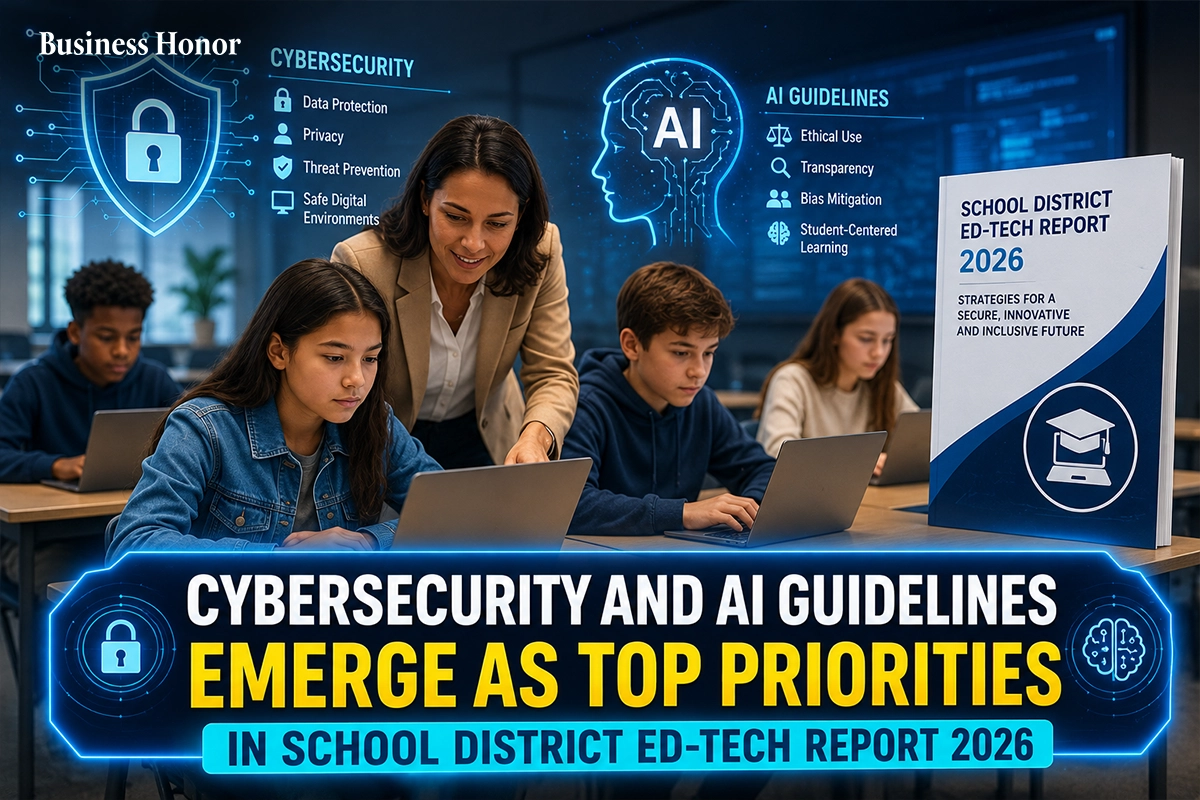
Cybersecurity and AI guidelines are top priorities in K-12 ed-tech, with 80% districts adopting AI policies amid rising cyber threats, budget limits, and digital transformation challenges in schools.
|
The report highlights that there is a noticeable change in the decision-making trend concerning education technology. The priority that used to be associated with the use of different technologies by schools and the adoption of digital platforms by districts is shifting towards cybersecurity, integration of technology, and effective learning results. Increasing numbers of cyberattacks directed against educational institutions make cybersecurity the most urgent issue for K-12 IT professionals across the United States. In addition, districts need to be able not only to implement the use of technology but to do it safely and protect sensitive student information from cyber criminals.
At the same time, Generative AI has become one of the focal issues in education policymaking. Over the last couple of years, significantly more districts are working with a policy that defines the use of AI in the classroom. It can be concluded that there is quick progress achieved regarding establishing guidelines for AI use in classrooms and making its implementation less experimental and more regulated. The way AI affects the K-12 education policy framework should be mentioned as well.
On the other hand, the use of generative AI has become one of the main policy areas. In comparison with previous years, the number of districts that do not have AI guidelines has significantly decreased, and fast progress can be observed towards implementing structured policies on the use of AI technology in class. Thus, schools perceive AI as a necessary component of the modern education process, and thus it is crucial to ensure its proper usage, ethics, and control. These are some of the directions in the development of AI policies in K-12 educational settings.
The adoption of AI guidelines is quite high – nearly 80% of districts have them implemented. Nevertheless, the lack of budget funding and personnel becomes the primary obstacle for successful implementation of innovative solutions in the field. Furthermore, organizational silos and insufficient training are the barriers that negatively affect digital transformation. Thus, schools focus on implementing affordable, secure, and interoperable solutions instead of using more technology without any evident instructionally meaningful purpose.
This is characterized by experts as a period of maturity for digital transformation strategies in school districts, where the focus is more on building long-lasting resilience, stability, and making strategic investments in technologies. The objective is to create secure and scalable digital infrastructures that will meet not only today’s requirements in classrooms but also those of tomorrow. School districts are focusing on creating safe and cost-effective, AI-enabled infrastructures. Business Honor views that school districts are prioritizing secure, cost-efficient, and AI-ready systems, reflecting a cautious, value-driven shift in ed-tech focused on cybersecurity, interoperability, and long-term sustainability.














.webp)

.webp)




.webp)

