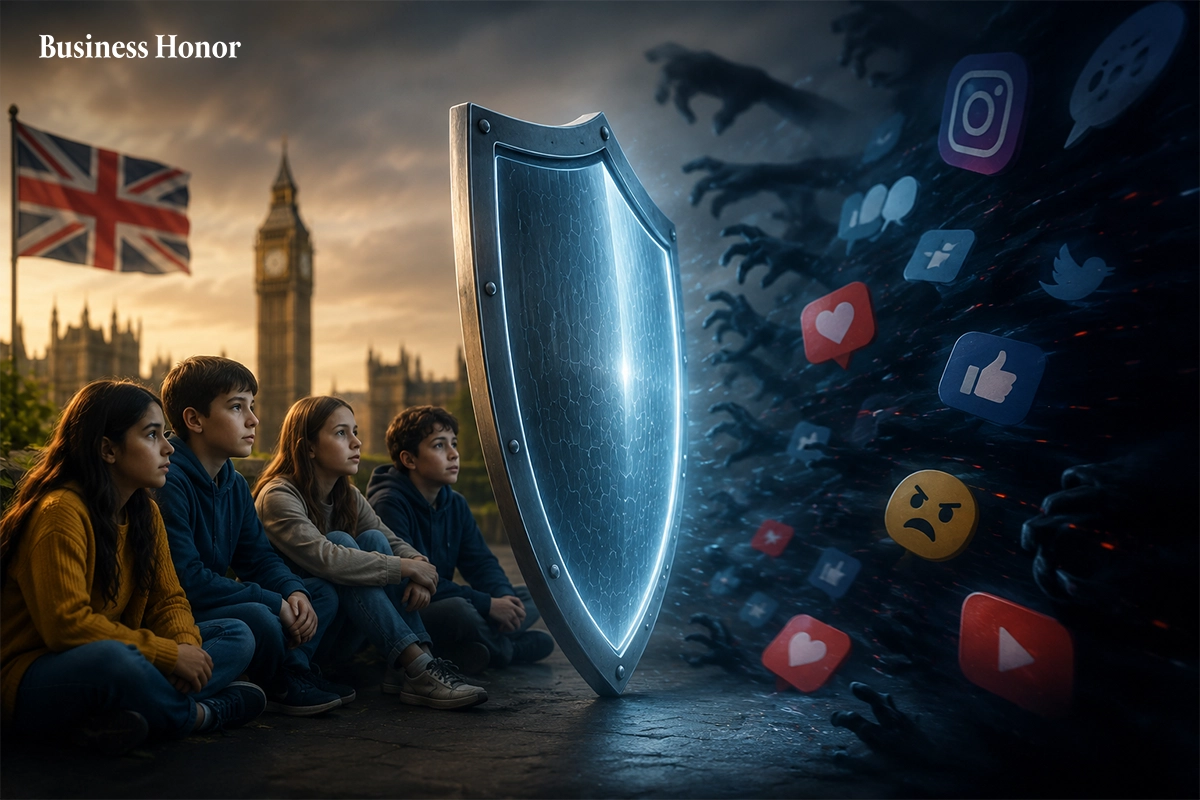
Social media ban signals UK commitment to youth protection as global regulatory movement accelerates worldwide.
|
Prime Minister Keir Starmer announced a sweeping legislative initiative - social media ban that would make it illegal for children under 16 to use popular social media sites. The legislation positions the United Kingdom to become the world's leader in protecting children from online abuses. The proposed ban would cover TikTok ban, Snapchat, YouTube, Instagram, Facebook, and X, in addition to the majority of mainstream social media applications. However, there are some exceptions; messaging applications like WhatsApp and Signal will be excluded, as will YouTube Kids, which offers only age-appropriate content. Starmer said he was drawing on his own experiences as a father of two teenagers and stated that the government has a duty to respond to increasing evidence that social media is causing children to suffer from poor mental health. "Every parent can see it with their own eyes—social media is making children miserable," he said at a press conference. "I've had families come to me in tears, saying they need change; we will support those families in our decision-making."
The proposed regulation will place the responsibility for compliance squarely on technology companies, and not on children. If a technology company fails to put in sufficient safeguards to prevent children under the age of 16 from using its platform, the company will be subject to very serious fines; Starmer acknowledges that teenagers will try to get around the restrictions but believes government involvement is needed nonetheless. After receiving this feedback, the government will evaluate all feedback and input from various stakeholders (e.g., youth, parents, educators and industry representatives) and provide a report with their recommendations by June 2023.
Canada is not alone in considering restrictions on social media use by children; numerous nations are also developing or implementing similar regulations. In addition to Australia, countries such as Canada, Brazil and Indonesia have already enacted age-based restrictions for their youth. Other nations, such as France, Spain, Denmark, Thailand and South Korea, are working to implement parallel regulatory schemes, indicating a possible trend of democracies changing their approach to the digital safety of youth.
Technology companies have expressed deep reservations about the proposal. YouTube believes that overly broad restrictions placed upon social media could push youth out of a safe, supervised environment (such as YouTube) to more anonymous and unsafe environments (such as the internet) or increase youth's exposure to harmful material. This demonstrates the industry's concern that blanket bans would not achieve the intended results. The U.S. Embassy in London issued a public statement recommending that any regulations remain narrowly focused and not limit free speech, as well as raise concerns about placing additional regulatory burdens on American technology companies providing services worldwide. Starmer indicated plans to discuss the initiative with President Donald Trump and other world leaders at the G7 summit in France, beginning Monday, suggesting the issue will feature prominently in diplomatic conversations between major democracies navigating digital governance challenges.
Business Honor is of the view that Britain's social media ban represents a pivotal regulatory shift in government responsibility toward protecting children's digital wellbeing and mental health.



























.webp)

.webp)



.webp)