
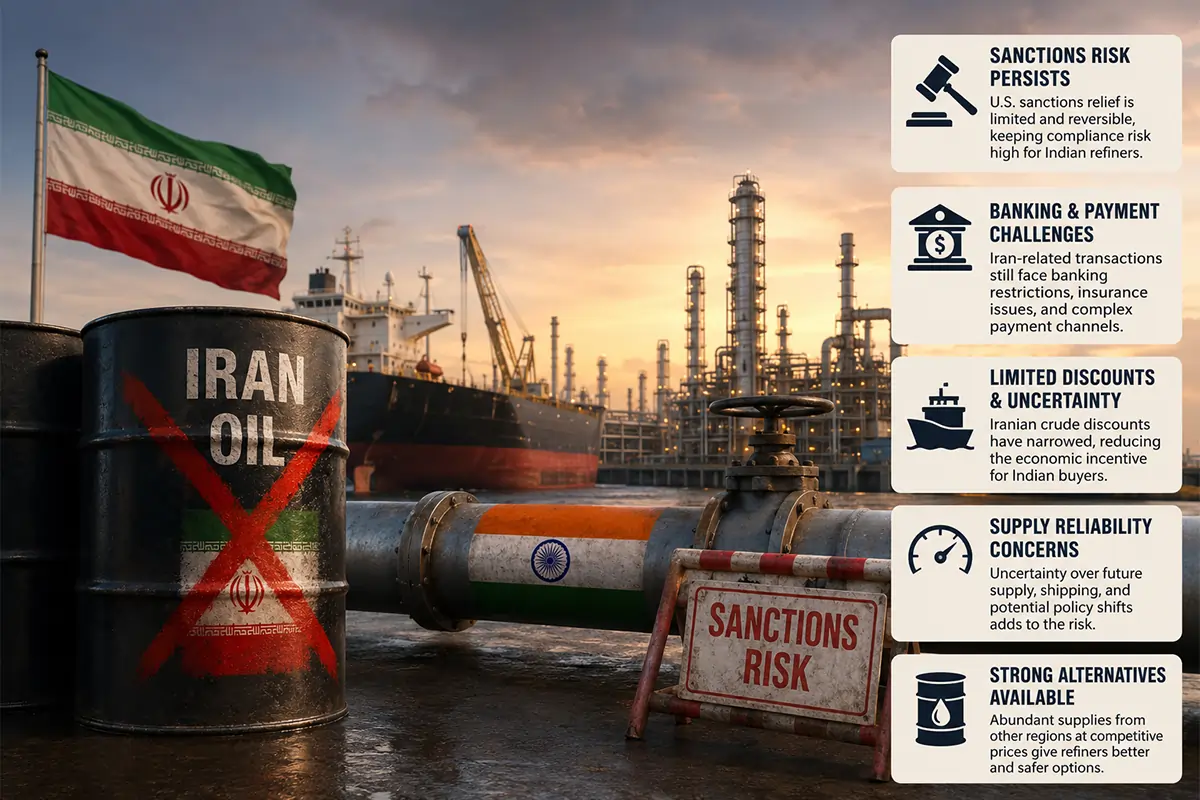
Temporary sanctions relief fails to unlock Iran oil exports opportunities for Indian refiners amid payment and trust concerns.
The United States lifted sanctions on Iran and Iran oil exports for 60 days in a move aimed at unlocking crude oil supplies for global markets, yet energy analysts warn that Indian refiners face formidable obstacles that will severely limit their participation in resumed Iranian oil purchases. The sanctions reprieve, effective until August 21, 2026, follows a 14-point memorandum of understanding signed between Washington and Tehran. Under the new general license issued by the US Office of Foreign Assets Control, Iranian crude oil, petrochemicals, and petroleum products may be exported, with payments processed in US dollar-denominated funds to Iran or blocked Iranian entities.
However, industry sources emphasize that the temporary nature of the arrangement creates a fundamental confidence problem. Refiners confront a critical question: if they purchase Iranian crude today, will payment mechanisms remain available tomorrow? This uncertainty, combined with strict payment protocols, heightened due diligence requirements from insurers, and shipping companies, creates a complex web of commercial challenges.
"The biggest issue is that it is temporary," one refinery source explained. Additional complications arise from Iran's commercial ties with sanctioned nations China and Russia, along with ongoing sanctions from the United Kingdom and European Union. These overlapping restrictions force refiners and insurers to conduct extensive compliance checks, effectively raising transaction costs and administrative burdens. The timing further constrains India oil imports and refiners' ability to capitalize on the reprieve. Refinery planning cycles typically operate two to three months in advance, meaning most Indian refiners have already secured crude supplies through at least the first half of August 2026. Current procurement strategies focus on securing requirements for the second half of August and September, with Russian and Middle Eastern grades forming the core of their sourcing plans. Venezuelan crude continues gaining market share in Indian refinery portfolios.
According to Sumit Ritolia, Lead Research Analyst for Refining at Kpler, a global real-time data analytics provider, opportunistic purchases of Iranian crude remain possible if sellers offer highly attractive discounts. However, he emphasized that overall participation scope appears "limited" given existing market dynamics and uncertainty. A previous sanctions waiver in March 2026 demonstrated this reluctance. That reprieve generated minimal participation from non-Chinese buyers, with most potential purchasers remaining on the sidelines due to payment restrictions and compliance concerns. The critical issue transcends immediate access to Iranian barrels. Refiners require confidence that sanctions relief will persist, enabling sustained trade relationships rather than one-off purchases. Payment availability, insurance coverage, shipping logistics, and durability of policy relief constitute the three key factors influencing refiner decisions on Iranian crude commitments.
Business Honor is of the view that the temporary sanctions reprieve represents a limited strategic opportunity for Indian refiners' crude procurement diversification.






































.webp)

.webp)



.webp)



Comments
0 Comments