
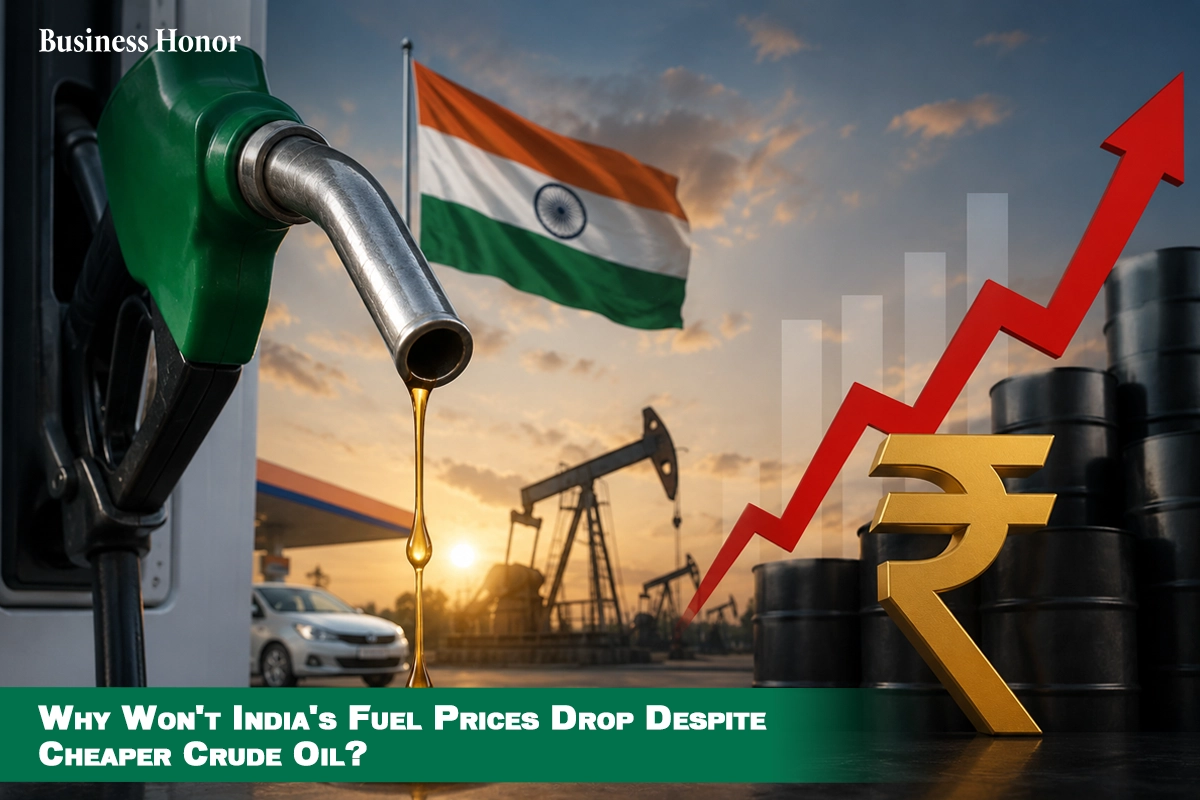
Oil import costs plummet below $70, yet fuel price relief remains elusive for Indian consumers and economy.
|
India's Oil Import: India's crude oil import costs have finally experienced some relief as global oil prices retreated from elevated levels triggered by Middle East tensions. The Indian crude basket slipped below the $70-per-barrel mark for the first time since geopolitical fears pushed prices higher earlier this month, settling at $68.86 per barrel on June 27. The continuing drop in crude oil prices indicates a significant change in market sentiment following the ceasefire agreement between Iran and Israel that, in turn, has reduced fears of critical shipping route disruptions that could influence supply. With nearly 90% of its crude oil needs being imports, this price adjustment has far-reaching macroeconomic consequences. Countries have lower import costs, which decreases their overall oil bill, allowing the government more flexibility in managing the current account deficit, as well as providing additional means for inflation control and improving overall trade balance. Therefore, these benefits will help give relief to policymakers who are currently facing difficult economic conditions.
|
Dipal Dutta, CEO of RedoQ, stated, “while the crude price decline offers meaningful economic relief, the benefits may not translate into lower retail fuel prices anytime soon.” |
However, analysts in the industry do not foresee consumers receiving any immediate relief from high petrol prices, as retail fuel prices will not likely fall as quickly as crude oil prices have. Oil marketing companies are expected to use the lower price of crude oil to recover losses previously incurred while selling at a high cost, thus supporting corporate financial viability after the period of extreme volatility in world markets. In addition, continuing caution in energy markets demonstrates the priority given to corporate financial viability versus lowering prices for consumers.
Dipal Dutta noted that oil companies remain vulnerable to sudden geopolitical developments and are taking a cautious approach to passing savings to consumers. Despite the current price of $68.86 for a barrel of Indian crude oil (the Indian Crude Basket or ICB), many companies are keeping prices steady at the retail level so they can maintain financial stability until there are no longer any uncertainties about future market conditions. Many experts believe that these low transportation costs provide India with an opportunity to accelerate its transition to cleaner technologies, and there is an urgent need to take advantage of this window of opportunity rather than just waiting for cheap transportation costs. According to Anup Garg, Founder & CEO of World of Circular Economy, although a decrease in oil prices has a positive impact on the entire economy, it should not reduce the motivation to invest in sustainable forms of industry.
Global energy markets will continue to be unpredictable for the near future due to geopolitical issues, supply chain disruptions and fluctuating demand. The key to achieving long-term sustainability in today's energy market is to innovate through strategic planning. Companies that rely on temporary relief from crude oil prices will experience difficulty sustaining their growth through innovation and strategic planning. In other words, true opportunity lies not in celebrating lower oil prices but in using this opportunity to create a more sustainable and environmentally friendly energy infrastructure to support India's continued economic development.
Business Honor is of the view that India's crude price decline represents a strategic opportunity for fiscal stabilization and sustainable energy transition.
FAQs:
Q: Why did India's crude oil prices fall below $70 per barrel?
A: Iran-Israel ceasefire eased geopolitical tensions and supply disruption fears in global oil markets.
Q: Will cheaper crude oil lead to lower petrol and diesel prices?
A: No, oil companies prioritize recovering losses and strengthening margins before passing savings to consumers.
Q: How does lower crude oil cost benefit India's economy?
A: It reduces import bills, eases current account deficit pressure, and provides government fiscal breathing room.
Q: Why are oil-marketing companies hesitant to cut fuel prices immediately?
A: They remain cautious about sudden geopolitical developments and want to stabilize finances first.
Q: What should India do with this period of lower oil prices?
A: Invest in sustainable energy technologies and clean industrial solutions for long-term economic resilience.





































.webp)

.webp)



.webp)



Comments
0 Comments