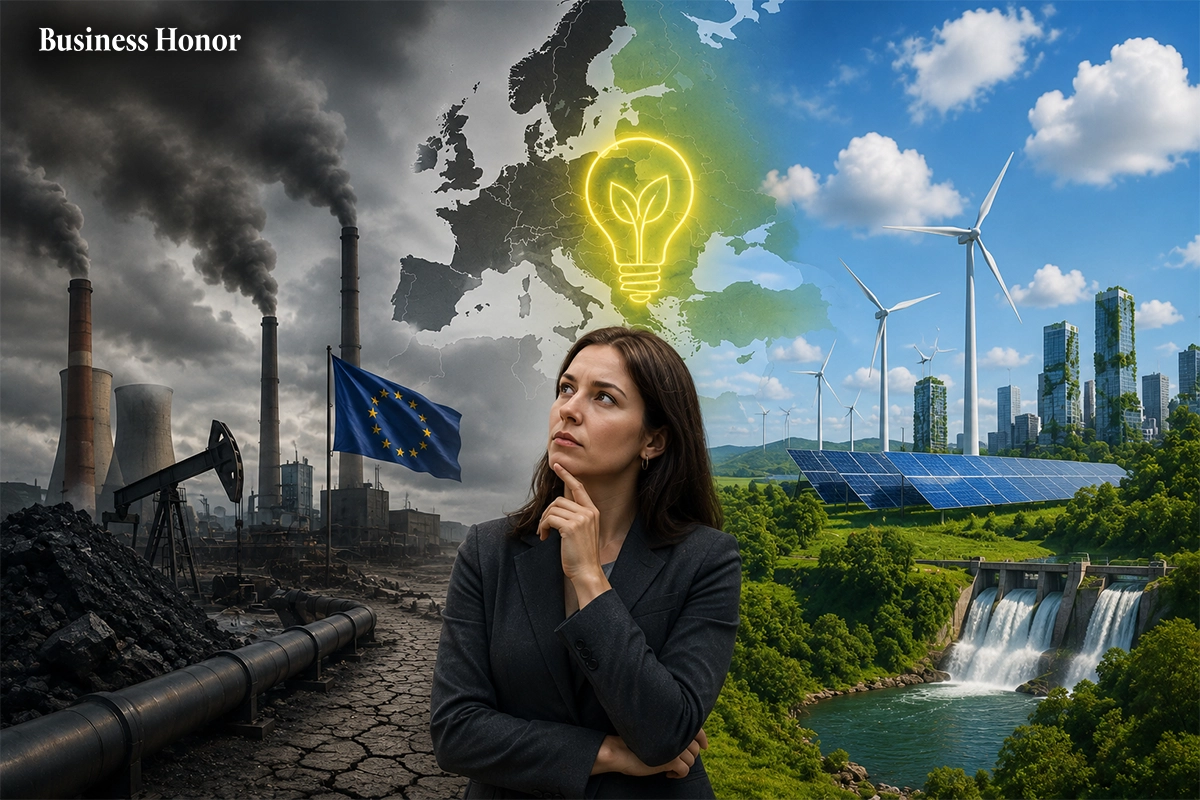
Europe energy crisis forces reassessment of green transition strategy and renewable energy investment priorities across member states.
|
Officials working for the European Union are asserting confidently that its ambitious goals to reduce carbon emissions can overcome the many challenges presented by extreme climate events and uncertainties about energy security across Europe due to the transition to greener forms of energy consumption. "While at this point in time it is unclear what exactly we are learning from our ongoing energy crisis due to the COVID-19 pandemic, accelerating the production of renewable energy and developing nuclear power sources provide the best opportunity to achieve both climate and economic security," Wopke Hoekstra (European Union Commissioner for Climate Change, Net Zero and Clean Growth) stated in a recent interview.
Hoekstra's comments come on the heels of mounting challenges confronting EU policymakers as a result of heat waves that created record high temperatures in May and droughts in April that threatened food security and water supply in many areas. In the meantime, rising geopolitical tensions in the Middle East have caused energy prices to increase substantially across Europe. As such, EU governments now face the challenge of balancing their long-term climate change objectives with their constituents' short-term needs for heating to survive the winter and for electricity to run their homes and businesses in response to Europe energy crisis.
In reference to his own experiences as a Dutch mayor and as an EU Commissioner, Hoekstra emphasized how political sensitivities create challenges, and about the EU green deal. When households across Europe are faced with increasing energy costs, messaging about clean energy as an opportunity is a non-starter. Hoekstra suggested that ultimately the answer would be the same regardless of motivation: "More renewables at home, electrification at speed, and maintaining nuclear energy generation."
Such investments would simultaneously address climate change, reduce reliance on volatile international energy markets, and eventually lower consumer costs. Hoekstra said, "Energy is an issue of national and European security," acknowledging a significant change in how policy makers are defining energy as a national and European issue beyond the economics of a traditional marketplace. The current view justifies the magnitude of public and private investments necessary for the transition to a green economy.
Hoekstra addressed concerns about the difference in the climate ambitions of the individual EU member states. Denmark and Sweden have outperformed all countries in reducing overall emissions, while France leads the way in electricity generation using nuclear technology and various forms of electrification. If there are all countries who meet the minimum level of expectations for their contribution to the world's climate challenges, Hoekstra does not view these variances in performance as problematic. He explained the need for all of the EU member states to share the same climate scenario and for all of them to be using the same temperature projection for their climate policies.
Perhaps one of the most controversial statements from Hoekstra was in his defense of the EU proposal allowing member nations to utilize international carbon credits as offsets against their own emission targets beginning in 2036. Critics of the proposal argue this type of flexibility violates national and international forestry agreements and sends a poor message regarding accomplishment with respect to overall climate commitments. Hoekstra countered such arguments by stating that Europe's goals to cut emissions 90% by 2040 still represent one of the world's harshest targets. In the EU's view, providing a moderate level of flexibility through international carbon credits would provide member nations with a reasonable opportunity to reduce emissions while still realizing substantial gains to the overall environment.
Business Honor is of the view that Hoekstra's carbon credits proposal represents strategic pragmatism in EU climate policy execution and cost-effectiveness optimization.
























.webp)

.webp)




.webp)