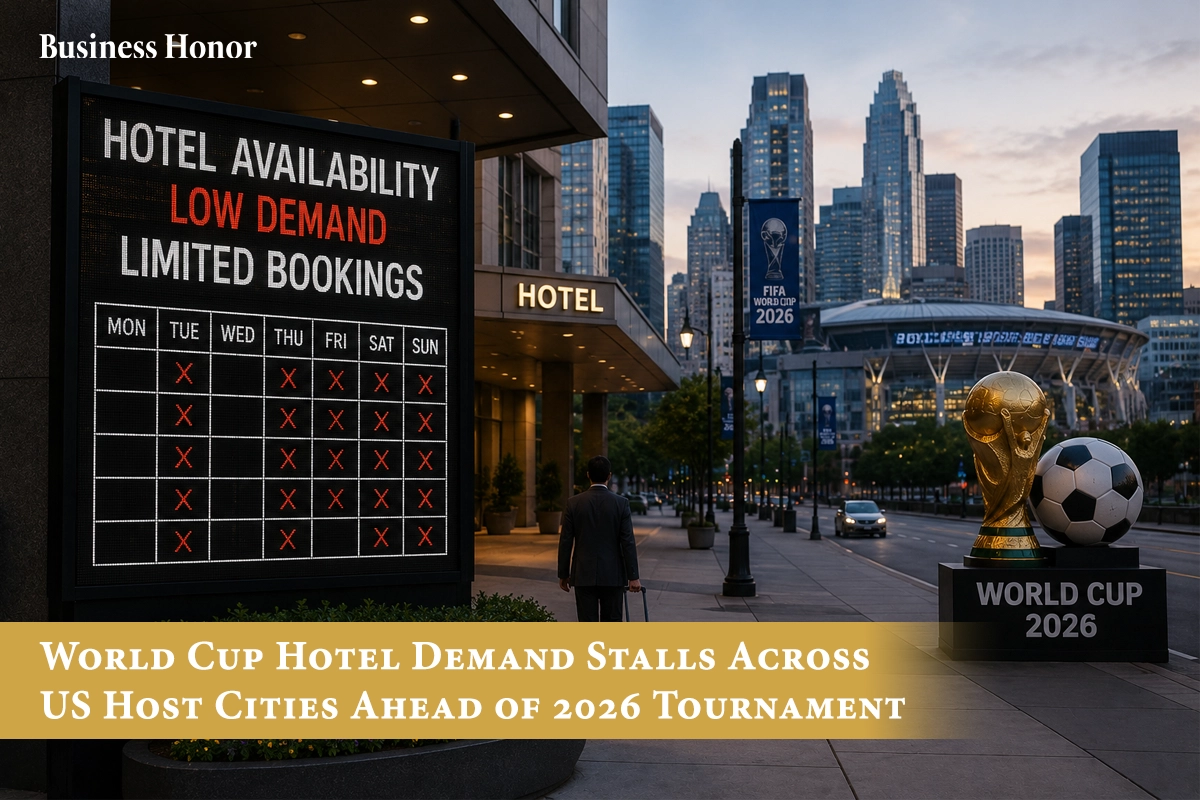
World Cup hotel demand in the United States is falling short of expectations as FIFA World Cup 2026 approaches, raising concerns across the hospitality sector about weaker international bookings despite strong ticket sales.
|
Hotel Industry Faces Weak World Cup Hotel Demand
The prospects for the World Cup demand for hotel rooms have declined in the major US host cities, according to industry forecasts that show that bookings in cities like New York/New Jersey, Los Angeles, Miami, Dallas, Seattle, and Boston have been below expectations. While there is optimism about ticket sales from FIFA, commitments for international travel have been delayed.
Visa Barriers and High Costs Impact World Cup Hotel Demand
Visa issues remain another determinant that influences the hotel requirements at the World Cup. The lengthy process of obtaining visas, as well as stringent immigration checks, has diminished the confidence of foreigners visiting America.
On the other hand, the high price tags associated with hotels during games have also acted as an inhibitor. For example, some accommodations in urban areas cost more than $1,000 for a night, forcing visitors to seek out vacation rentals. Geopolitical factors and global instability have played a role in shaping the outlook on tourism.
Domestic Travellers Dominate Early Bookings as Outlook Remains Mixed
According to available statistics, US tourists have been responsible for the bulk of the early hotel demand, but foreign tourists, who are known for high levels of expenditure, are less numerous. This situation causes serious concern in the sphere of hospitality because of the negative impact on revenue.
Nevertheless, tourism authorities and hotel owners are optimistic that there is still time left for the World Cup hotel demand to increase towards the event. Last minute bookings and additional flight capacity will facilitate this process. In Business Honor perspective, the current state of World Cup hotel demand highlights how global hospitality performance is increasingly shaped by external macroeconomic and geopolitical forces rather than event scale alone.



































.webp)

.webp)



.webp)