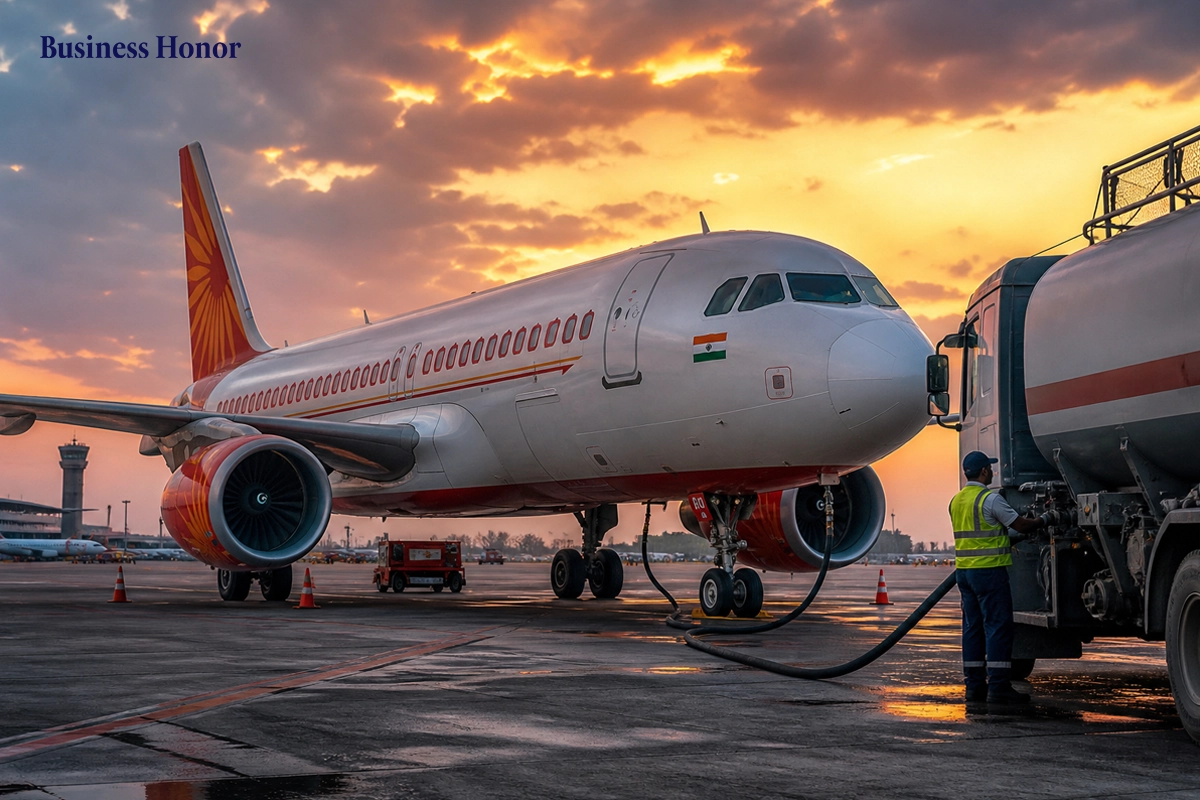
Air India's operational contraction during fuel crisis and crew concerns signal deeper structural challenges within Indian aviation sector.
Summary
|
The Tata Group-owned national carrier, Air India has announced it will reduce its daily flight capacity by around 100 flights through its network as a way of cutting costs from May to July 2026. This newly discovered capacity reduction has raised concern among Air India's cabin crew regarding job security and pay.
It is estimated that the overall capacity reductions and Air India flight cancellations for the group's operating network will be a reduction of approximately 15-20%. Out of this capacity cut, long-haul international routes are expected to experience the most significant impacts. Air India's capacity reductions in terms of routes to and from Europe, North America, Australia, and Singapore will be the highest impacted.
As per Campbell Wilson, Air India's CEO and MD, further capacity reduction could occur in June and July and these capacity reductions are a continuing strategic change rather than just a temporary capacity reduction.
According to Air India, the two primary reasons that have led to the reduction of Air India's capacity are rapidly rising aviation turbine fuel prices (ATF); and Pakistani Airspace Closure. Currently, approximately 60% of Air India's costs are made up of the cost of ATF, a number that the Federation of Indian Airlines believes to be unsustainable.
The closure of the Pakistani airspace has resulted in European and North American aircraft having to increase their flying distance due to lengthy detours through Vienna and/or Stockholm, which has resulted in much higher oil consumption, crew duty hours, and aircraft rotations, which are creating larger and larger monthly losses for international operations.
Air India's outlook for the fiscal year 2026 indicates losses of approximately ₹20,000 crore, which underscores the extent of the financial crisis that continues to plague the airline. A Senior Airline is reporting that many flights are currently operating at below breakeven levels, and if fuel costs continue to increase, there may be a need for further capacity reductions in the market place if conditions do not improve.
The workforce implications for cabin crew are immediate and frightening. Insiders within the industry have indicated that were reductions to continue into (after) July that structured periods of leave would be issued without pay to help control surplus operating levels. Historical records show that Indian airlines have historically used unpaid leave as a buffer method prior to issuing formal layoffs during past periods of decreased activity. While there is no specific time frame on the future of Air India, there are already discussions of layoff options for cabin crew within crew networks and union channels, which has created a level of anxiety among its employees.
The uncertainty of employment adds to existing policy friction created by Air India's recently implemented "fit to fly" policy, which goes into effect on May 1, 2026. This highly debated policy will determine an aircraft cabin crewmember’s (BMI) body mass index and associated pay because of that BMI calculation. Any crewmember with a BMI greater than 30 will be removed from the flight roster and subject to reduced pay until the crewmember returns to their previously approved pay.
The Federation of Indian Airlines has urgently appealed to the government to intervene in jet fuel pricing and excise duty structures, arguing that current levels undermine operational viability across the sector. Air India's board is expected to render a final decision on extended capacity cuts within the coming weeks, with implications extending beyond crew welfare to broader questions of India's aviation sector competitiveness and employment standards.
Business Honor is of the view that Air India's capacity reductions represent strategic workforce restructuring amid unsustainable fuel cost pressures globally.






































.webp)

.webp)



.webp)