
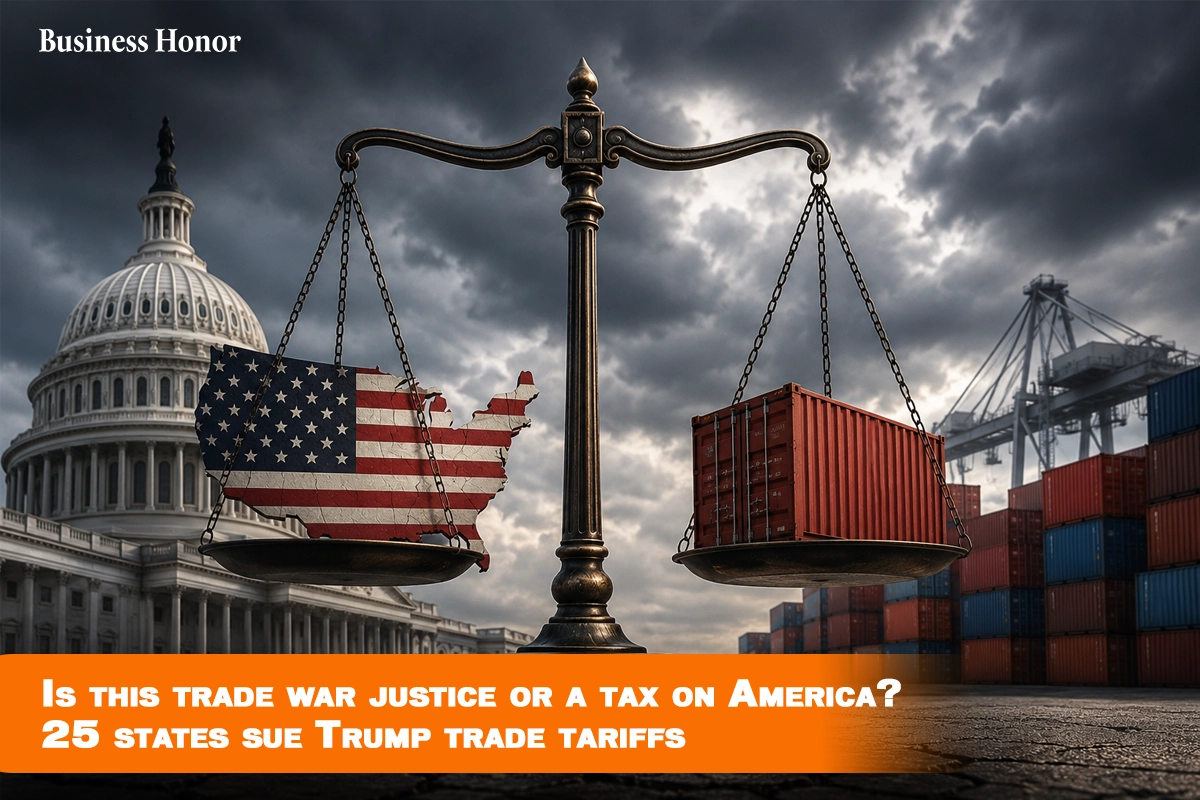
US President Trump trade tariffs of 10% to 12.5% hit 60 partners. 25 states sue, calling the trade war unlawful and dangerously overbroad.
|
US trade war measures just met a court challenge, and the question is bigger than forced labour claims. Twenty five US states have sued the administration over new trade tariffs of 10% to 12.5% on goods from 60 trading partners. The duties began in July and target countries and blocs including the UK, China, and the European Union, plus major economies such as Japan, Brazil, and Taiwan.
So why is the fight accelerating now? Because the administration is using forced labour as the stated reason for action under Section 301 of the 1974 Trade Act. Washington argues that affected countries failed to properly tackle forced labour, and that the policy is necessary to protect American businesses. In a legal document, the state coalition says that logic does not match the law. They describe the decision as “arbitrary, capricious, and contrary to law.” They also argue the administration “cannot use forced labour as a pretext to continue its illegal tariff scheme.”
The political response is equally pointed. White House spokesman Kush Desai says the US is using “lawful authority” to address practices that burden American businesses. He adds that it is “unreasonable” for a country to fail to deal with forced labour in imported goods. Nevertheless, the plaintiffs warn that the tariffs are so broad they contradict the statute’s stated aims. They argue the rules stretch far beyond a focused remedy and effectively “make a mockery” of the tool used to justify them.
The backlash is not limited to US courtrooms. Brazil and Japan said the measures are “unjustified,” while China called the tariffs an “excuse for political manipulation.” With US China tariff escalation on hold, if the court battle drags on, the next round of pressure will hit harder and unwind slower.
The trade war is also not happening in a vacuum. Earlier Trump tariff moves were struck down by the US Supreme Court, triggering tens of billions of dollars in refunds. That history makes this new fight more than a policy dispute. It becomes a test of whether courts will again rein in sweeping trade tariffs or whether this trade war will keep finding new ways to run past the same legal limits.
In the end, the contradiction is unavoidable, the trade war is sold as law based enforcement, but it lands like a broad tax on families and businesses. Business Honor asks what is being punished, the alleged wrongdoing, or just the cost of doing business in America?














.webp)






.webp)


Comments
0 Comments