
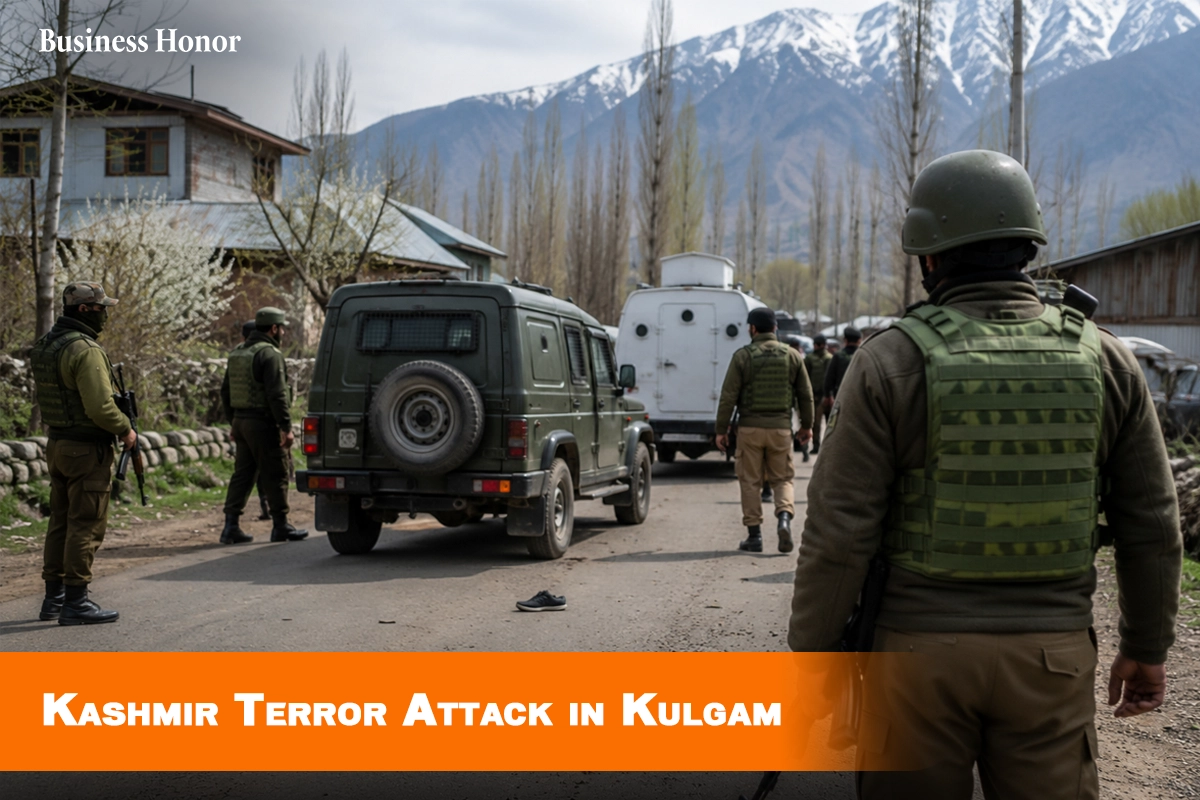
Kashmir Terror Attack hits Kilam in Kulgam as two migrant workers are shot. One dies, one fights for life, while security operations intensify.
|
A Kashmir Terror Attack has once again shaken South Kashmir, striking migrant workers at their workplace instead of a battlefield or front line. Two men from Chhattisgarh were shot from point-blank range in Kilam village, Kulgam district. Deepak was killed. Bhupender was rushed to hospital and is in critical condition.
This is the second terror incident in the Valley this month, and it comes just about 10 days after a J&K Police head constable was killed in a crowded market in Anantnag. After last April’s Pahalgam attack that killed 26 civilians, security concerns were already raw. Now the target has shifted to people whose names rarely make headlines.
Jammu & Kashmir Police Inspector General V K Birdi said the victims were Deepak and Bhupender from Bilaspur. The grim context matters. Brick kilns across the Valley are staffed largely by migrant workers who stay on site because demand is high and the working season is short. That routine creates predictability, and predictability becomes leverage.
Jammu & Kashmir Lieutenant Governor Manoj Sinha said he spoke with DGP Nalin Prabhat and top security officials and directed security forces to step up operations to eliminate terrorists. Police and security forces have cordoned off the area and launched an operation to bring those responsible to justice.
Political condemnation has been immediate. Mehbooba Mufti called the attack unimaginably cruel, arguing that the victims work far from home to feed their families. The National Conference said such killings are unacceptable in any civilized society. Opposition leader Sunil Sharma branded it cowardly and barbaric, saying it is meant to disturb peace and normalcy.
The Kashmir Terror Attack exposes a brutal business contradiction. Migrant labour is the workforce that keeps Kashmir’s economy running, yet it remains the most exposed when violence hits. Business Honor asks if estimates put the workforce in the hundreds of thousands, then what exactly is “security coverage” protecting when workers keep “bleeding” at brick kilns and job sites?


















.webp)


Comments
0 Comments