
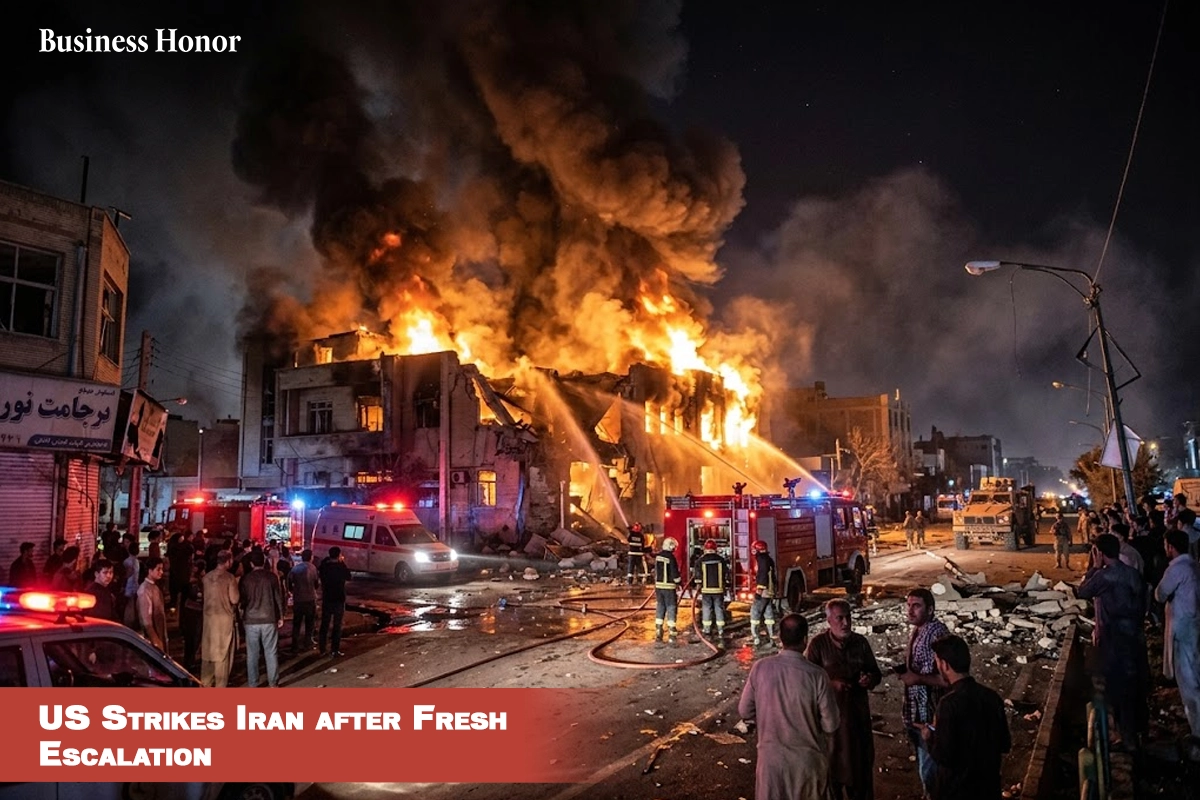
US strikes Iran intensified after renewed attacks in the Strait of Hormuz, escalating the US Iran war with retaliatory military actions across the Gulf region.
|
US attacks on Iran operations have increased after the order of President Donald Trump for yet another round of military operations on targets in Iran, which is an indication of escalation in the US war on Iran. This new offensive is in the wake of attacks on commercial ships in the Strait of Hormuz and increases worries regarding the latest US-Iran conflict updates and the Strait of Hormuz shipping crisis.
It has been stated that, according to the US Central Command (Centcom), US troops have carried out military attacks on about 90 military sites in Iran, which include air defense sites and logistical sites near Iran's southern coast. Attacks took place in the regions of Bandar Abbas, Sirik, Konarak, and Chabahar while Iranian news sources reported explosions, power failures, and damage to military sites.
The actions were described by the president as retaliation against attacks on commercial shipping, adding that any further aggression would be met with an even stronger reaction. All of these events have raised the level of geopolitics in the Middle East in 2026, with several Gulf countries reporting Iranian missile and drone operations after the US mission.
The IRGC of Iran reported retaliatory strikes against the US facilities in Bahrain and Kuwait, which it described as the first step in the retaliation measures being carried out by it. The Iranian government accused the US of violating the memorandum of understanding that was signed in June and said that it would protect its interests in the Strait of Hormuz.
The most recent development is one of the most dangerous incidents that have occurred in the relations of both nations since the establishment of the ceasefire framework. While the arrangement had provided for talks and safe sea passage, both sides have accused each other of violating it. Business Honor believes prolonged military escalation in the Gulf threatens global trade, energy security, and diplomatic stability, reinforcing the urgent need for sustained international dialogue.




































.webp)

.webp)



.webp)



Comments
0 Comments