
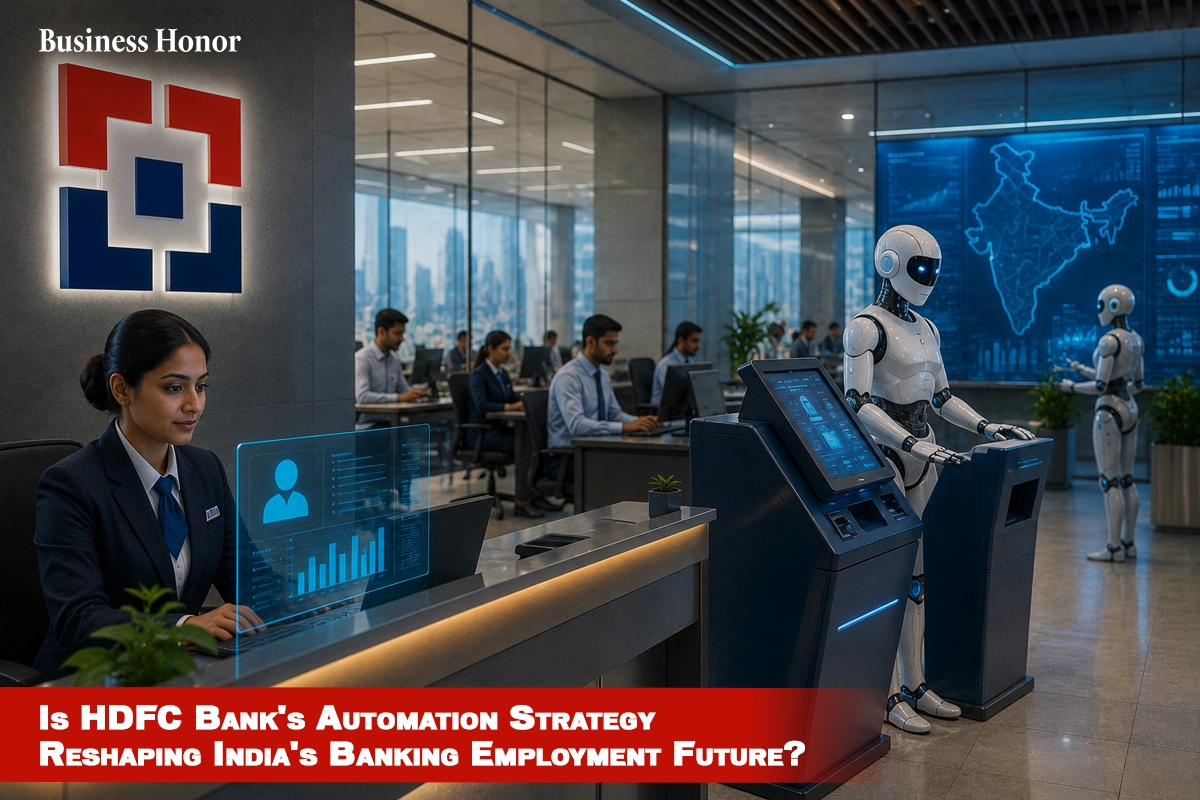
HDFC Bank's aggressive automation push eliminates thousands of back-office roles while expanding management positions strategically.
|
India's largest private lender, HDFC Bank, has undergone a significant workforce restructuring as it accelerates its shift toward automation and digital operations. The Mumbai-based financial institution reported a net reduction of 3,343 employees during the fiscal year ending March 31, 2026, bringing total headcount down to 211,178 from 214,521 the previous year. While senior management expanded by 15 positions and middle-level staff increased by 1,252, the most dramatic changes occurred at operational levels. Non-supervisory employees—including clerical and subordinate staff—fell by more than 8,000, representing the steepest decline in the workforce composition.
|
Chief Executive Officer Sashidhar Jagdishan stated the institution is "consciously redeploying talent from backend functions" toward customer-facing roles as technology assumes responsibility for routine operations. |
Digital banking has systematically transitioned routine processing tasks, such as cash deposits and other standardized procedures, to Cash Recycler Machines and other automated channels. These efforts are powered by Neev, HDFC Bank's proprietary artificial intelligence platform designed for model access, governance, and workflow integration.
Back-office positions have proven most vulnerable to technological displacement. The elimination of repetitive tasks through AI and automation has fundamentally altered the employment landscape within the bank's operations division. New hiring also declined significantly, dropping by 3,811 positions across the fiscal period, reflecting the institution's cautious approach to workforce expansion amid ongoing digital transformation. Paradoxically, the workforce reduction has coincided with improved financial performance. HDFC Bank's profit after tax surged by 10.9% to ₹74,671.3 crore, approximately $7.83 billion, despite the smaller employee base. This financial success provides quantifiable evidence supporting the bank's automation strategy and justifies the restructuring decisions to investors and stakeholders.
The situation witnessed by HDFC Bank reflects larger developments observed across the globe in the banking industry. In line with new automation initiatives of the company, Standard Chartered has revealed its intention to reduce 15% of the employees in corporate functions by 2030. Many jobs were eliminated in connection with AI technology adopted globally, including 38,579 in the U.S. in May alone, which represents nearly 40% of all terminations reported in that month by Challenger Gray & Christmas company, which demonstrates contradictory views on the influence of automation on employment. Although many people see automation technology as posing a threat to employment, others express a more optimistic opinion, for instance, Jeff Bezos insists that artificial intelligence in the end will promote economic growth and enhance people’s living as a result. In the case of HDFC, the financial parameters also demonstrate business interest in technology, as growing profit levels go hand in hand with reduction in number of employees.
Business Honor is of the view that HDFC Bank's automation strategy represents a transformative shift in operational efficiency and workforce modernization capabilities.






































.webp)

.webp)



.webp)



Comments
0 Comments