-Liyaga Suresh Babu
Government borrowing in Bangladesh rises sharply, impacting banks, private credit, interest rates, and insurance sector growth amid economic uncertainty and fiscal pressure.
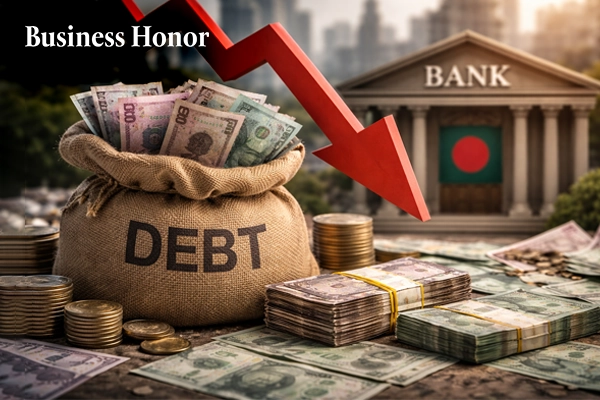
The recent data released by Bangladesh Bank shows an increasing tendency of government borrowings from domestic banks, which has raised serious concerns about the Bangladesh banking sector crisis 2026 , India. During the first seven months of FY2025-26, the interim government borrowed over Tk73,000 crore from the domestic banking sectors, accounting for almost 81% of their total borrowings. There are various reasons behind this, some of which include higher government expenses and lower income collection than expected during the period. A significant share of these borrowings was dedicated to the Combined Islamic Bank, whose financial position had been supported by almost Tk20,000 crore of bank-based financing.
However, economists claim that the high rate of government borrowings may result in the crowding-out effect in emerging markets, meaning that private firms will have fewer opportunities to obtain a loan in this environment. At present, it is noticeable because of the slowdown in the growth rate of private credits due to the political uncertainty experienced. Furthermore, such trends can affect the insurance industry negatively. The borrowing from sources outside the bank system and external borrowing have been significantly reduced at the same time. The reduction in borrowing from other sources has increased pressure on domestic banks and resulted in fears that interest rates are increasing in the Bangladesh banks. An increase in interest rates would make borrowing costlier, reducing spending.
As regards the insurance industry, the impact has been mixed. While on one side, an increase in interest rates will positively affect the performance of investments, on the other hand, it might result in individuals and companies deferring insurance policy purchases because of increased costs and economic uncertainties. The need for balance in borrowing has been identified by the specialists. Business Honor notes that while the current borrowing trend addresses short-term needs, a more diversified approach may be important for ensuring long-term stability across both sectors.
About the Author
Liyaga Suresh Babu is a skilled writer known for creating clear, engaging, and informative content. With a strong attention to detail, Liyaga simplifies complex ideas into easy-to-understand insights. Passionate about delivering value to readers, her writing combines accuracy with clarity, aiming to inform, engage, and make content accessible and meaningful to a wide audience across diverse topics.





































.webp)

.webp)



.webp)