
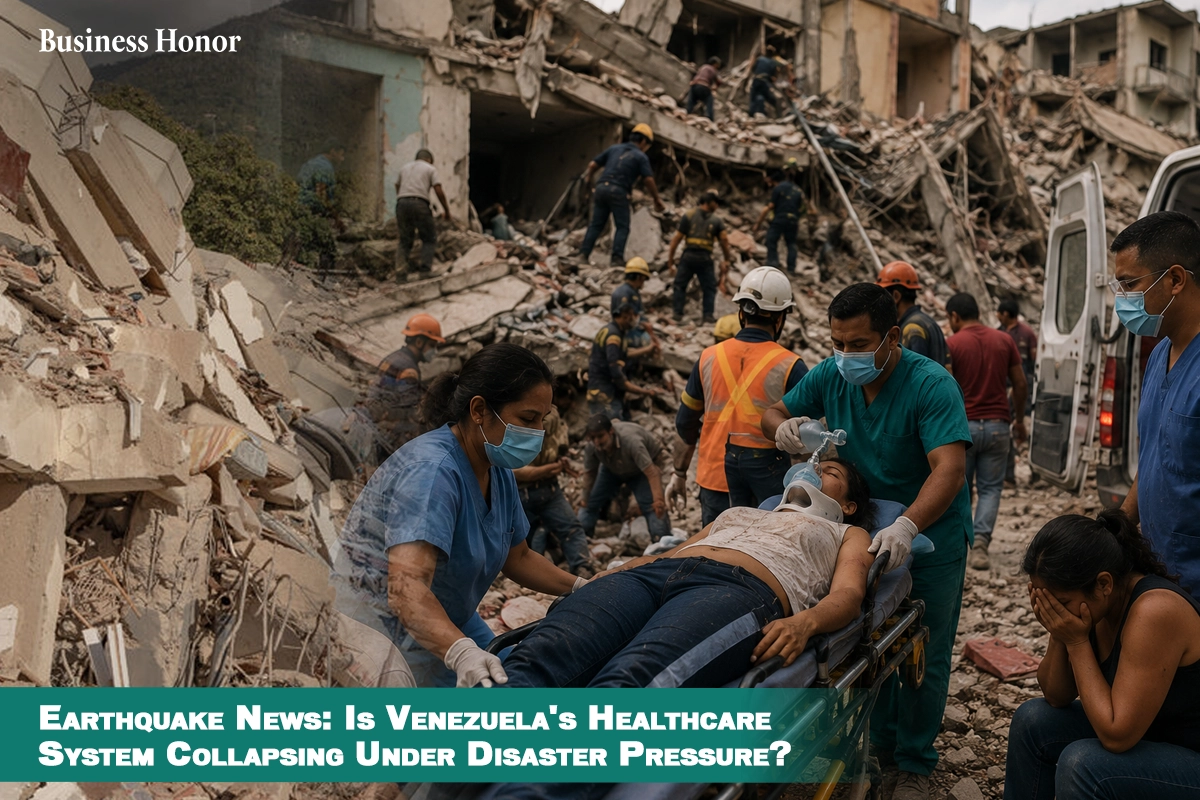
Venezuela faces humanitarian catastrophe as death toll nears 2,000 and healthcare system buckles under strain
|
Venezuela is currently dealing with a humanitarian crisis, after two earthquakes killed nearly 2,000 people and displaced many others. Jorge Rodríguez, who is the President of the National Assembly, said as of Tuesday, June 30, 2026 there were 1,943 deceased, and 10,571 injuries reported. Rescue efforts have been severely hampered over the past several days. In the first 48 hours after the earthquakes, there were 5,380 people rescued. However, on June 29, there were only 4 survivors found. By Tuesday afternoon, the only other survivor rescued by a rescue team was a 2-year-old child who was rescued 6 days after being trapped under a collapsed building. Although most of the 48 to 72 hours after an earthquake have now passed for finding survivors, there are still some survivors found in good conditions (ample amounts of water, food would be available, or people had adequate shelter).
The completed rescues through official and unaffiliated channels do not accurately reflect the large amount of help being performed through community-run relief efforts. Volunteer groups throughout Venezuela, who feel that the government has not responded quickly enough, have mobilized themselves to search for and help rescue, family members and neighbors that have been trapped, often arriving to disaster scenes several days prior to international experts.
The current challenge goes way beyond immediate rescue operations for the South America earthquake. The Venezuelan health system was in a precarious situation prior to the disaster, but it is now overwhelming. The World Health Organisation has indicated that health facilities are currently beyond their potential surge capacity and are being overwhelmed with trauma cases, while inadequately able to meet routine medical and health needs. According to government statistics, 38 hospitals across the country sustained damage and/or were rendered non-functional because of the earthquake. So far, the World Health Organisation has conducted evaluations on 21 of these hospitals and has confirmed that three of these hospitals are no longer able to operate and six of the hospitals sustained severe structural damage. The remaining hospitals are struggling to accommodate the influx of injured people.
Over 15,800 Venezuelans have been displaced in the earthquake, with the largest concentration being in the coastal State of La Guaira, outside of the capital city of Caracas. The newly-homeless are sleeping in vehicles, in parks, and in makeshift shelters, many lacking basic necessities. United Nations agencies have expressed serious concern for the living conditions of the displaced persons, with particular attention being given to food security in the areas most affected by the earthquake. The humanitarian disaster goes well beyond the immediate impact of injuries and displacement. Without adequate access to sanitation facilities—toilets, showers, or soap—displaced Venezuelans are increasingly vulnerable to preventable illnesses.
Business Honor is of the view that Venezuela's earthquake disaster represents a critical test of international humanitarian response coordination and regional healthcare resilience.
FAQs:
Q: How many people died in the Venezuela earthquakes?
A: 1,943 deaths have been confirmed as of Tuesday, June 30, 2026, with over 10,571 injured.
Q: Why are rescue operations slowing down?
A: The critical 48 to 72-hour survival window has largely passed, making finding survivors increasingly difficult now.
Q: How many hospitals were damaged in the earthquakes?
A: 38 hospitals nationwide were damaged or compromised; three are completely non-operational currently.
Q: What diseases are spreading in disaster zones?
A: Measles, dengue fever, yellow fever, malaria, and waterborne infections due to poor sanitation conditions.
Q: How many people are displaced from their homes?
A: Over 15,800 people are displaced, sleeping in cars, parks, and crowded unsanitary emergency shelters.





























.webp)

.webp)




.webp)



Comments
0 Comments