
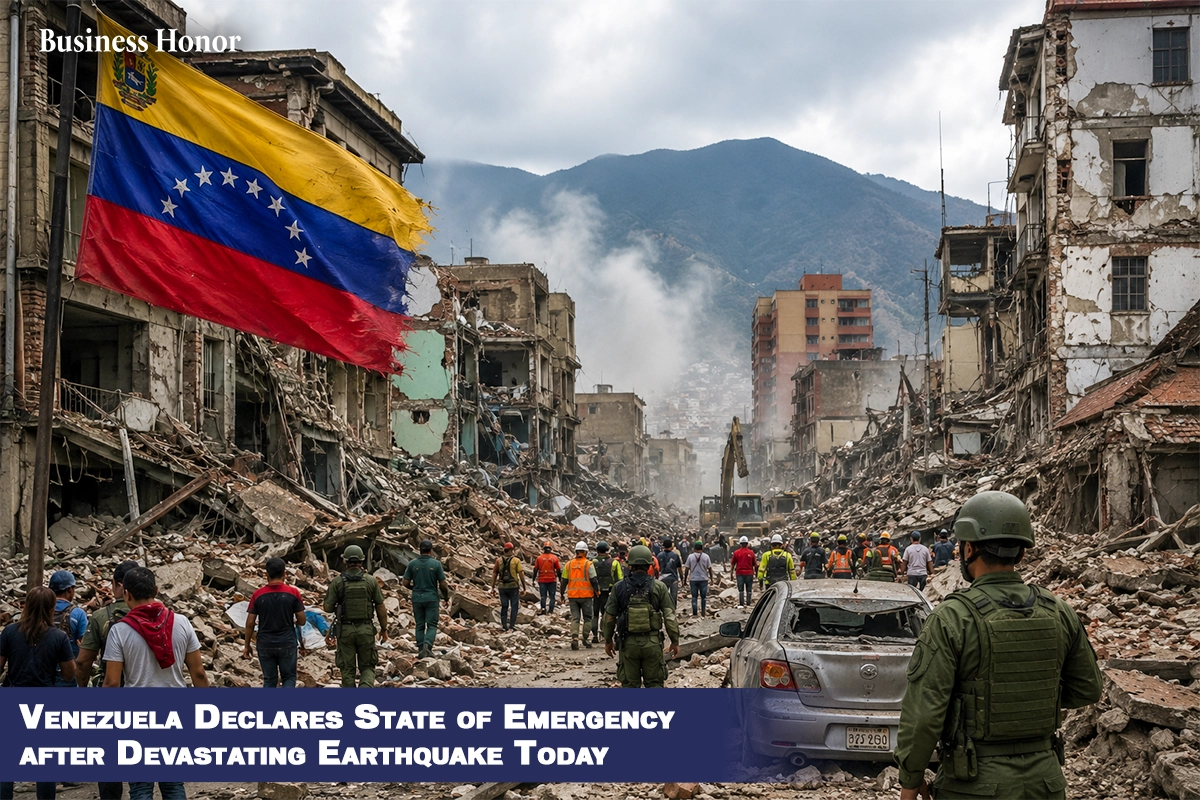
Devastating earthquake today in Venezuela signals urgent need for regional disaster preparedness infrastructure improvements.
|
South America Earthquake Today: The interim president of Venezuela, Delcy Rodriguez, declared a state of emergency. That follows two massive earthquakes that hit the capital region of the nation and, thus, caused considerable damage and shutdown of vital infrastructure. The United States Geological Survey stated “a twin seismic event with two cycles of assembly-a first of, according to Rodriguez, has a magnitude of 7.2; its aftermath was riddling the metastasis of Caracas and its outskirts, reducing buildings to virtual rubble and leaving gruesome stories related to the devastation of residential property and business}). Maiquetia International Airport, whereby the national airport closest to the capital is based, met an extreme affliction that befell its infrastructure whereby securing its immediate closure.” The general scene of the airport, following the quake, made news on social networks, with accounts of the destruction having, with good reason, passed to state that the runways and terminal buildings suffered a crippling infarction. Rodriguez confirmed that it had been unsafe for the air traffic to and from the capital to remain airborne for want of severe upheaval of the earth.
Seismic activity was responsible for a residual stir that followed the tremors; Rodriguez confirmed that 20 aftershocks followed the initial twin tremors. This smolder was enough to concern the whole region of a second round of tremors near any mired walls and left people exposed to the chances of an unfriendly circumstance of safety in such country habitats.
Residents are advised that authorities have stated that they will continue to feel aftershocks for the next few hours and days and should remain on alert as a result. The after-effects of the tremors were felt in the Colombian capital of Bogota that is several hundred kilometres away. The alarm systems in Bogota were triggered due to the tremors, and residents evacuated their buildings as a precautionary measure to the large amount of seismic activity produced by the earthquakes. The National Seismological Network's Freddy Tovar has reported that there have been over 200 aftershock reports, which are an indication of the widespread geographical area of the earthquake. He indicated that the characteristics of the seismic event indicate that aftershocks are likely and that they will likely be felt throughout much of Colombia; disaster management officials rejected the possibility of a tsunami occurring as a consequence of the earthquakes. The United States National Tsunami Warning Centre confirmed that there is no possibility of a tsunami existing because of the Venezuelan seismic event.
Venezuela has a long history of high-magnitude earthquakes. The highest magnitude earthquakes in recent Venezuelan history occurred in the northern part of the country in 1997 causing 73 fatalities and widespread property damage. Another severe earthquake (236 fatalities) occurred in Caracas in 1967 and left a long-lasting mark on the capital's infrastructure and on the nation's collective memory. Wednesday's twin earthquakes represent the most significant seismic activity to strike the country in recent years. Coincidentally, shortly after Venezuela's earthquake sequence, a 6.9 magnitude tremor struck northern Japan, as reported by the country's meteorological agency. Japanese officials reported no casualties or material damage resulting from the seismic event, contrasting sharply with the destruction documented in Venezuela.
Business Honor is of the view that Venezuela's infrastructure collapse following today's earthquake demonstrates critical gaps in the nation's disaster management and emergency response protocols.
































.webp)

.webp)




.webp)



Comments
0 Comments