
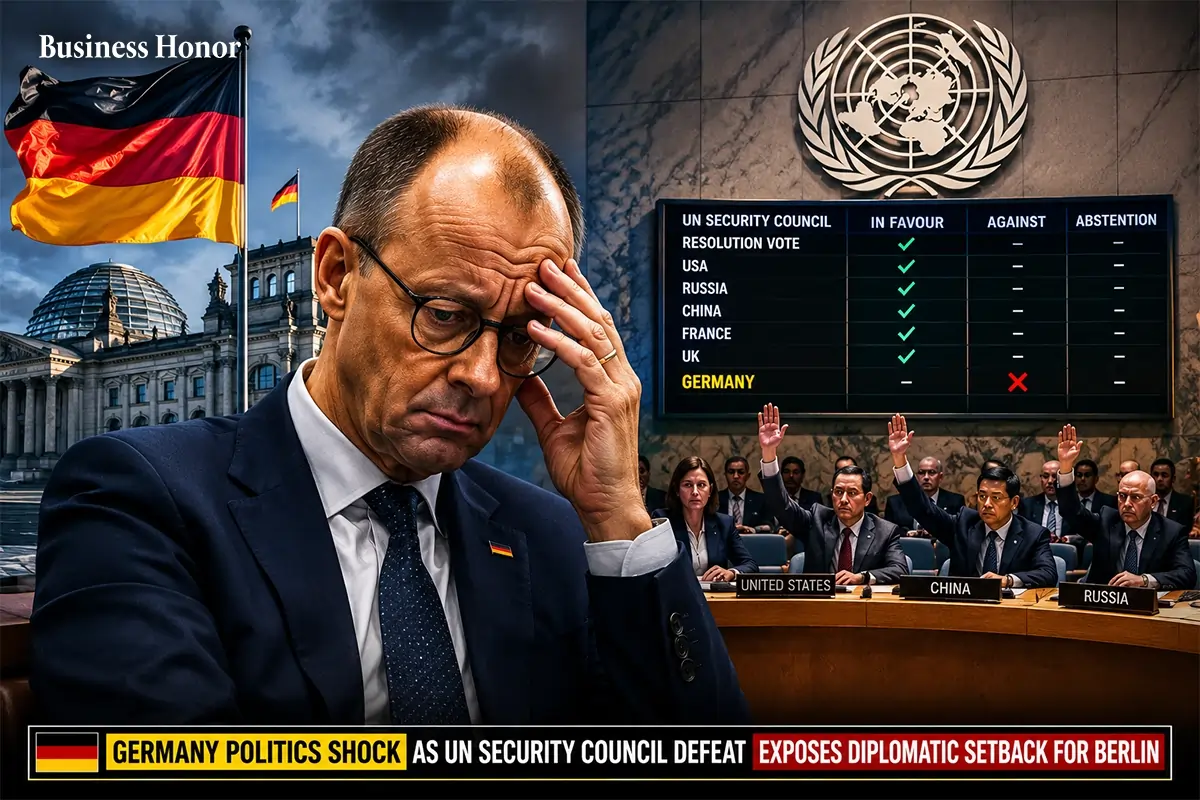
Germany politics faces renewed scrutiny as the UN Security Council defeat exposes shifting global alliances and raises questions over Berlin’s diplomatic influence and strategy.
Germany suffered a big diplomatic hit when it failed to get a seat on the UN Security Council. This marks a key moment in German politics and makes folks wonder about the nation's global clout during Chancellor Friedrich Merz's watch. It’s seen as a setback for Berlin's foreign policy goals and its push to lead on the world stage again.
In the recent UN General Assembly vote, spots went to Portugal and Austria instead of Germany. Even though the country expected a regular spot due to a rotation tradition, they came up short. Experts viewing the UN Security Council election 2026 results see this loss as a change in who supports whom diplomatically. Officials call it a “bitter defeat,” and analysts mention shifting global alliances as reasons for the letdown.
Johann Wadephul, Germany's Foreign Minister, partly blamed the loss on the country's firm stands on Israel and Ukraine. He hinted that these positions might've swayed how countries voted. Wadephul also pointed out worries about outside political pressure, alleging Russian attempts to mess with their campaign – making German politics even tenser. Prior to the big vote, Germany put in a major diplomatic push, talking to tons of international partners. Yet, Portugal and Austria played up their neutral and cooperative images and got more support. Austria mentioned not being in NATO, while Portugal talked up its job as a mediator worldwide.
The loss is drawing flak from within. Opposition voices are calling it embarrassing and showing declining global influence. Even some within the governing coalition think it's a reflection of how Germany is viewed globally. The main worry is why Germany lost a UN Security Council seat to Portugal and Austria, and what that means for its overall diplomatic plans.
Still, German officials vow they'll keep pushing for multilateral engagement and shouldering responsibilities on the world stage. However, the failure piles on the pressure for Merz to rethink Germany’s place in the world. Business Honor views the UN Security Council defeat as a sign of shifting global influence, urging Germany to reassess alliances and strengthen diplomatic strategy.










.webp)

.webp)



.webp)

