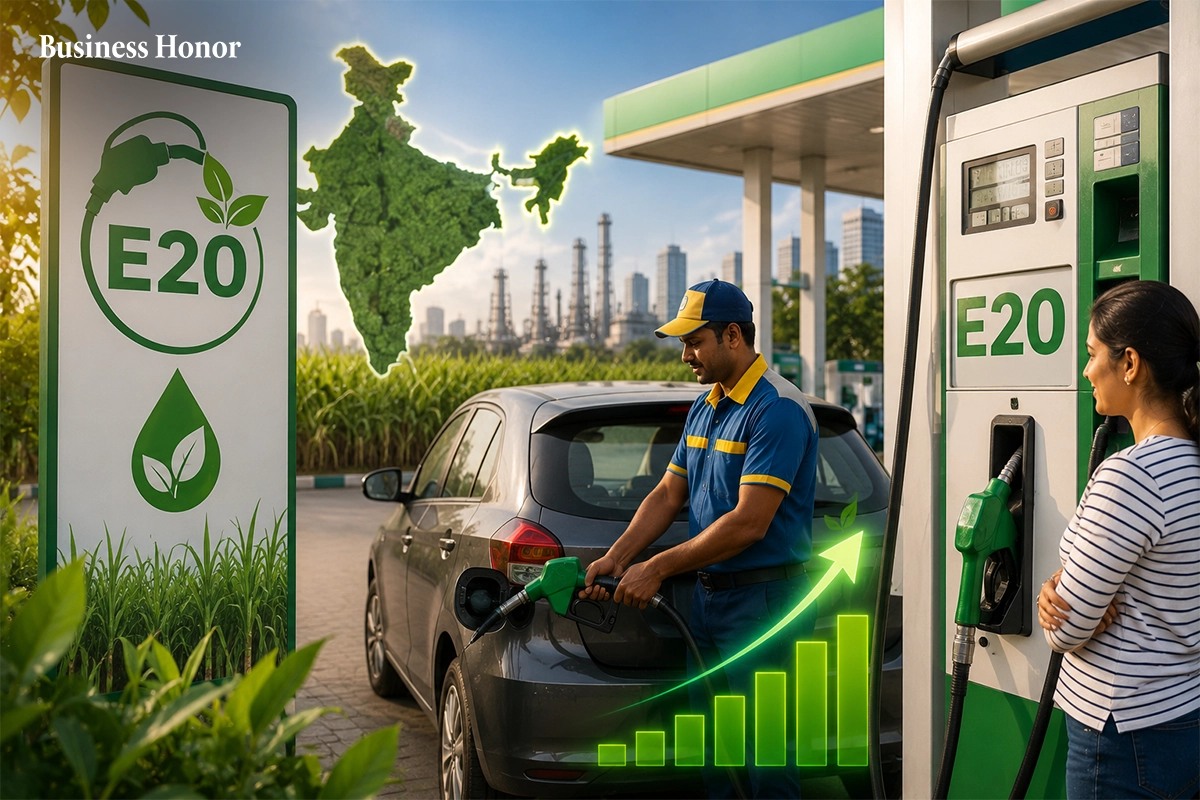
Government's E20 fuel push signals strategic shift toward domestic biofuels and reduced crude oil dependency.
|
The Indian government has introduced a wide-ranging excise duty exemption on petrol mixed with 22% to 30% ethanol, signaling an important change in the country's drive towards cleaner and sustainable transport fuels. The central government's effort represents a real commitment to reducing reliance on crude oil imports and supporting both environmental and energy security objectives. Any petrol blended with ethanol that sits within the high blends range (E20 fuel and E30 fuel) will have a competitive advantage economically for fuel retailers and consumers and the excise duty exemption looks to facilitate this price competitiveness and thus support the broader goals of increasing the take-up of high blend ethanol in transportation throughout India. Industry experts are suggesting this move will fundamentally change how fuel is consumed in India over time.
Gadkari, as the Minister for Road Transport and Highways, has been one of the strongest proponents of this policy and has regularly promoted ethanol-based fuels as a legitimate alternative to traditional fossil fuels. He has also publicly stated that the expanded use of ethanol-blended petrol has the potential to substantially reduce the price of petrol, which could have an immediate positive impact on millions of Indian consumers currently experiencing fluctuations in global oil prices.
In addition to cost savings, the minister has also pointed to myriad social benefits from ethanol usage, such as improved air quality in urban areas with traffic congestion and energy independence. This policy is important for the agricultural sector in India because it will give farmers more chance to earn extra income through the increased use of domestically grown feed stock to produce ethanol, while also reducing their exposure to volatile international crude oil prices. This policy will complement the government’s comprehensive rural economic development initiatives to increase the income of rural farmers by providing them with access to value-added agricultural products. The ethanol-blending infrastructure being developed in India has progressed at a remarkable pace relative to planned dates for implementation. The most recent tax incentive provided as part of the latest ethanol policy is expected to further accelerate this development by encouraging oil companies to expand their production capacity, as well as the retail distribution of ethanol-blended petrol. Similarly, it is expected that automobile manufacturers will greatly increase their efforts to ensure that their vehicles comply with the new E20 and E30 (ethanol blend of 20% or 30%) specifications, thereby increasing consumer access to these products.
From an environmental standpoint, this effort will address numerous air quality problems that India is encountering and meet its international climate commitments. Using more ethanol-blended fuel will lead to lower emissions, which will reduce the stress on transport (the second largest source of pollution in India). Furthermore, moving to biofuels from domestic sources will lower both the carbon footprint of India and dependence on imported petroleum products.
Business Honor is of the view that India's excise duty exemption on E20 and E30 fuels represents a transformative policy shift strengthening domestic biofuel production capabilities and energy security objectives.






































.webp)

.webp)



.webp)