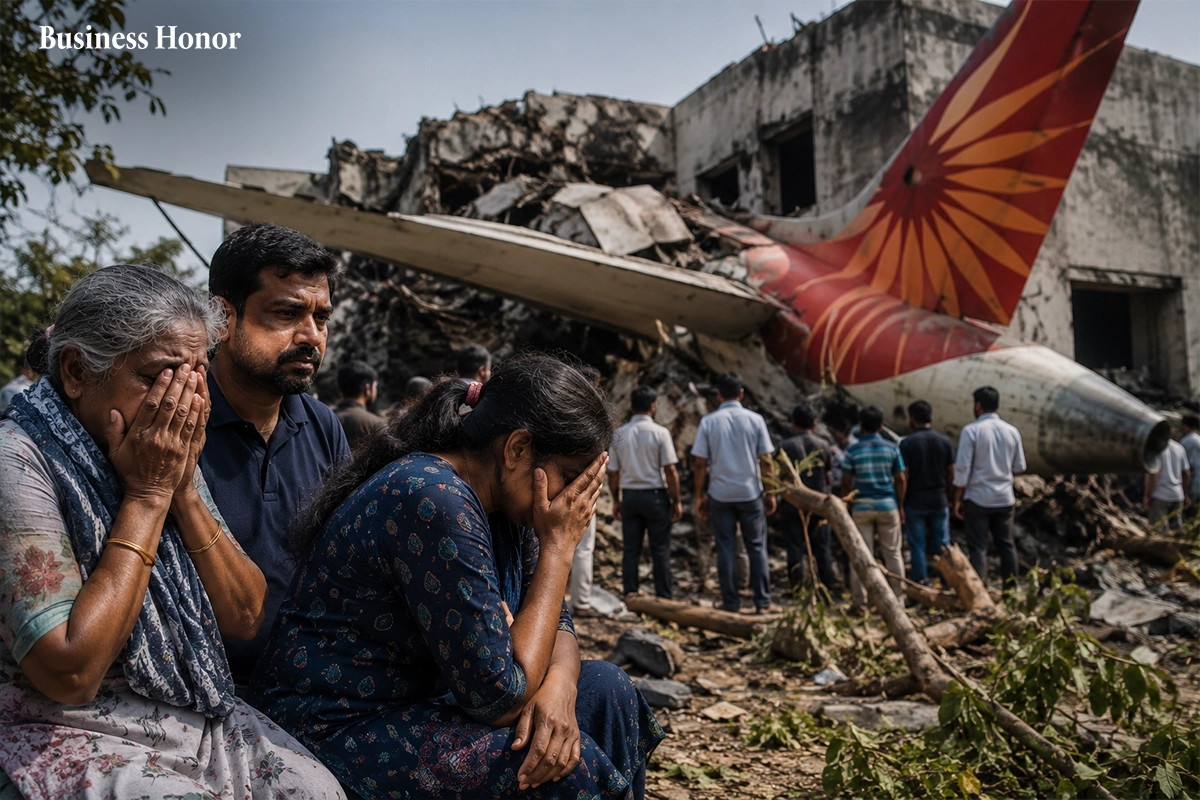
Air India Crash Leaves Bereaved Families Struggling for Closure and Support One Year Later.
|
Families of the 241 deceased passengers, and crew of the Boeing 787 Dreamliner that crashed and caused 19 deaths in Ahmedabad, India, are struggling with many unanswered questions regarding why their loved ones did not make it home. 169 Indians and 52 Brits lost their lives when on June 12, 2025; the aircraft clipped a medical college shortly after takeoff. The crash deprived families of support through distance and myriad other reasons. Sagar Patel, who manages a business in London, was speaking with his mother, Hasumatiben Patel, before her return flight to the UK. The funeral, arranged by his father's family, was held just weeks after her death. Sagar fondly recalled their phone call before she boarded her flight. "I told her that I would be at the airport to meet her, and she would see me again later that day, and that was it," he stated. "The hardest thing for me now is to understand how my little girl is losing out on her grandmother."
No information has been released regarding the air crash investigation. They have no definite timeline regarding the release of their findings, causing further anguish for families already coping with the shock of the sudden loss of their loved one. Mike Andrews, an aviation attorney representing approximately 135 affected families, said relatives faced persistent "roadblocks" from Air India when seeking information. "They are still being victimized, even one year after the Air India crash," he stated. Shweta Parihar lost her husband, Abhinav, in the disaster. She flew to India with their young son after learning of the crash, initially forced to conceal the truth while authorities conducted DNA identification. When her son finally learned the reality, his emotional deterioration was immediate. "He starts crying over small things now," she said of her 11-year-old. "Every little thing makes him cry."
Parihar, on a health work visa, has received no substantial support from Indian or British governments, Air India, or the Tata Group, which owns the airline. She desperately seeks assistance securing stable employment, work permits, childcare, and educational support for her son. "I can't get him involved in any activities here because they are so expensive," she explained, noting that swimming and gymnastics sessions cost £30–40 per hour—expenses her family cannot manage alone.
Mohammed Shoeb Iproliya, another widower, described the profound emptiness of returning home. "When I come back home she would be waiting at the door," he said of his wife, Nusratjahan. The couple had recently moved to Britain and was saving for a house. "We had a lot of dreams. All those dreams are broken now." All three families emphasised their frustration with the lack of transparency regarding the investigation. Patel stated, "Even just provide us a little bit of updates. We've not even heard the black box or anything like that." For these bereaved families, the absence of clear answers has prevented any meaningful closure, leaving them suspended between grief and uncertainty as they attempt to rebuild shattered lives.
Business Honor is of the view that the prolonged investigation silence following the Air India crash represents a significant failure in crisis communication and family support mechanisms.




































.webp)

.webp)



.webp)