

Data lakehouses emerge as critical infrastructure for autonomous AI agents, balancing innovation with enterprise governance requirements.
|
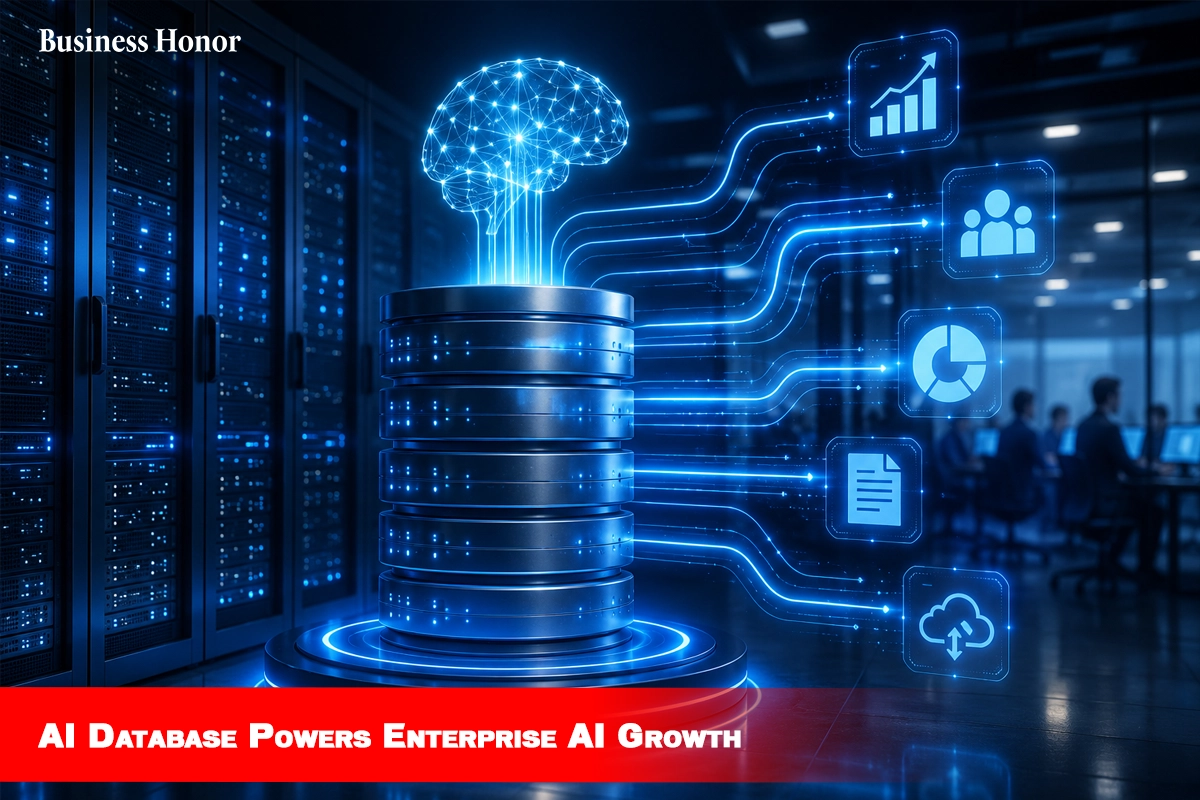
Artificial intelligence projects at large corporations are transforming how data is used—with enterprise data lakes proven the backbone of these efforts. The convergence of data lakes and traditional data warehouses into what we now call “Data lakehouses" provides organizations with a hybrid environment that combines the scalability and efficiency of data lakes with the security and governance provided by traditional data warehousing. The movement toward lakehouse solutions has been impressive, as all major vendors of data platforms—including Snowflake, who began as a pure-play data warehouse—have completely redesigned their platforms to reflect the lakehouse model. As a result, there is a general agreement throughout the industry that organizations need a single unified platform capable of supporting multiple data formats while adhering to stringent governance requirements.
The true benefit of lakehouses for enterprise AI deployments lies in their ability to consolidate data from multiple distinct sources into a single source of truth (e.g., sales system, customer database, operational systems). This single source of truth is essential for training machine learning models, for driving RAG pipelines, and for providing context from the large language models relied upon by autonomous agents. However, the convenience of centralized data accessibility introduces substantial risks. Docusign, the digital transaction company, has become a notable case study in deploying lakehouses responsibly for AI workloads. The company pulls data from Salesforce into its Snowflake lakehouse to train internal sales agents and machine learning models designed to improve customer service.
“This expansion of data access presents governance challenges that Docusign approaches with deliberate caution.”
"We're proceeding very cautiously," explains Shivi Verma, Docusign's senior manager of engineering. The company implements stringent security reviews and engages both technical and business stakeholders before exposing any data to AI systems. Security protocols operate at both entry and exit points: when data enters the lakehouse and when it flows outward to LLMs or agents. The importance of lakehouses and their hybrid architecture in providing flexibility without sacrificing control is underscored by the current market landscape. For example, Gartner has reported that 65% of its client base currently uses lakehouse platforms, which demonstrates an extremely high adoption rate in a short period. This pattern is not only indicative of a technological preference but also of a real need for businesses today: more and more businesses are recognizing that, in order to effectively utilize AI, they will need both data access and solid governance in place. The lakehouse model appears to be in an upward spiral, as enterprises try to find the balance between innovation and security, and as they increasingly utilize autonomous agents in day-to-day operations. As a result, the lakehouse is positioned to become the platform of choice for enterprise AI initiatives as they enter into a new level of sophistication and responsibility.
Business Honor views that data lakehouses' adoption represents a strategic shift in enterprise AI governance and autonomous agent deployment capabilities.
FAQs:
Q: What is a data lakehouse?
A: A hybrid platform combining data lake flexibility with data warehouse governance and reliability for enterprises.
Q: Why are data lakehouses important for enterprise AI?
A: They centralize diverse data sources, enabling secure AI model training and autonomous agent deployment with governance.
Q: How do companies like Docusign secure data in lakehouses?
A: They implement strict security protocols at entry and exit points with rigorous compliance reviews and gradual access expansion.
Q: What percentages of enterprises have adopted data lakehouses?
A: Gartner reports 65 percent of clients have adopted lakehouses, reflecting rapid industry-wide adoption in short timeframe.
Q: What is RAG and how does it relate to data lakehouses?
A: RAG retrieves relevant lakehouse data to provide context for language models, improving enterprise AI accuracy significantly.































.webp)

.webp)




.webp)



Comments
0 Comments