
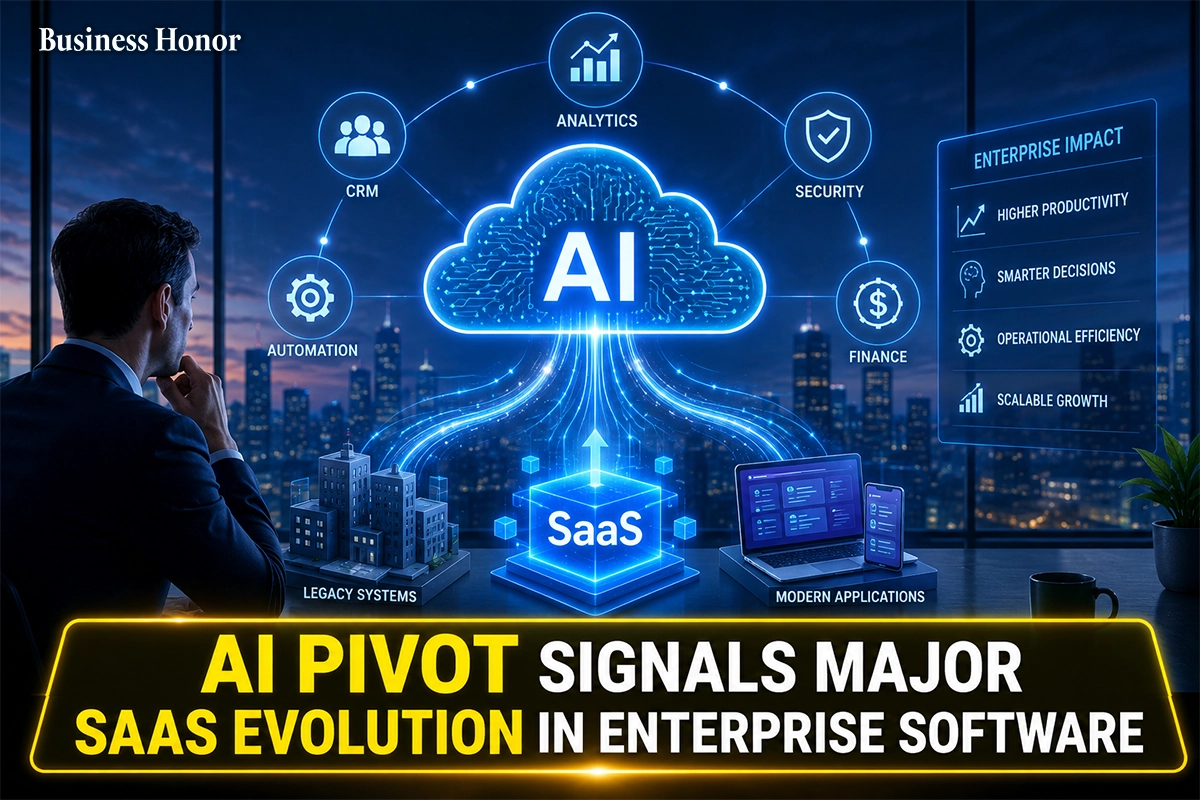
SaaS evolution accelerates as traditional software giants reinvent themselves as AI infrastructure providers for autonomous enterprises globally.
|
The software industry is at a turning point and SaaS Evolution because of fear of how AI could cause traditional software solutions to go away. This has caused SAP, one of the largest enterprise software vendors in the world, to restructure its business model from a traditional ERP vendor to what it calls "The Business AI Company" or an AI-first company. The announcement was made during SAP's annual Sapphire conference in the U.S. in 2026 in response to worries by investors about the hundreds of billions of dollars in market cap job losses from SaaS due to AI taking over more tasks that were traditionally done by specialized software solutions. Especially those being developed by top tech firms using Autonomous AI Agents.
The announcement was made just before a group of Vietnamese and other South East Asian representatives were invited to hear about SAP's new strategic vision on how the software industry will function in an AI-driven world. Rather than compete head-on with AI functionality, SAP has positioned itself as "the foundation of the AI-era business world", focusing on creating a partnership between traditional software vendors and AI companies with the goal of making what SAP calls the "Autonomous Enterprise Era" possible. SAP's strategic pivot is based on the recently initiated Business AI Platform, a comprehensive system that combines three previous independent systems; these are called: SAP Business Technology Platform; the SAP Business Data Cloud; and, the SAP Business AI. The combined system provides an overarching governance mechanism that ensures that all companies using AI can use AI responsibly throughout their business.
The architecture of the SAP Business AI Platform is designed for three unique levels to fulfill various business needs. The First Layer (Context Layer) is a combination of knowledge work automation and the Business Data Cloud to create a central repository (enterprise information) through which all AI systems can process complex business relationships and end-to-end operational processes. This layer ensures that all AI agents have complete contextual information and not just information from several different sources.
The Second Layer (Joule Studio 2.0) is an open development environment for companies to create their own unique AI agents. This layer enables companies to integrate Artificial Intelligence (AI) models from all vendors into one platform; this includes all of the major players in the Artificial Intelligence space such as Anthropic and Mistral as well as all the major Cloud Hyperscalers, and enables them to retain a direct connection to their proprietary corporate data. This new capability means that companies can avoid the previous concerns about vendor lock-in that companies have faced when using enterprise software. The Third Layer, also known as the AI Agent Hub (Governance Layer), is the area that provides governance oversight of all AI Agents that have been deployed across the company. This component enforces data access controls, ensuring agents interact only with authorized information while maintaining compliance with organizational policies and regulatory requirements. Industry observers note this governance infrastructure addresses a primary concern limiting enterprise AI adoption: the need for transparent, auditable AI operations.
Business Honor is of the view that SAP's transformation into a Business AI Company represents a strategic repositioning of enterprise software's foundational role in the SaaS evolution era.











.webp)
.webp)




.webp)

