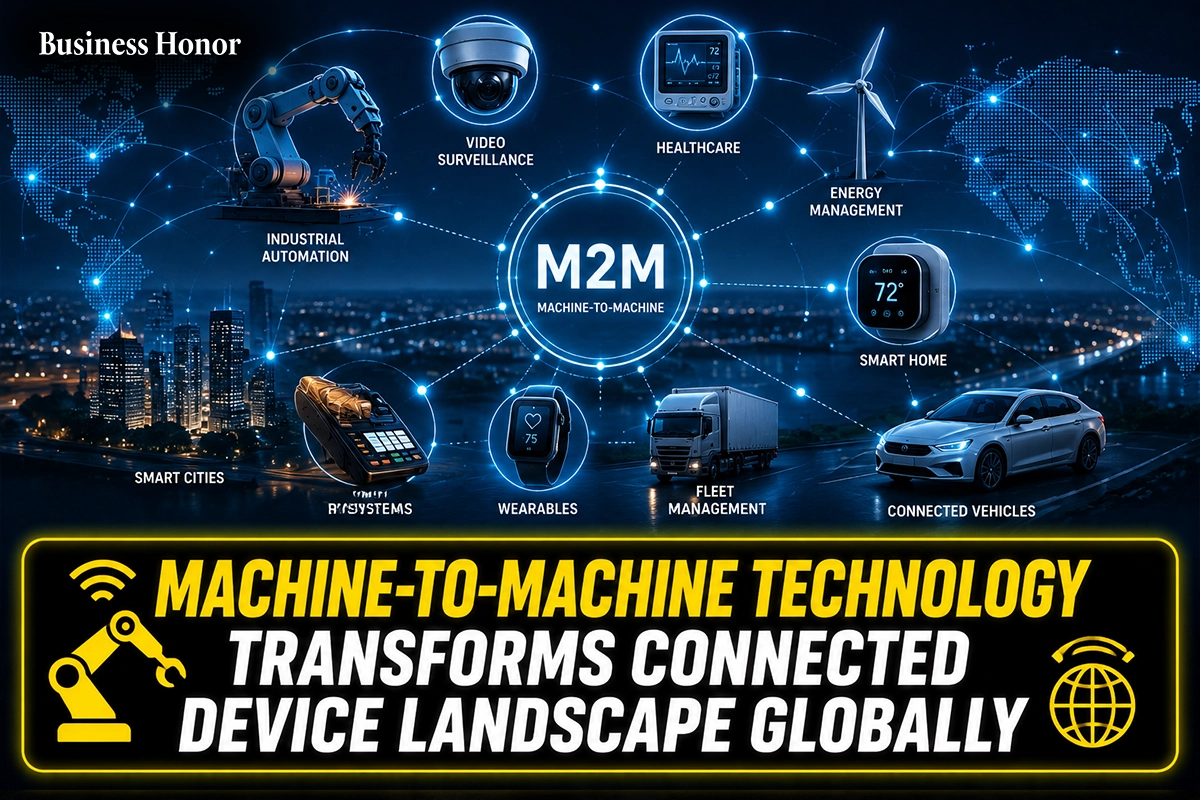
M2M technology enables billions of connected devices to communicate autonomously, reshaping industries and consumer experiences without human intervention.
|
There has been a dramatic change in the way we communicate with each other and the world around us since 2016. In addition to surpassing the global population figure of 7.19 billion, the number of global mobile connections has reached 7.7 billion worldwide — a new record high since it was first achieved in 2014. Of those mobile connections, more than 240.1 million (approximately 3.5 percent) currently belong to “machine-to-machine” (M2M) devices (which provide a truly amazing way to automate common tasks), with estimates indicating that the total number of M2M devices is expected to rise beyond 360.9 million by 2018.
Why is machine-to-machine communication becoming so important?
This increase in connectivity is not merely a curiosity. It also signifies the emergence of a new era in which the internet operates continuously in the background, carrying out many functions that were once done by human beings, such as automatically ordering fresh milk via smart refrigerators, renegotiating insurance policies on their own and coordinating intricate logistics networks using M2M communications.
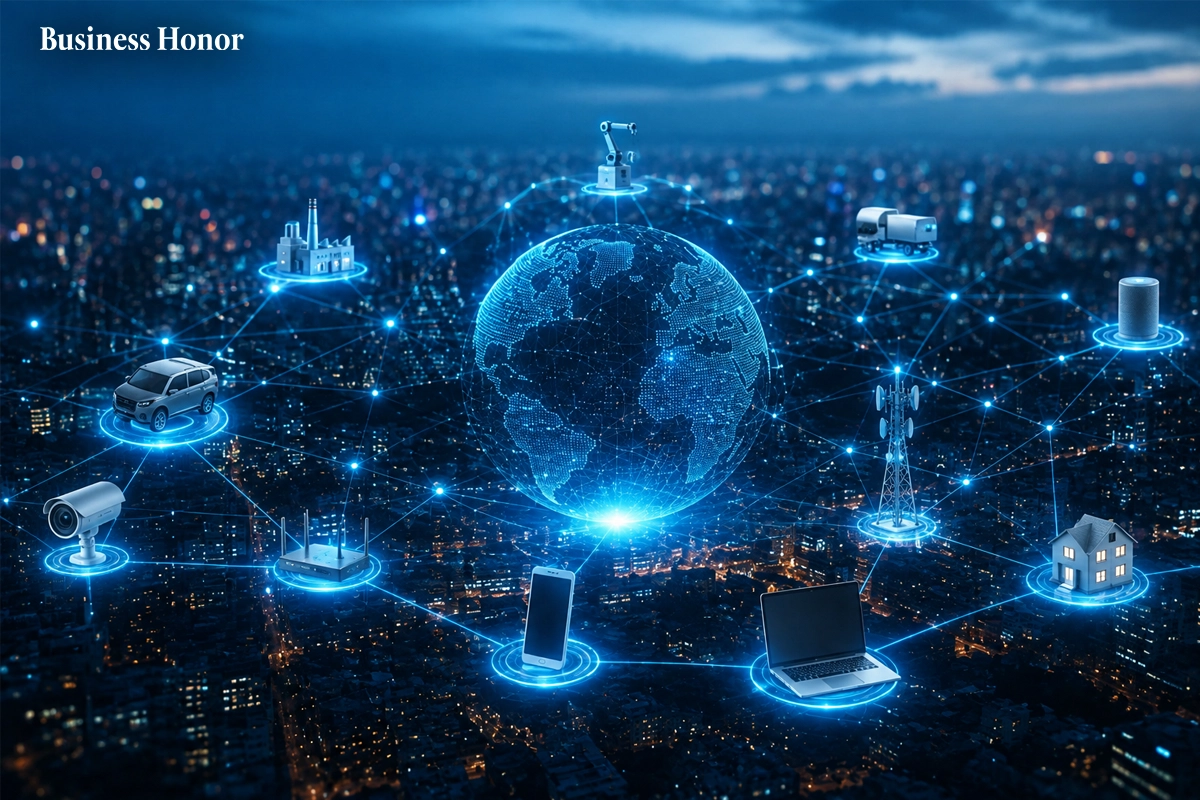
According to an estimate from Cisco, Internet Protocol Journal, by 2030 the number of connected devices in the “Internet of Things” will likely reach 50 billion — a significant shift in how businesses operate within their marketplaces, as well as how we interact with our physical environments. In contrast to the devices that are so prevalent in our lives today requiring us to provide input via some form of interaction. The devices of the near future will interact with each other primarily through the use of software agents carrying an assortment of sensor technologies, such as: wireless technologies; 5G networks; Bluetooth; Wi-Fi; RFID; telemetry; and GPS, just to name a few.
How is M2M technology already changing everyday life?
The practical applications are already reshaping daily life. Internet-connected 3D printers respond to e-commerce orders placed halfway around the world. Self-driving cars equipped with machine-to-machine communication systems navigate streets by coordinating with other connected vehicles. Smart home technology—from intelligent lighting systems to connected door locks controlled by smart watches—creates environments that anticipate occupant needs.
Where did machine-to-machine technology originate?
This technological revolution has deep historical roots. Machine-to-machine concepts evolved from military innovations: SONAR technology developed during World War II, RADAR systems created by the British Navy, and early GPS systems like LORAN and Decca Navigator. These technologies established the foundational principles of machines detecting and communicating with other machines.
Theodore G. Paraskevakos, credited as the father of M2M technology and inventor of Caller ID, conceptualized machine-to-machine communication in 1968. Within a decade, he established Metretek in Melbourne, creating the first smart meters for electricity grids. His vision catalyzed an entire industry.
What role will M2M play in the future internet of things?
Today, M2M devices serve specialized functions: tracking refrigeration trucks transporting food and medicine, analyzing driver behavior for insurance companies, and instructing vending machine suppliers when restocking is needed. However, as these devices connect with cloud computing and advanced analytics through Internet of Things gateways, transformative possibilities emerge.
Smart factories operate remotely from tablets. Intelligent buildings monitor their environments and transmit data to cloud systems. Consumer innovators like Tony Fadell's Nest learning thermostat and Ireland's Drop smart scales demonstrate how M2M technology enhances everyday experiences. Without machine-to-machine technology, the internet of things that will define the coming decades would remain theoretical. M2M infrastructure represents the essential foundation enabling digital disruption across traditional industries and the seamless integration of intelligent systems into human life.
Business Honor is of the view that machine-to-machine technology adoption represents a transformative shift in industrial automation, smart infrastructure, and autonomous device communication capabilities.
FAQsQ: What is machine-to-machine (M2M) technology? A: Machines communicating directly with each other autonomously without requiring human intervention or manual oversight. Q: How many M2M devices exist currently? A: As of 2016, approximately 240.1 million M2M devices operate globally among 7.7 billion total mobile connections. Q: Who invented machine-to-machine technology? A: Theodore G. Paraskevakos conceptualized M2M in 1968 and founded Metretek, creating first smart meters. Q: What is the projected growth for connected devices? A: Cisco estimates 50 billion connected machines will exist between 2020 and 2030 worldwide. Q: How does M2M enable the Internet of Things? A: M2M allows devices to exchange data automatically through sensors, wireless technologies, and cloud analytics integration. Q: What are real-world M2M applications today? A: Smart refrigerators ordering milk, self-driving cars communicating, smart meters tracking usage, and temperature monitoring systems. Q: Which military technologies influenced M2M development? A: SONAR, RADAR, and early GPS systems like LORAN established foundational principles for machine communication. Q: Why is M2M important for industries? A: M2M enables smart factories operating remotely, automated logistics, intelligent buildings, and industrial automation without human presence. |































.webp)

.webp)




.webp)