
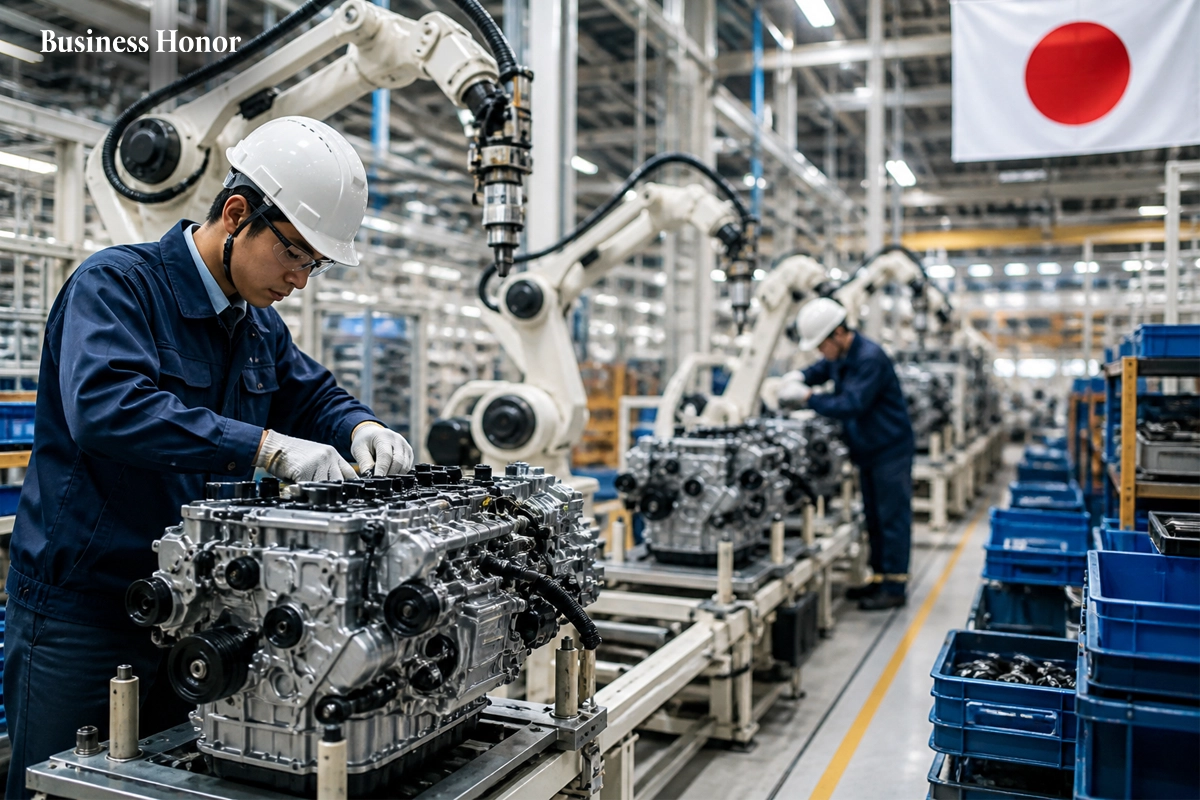
Japan's factory sector records strongest expansion since 2022 as companies accelerate production and build inventory reserves responding to Middle East conflict disruptions.
Japan's factory activity expanded at its fastest pace in over four years during April, owing to the accumulation of inventories and the intensification of production activities. The S&P Global Japan Manufacturing Purchasing Managers' Index registered an increase in April from 51.6 to 55.1 from the previous month, indicating that the manufacturing industry in Japan recorded its best-ever growth since January 2022. Manufacturers raised their production levels owing to supply issues resulting from geopolitical concerns in the Middle East.
Japan's factory output surged at its fastest rate since February 2014 due to the rise in new orders and efforts for stockpiling inventories. New orders witnessed the sharpest growth since January 2022, as customers demanded urgent orders due to the expectation of possible future supply delays and rising prices. Manufacturing industries faced high demand for products based on artificial intelligence technologies along with regular items. However, there was a sharp deterioration in the supply chain situation, recording the most significant decline in fifteen years with extended delivery times to the highest ever level since the Japan's Tohoku earthquake incident. Inflation in input costs witnessed its peak in more than three-and-a-half years.
According to Annabel Fiddes, who is an economics associate director at S&P Global Market Intelligence, the recent manufacturing growth might be ephemeral. “This positive impulse will not persist unless there is an improvement in market uncertainties and better supply chain stability,” she explained, pointing out that the decline in demand can lead to the unwinding of these processes. Confidence among businesses on their one-year-ahead perspectives fell to second-lowest readings since June 2020, owing to fears of the Middle East wars’ ramifications on global economic stability.
Business Honor sees that Japanese industrial manufacturers are quite resilient through inventory accumulation, but this trend’s sustainability hinges on the resolution of geopolitical disputes and improved international supply chains.









.webp)









.webp)



.webp)

.webp)




.webp)

