
Iran war updates reveal Tehran's strategic shift toward aggressive military posturing in contested shipping lanes globally.
Summary
|
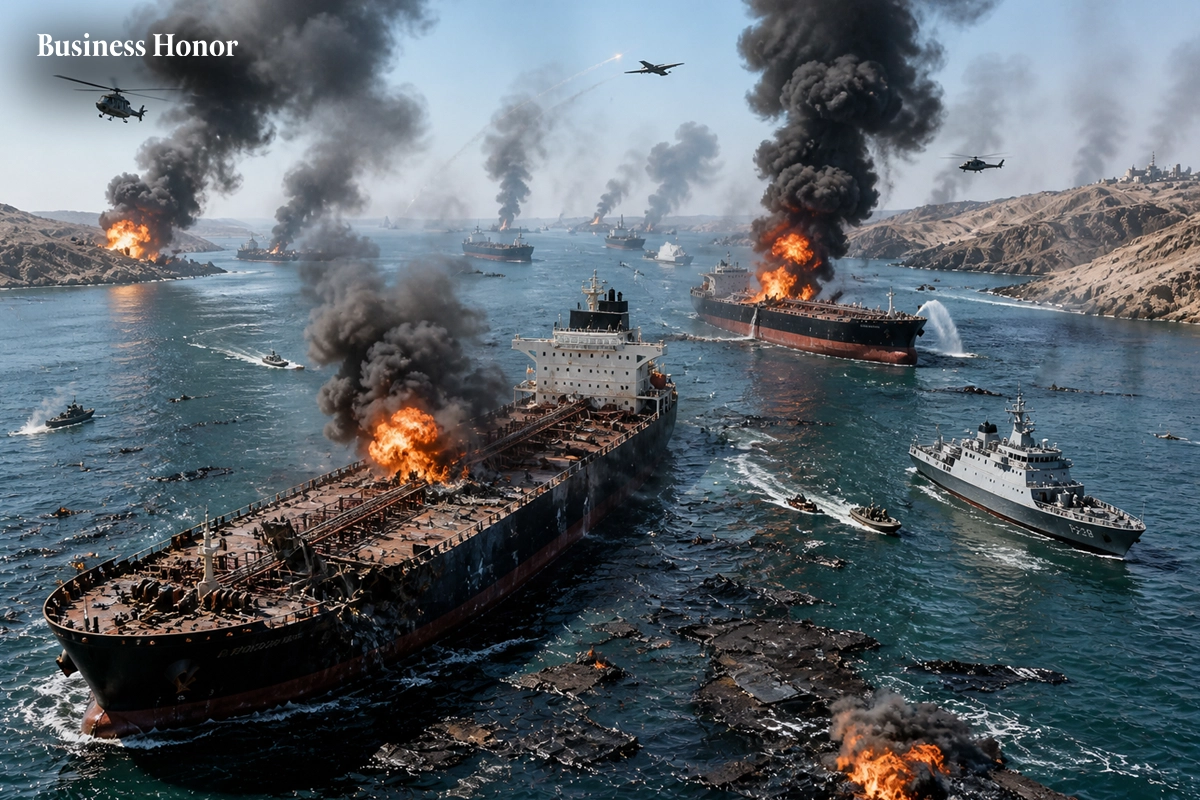
On Monday, May 5, tensions in the Middle East escalated to a dangerous level as Iran carried out a large-scale, coordinated series of attacks on the UAE and commercial shipping in the Strait of Hormuz, breaking the fragile April ceasefire agreement. The Iranian strikes targeted multiple targets simultaneously. Drones were used to strike Fujairah Oil Industry Zone (the largest UAE oil storage warehouse), resulting in major damage, beginning large fires and wounding three people.
What is the Strait of Hormuz?
The Hormuz Strait connects the Persian Gulf to the world and is one of the most critical shipping routes in the world and it separates the US and Iran. The Hormuz Strait transports about one third of the world's oil and is therefore essential to providing energy to countries all over the world.
While the drone attacks were happening against the Fujairah Oil Industry Zone, Iranian forces fired missiles and launched drone strikes onto vessels transiting the critical Strait of Hormuz, stimulating concern for two critical items: global energy security control and maritime shipping ability.
U.S. military forces conducted the "Project Freedom" initiative to keep the Strait of Hormuz shipping lane open. U.S. military forces reported they successfully intercepted and destroyed a number of Iranian missiles, drones, and six Iranian speedboats that posed a threat to commercial and naval vessels. U.S. Central Command reported two American flagged vessels transited the Strait of Hormuz, but the Iranian government has denied that report.
Abbas Araghchi, Iran’s Foreign Minister, has claimed that the United States’ use of force is unproductive and even said that the use of force wouldn’t solve the political issues connected with the conflict in the Strait of Hormuz. The Iranian Government also presented to the international community an overall 14 point plan for peace to end the conflict between Iran and the U.S., while the use of force against Iran by the U.S. was escalating. However, President Trump voiced his skepticism regarding the Iranian proposal for peace and, thus; his skepticism could potentially complicate or hinder the potential for peace through negotiations.
How has the escalation influenced global oil prices and the economy?
The ongoing violence and higher tensions in this area are jeopardizing the stability of oil supply chains because the Strait of Hormuz is one of the main routes used to move crude oil globally. The threat of unsafe water shipping routes in this part of the world typically causes oil prices to rise and creates volatility with respect to global markets. If instability continues to be an issue for an extended period, this will lead to long-term high fuel prices, poor access to trade, and uncertainty in the economies of many nations around the world.
The international community immediately expressed concern about the escalation. French President Emmanuel Macron condemned the Iranian military actions as „unjustified and unacceptable” and called for a comprehensive security agreement with Iran that addresses their nuclear program and long-range missilery. Leaders of numerous countries called upon Iran and the U.S. to resume mediation of peace talks through Pakistan, stating that diplomatic resolution- not military confrontation- is necessary to achieve long-term regional stability.
Additionally, the economy was substantially impacted immediately after the escalation. Oil prices increased dramatically (e.g., Brent Crude reached approximately $114.07 per barrel) and the average price of gasoline in the U.S. increased to approximately $4.48 per gallon. Further, stock prices declined due to uncertainty over the importance of the shipping channel used to ship roughly one-third of the total seaborne oil supply (via the Strait of Hormuz).
Business Honor is of the view that Iran's coordinated strikes represent a calculated escalation in regional military strategy and positioning.











.webp)

.webp)




.webp)

