
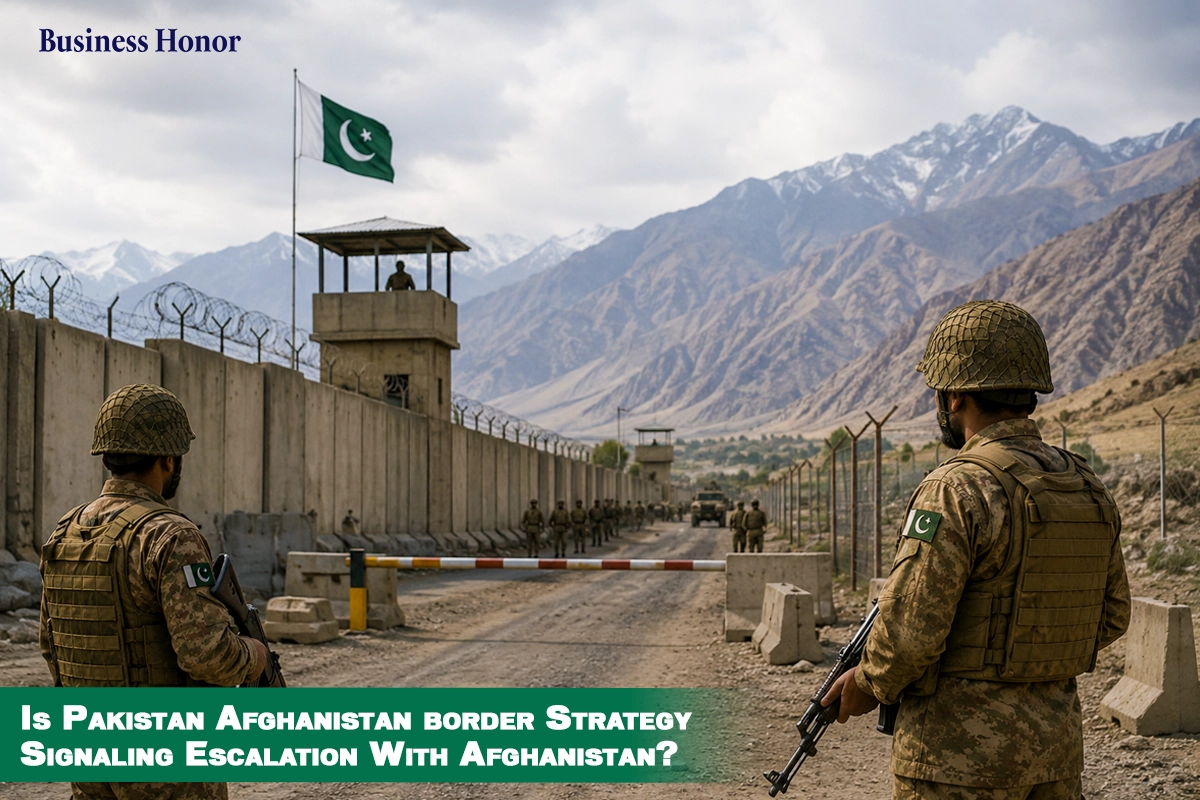
Pakistan Afghanistan border tensions intensify as military strikes kill 29 fighters in response to deadly Karachi attack.
|
Pakistan's security forces conducted ground and air operations along the Afghan border, killing 29 fighters in response to deadly attacks. Three soldiers died in a Karachi attack; Pakistan blamed the Pakistan Taliban. Precision strikes destroyed targets in eastern Afghan provinces. The escalation continues months of tit-for-tat military action between the neighboring countries. |
Pakistan Afghanistan Border: Pakistan's security forces have mounted a significant cross-border response to escalating militant violence, conducting ground operations and air strikes along the Pakistan-Afghanistan border that resulted in the deaths of 29 fighters, according to government officials. The defense action follows a deadly attack in Karachi where armed fighters killed three soldiers at the regional headquarters of the paramilitary Rangers organization. In an announcement on social media, Pakistani Minister of Information Attaullah Tarar disclosed that the operation targeted hideouts and safe havens of the Pakistan Taliban, an armed group distinct from but allied with Afghanistan's ruling Taliban movement. "Three targets in Paktia, Paktika and Kunar were destroyed during precision strikes," Tarar stated on X, referring to three provinces in eastern Afghanistan. The minister emphasized that the operation was launched in response to multiple attacks by armed groups throughout Pakistan.
One day before the cross- border security strikes, gunmen equipped with firearms and explosives attacked a Rangers Headquarters facility located in the southern port city of Karachi with the intent of breaching security. Security Forces responded immediately and killed three of the attackers, one of whom, identified by the military as being an Afghan national, was captured and taken into custody after suffering injuries during the incident; he requires medical attention.
On Saturday night Jamaat-ul-Ahrar, a splinter group from the Pakistan Taliban, took responsibility for the assault via statement. During the last several years, Pakistan has suffered an unprecedented number of attacks perpetrated against both police and military and security officials, with officials consistently pointing to the Pakistan Taliban and their affiliated militant groups as being primarily behind these violent acts. The Pakistani government alleges that the Taliban administration in Afghanistan is providing sanctuary for the militants who conduct the deadly attacks in Pakistan, predominantly members of the Pakistan Taliban, who operate with relative ease across the border from Pakistan.
Sunday's operations mark the second major Pakistani military action in less than three weeks, following air strikes conducted in late June that officials claimed targeted fighter group hideouts in Afghanistan. These latest strikes represent a resumption of hostilities after approximately one month of relative calm, during which Islamabad had characterized the situation as an "open war" despite concurrent international diplomatic efforts to establish a durable peace arrangement.
The escalation reflects months of intensifying tit-for-tat military engagements between the two nations. Since February, hundreds of people have been killed in cross-border fighting, initiated when Afghanistan launched retaliatory strikes following Pakistani air strikes inside Afghan territory. Multiple internationally mediated peace negotiations have failed to produce lasting ceasefire agreements, and recent efforts by China, which hosted both sides in April, have proven insufficient to prevent further escalation. The latest operations will likely deepen already strained relations between Islamabad and Kabul, further complicating prospects for regional stability. Afghanistan has not yet issued an official response to Pakistan's latest military action, though the pattern of escalating violence suggests renewed tensions in an already volatile border region.
Business Honor is of the view that Pakistan's cross-border military operations represent a significant escalation in regional security strategy and operational response capabilities.



































.webp)

.webp)



.webp)



Comments
0 Comments