- Sandra Kelembeth
Running a luxury residential remodel in Miami Beach is not a simple undertaking. The city's permit review process alone can add between six and twelve months to a project timeline, with carrying costs and budget escalation of up to 10% for every delay that builds on the one before it. Beyond permitting, there are clients with precise expectations, contractors who need coordinating, consultants who need briefing, building codes that need satisfying, and a continuous stream of decisions, large and small, that must be made correctly and on schedule if a project is going to close out the way it was designed to begin. Most firms divide this responsibility between two professionals. One designs. One manages. The handoff between them is where intentions get lost and timelines begin to slip.
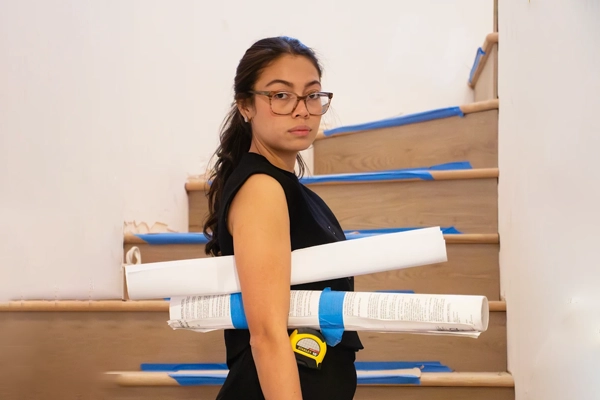
"As a checklist-oriented person and project manager, seeing tasks completed and projects realized is deeply satisfying," says Francis Castro, Project Architect Manager at Mirador 3426 LLC, a Miami Beach design-build firm focused on high-end single-family residential architecture. For the highly regarded Francis, design and project management are not parallel responsibilities managed in sequence. "As a project manager, I discovered I was born for this role," she says. They are a single, integrated practice that she holds together across the full lifecycle of every project she leads, and it is why her approach consistently produces results that conventional split-role arrangements struggle to match.
One Role, Two Disciplines
The title Project Architect Manager combines two functions that most firms assign to different professionals. Francis performs both simultaneously, and the distinction between doing them simultaneously rather than sequentially matters more than it might initially appear.
"What I love most about this combined role is that it lets me bring every dimension of my training to bear at once," she explains. "The leadership, the architectural knowledge, the design expertise, the ability to manage people, optimize workflows, and get things done on time. That is the role I was built for, and the reason holding both disciplines together produces something a split-role arrangement simply cannot."
The decisions that determine whether a luxury residential remodel succeeds or fails are rarely confined neatly to architecture or project management alone. A structural adjustment required during construction can affect a spatial relationship that was resolved carefully during design.
A mid-build client request can create compliance complications that only someone with an understanding of both disciplines can evaluate quickly and correctly. A contractor's proposed workaround to an unanticipated site condition needs someone who understands both the design intent behind the original specification and the practical consequences of changing it. When the architect and the project manager are the same person, these decisions get made once, without delay, and without the information loss that travels between departments in a conventional split-role arrangement.
What distinguishes Francis' model within the broader field of luxury residential practice is her integrated design-build approach.
Francis makes a meaningful departure from the conventional separation of architectural and project management functions: “By holding design authority and project management responsibility simultaneously, I can eliminate the communication gaps that most commonly produce the delays, cost overruns,” she says.
“These are the quality compromises that clients at this level find unacceptable. The result is a more reliable, more responsive, and ultimately more satisfying experience for clients whose investment demands that level of accountability from start to finish,” Francis adds.
Juan Carlos Mejia is Project Manager at 3Design in Miami, Florida. He worked with Francis on residential projects in Miami Beach between 2023 and 2025.
He says: "She has the capacity to carry the full scope of a complex project entirely independently," he reveals.
"On one of our major residential remodels, she originated the architectural design concept, then developed it into a complete and buildable drawing set. Francis also managed the permitting process through the City of Miami Beach, and coordinated consultants across MEP, structural, civil, and landscape disciplines simultaneously.”
Mejia adds: "That level of end-to-end professional responsibility, from design concept through permit approval, is typically reserved for practitioners significantly more senior than she was at the time. Her technical proficiency, design capability, and project management discipline all reflect an architect operating well above her peers."
Francis's qualifications underpin this unique expertise. A licensed architect in Honduras and an AIA associate member in the United States, she holds professional certifications in Revit and AutoCAD, as well as an Interior Design Certificate from PCS International and Survey and Layout certifications.
"I did not arrive at the design-build model by accident," she says. "I built the credentials across design, technical drafting, and construction disciplines deliberately, because that breadth is what the role actually requires."
Because she creates the plans herself, she carries their full logic with her when she walks onto the construction site. Every decision she makes on site is connected to the design intention behind it, and every design decision she makes at the drawing board is informed by her direct knowledge of what the site and the contractors can deliver. "The two disciplines sharpen each other," she says. "When you are the one who drew the plans and the one managing their execution, there is no gap between what was intended and what gets built."
How a Project Actually Runs
The practical mechanics of a luxury residential remodel at Mirador begin well before the first design decision is committed to paper. Francis conducts a thorough assessment of the existing space, documents site conditions carefully, and builds a picture of what the project will require structurally, logistically, and from a compliance standpoint.
She says: ‘Only then, once all that is done, do I establish a design direction. That early investment in understanding is what prevents the costly mid-project discoveries that derail timelines and frustrate clients.
"Each tool in my toolkit does specific work," she adds. "Revit gives me the precision in architectural drafting and coordination that complex residential remodels demand.
“Then I can use SketchUp to iterate on conceptual options quickly without locking in details before the design direction has been properly tested. I can also use Enscape to generate real-time visualisations that let clients actually experience a proposed space before construction begins, so we can refine decisions while changes are still affordable.
“Agile project management and lean construction principles govern how the work progresses: "I use agile thinking to absorb the changes that every construction project generates without losing the thread of the original design intent," Francis explains.
Lean principles can minimise waste across materials, time, and effort, as well as keep the project efficient: “We can maintain quality standards that luxury clients are paying for,” she adds.
For Francis, regular site visits, redlined drawings returned promptly, and direct coordination with contractors, consultants, and trades are how every component of the project stays moving in the same direction at the same pace.
The pressure that comes with that level of coordination is real and, for Francis, motivating. "Tight deadlines, often self-imposed, are challenging but also motivating and rewarding," she says. "They push high productivity and completion." That self-imposed standard is a professional choice. Every day a project runs beyond its planned schedule represents a real cost to the client, and a real failure of project management to anticipate and prevent what was preventable.
However, Francis reveals the moments that test that standard most sharply are the ones that arrive without warning.
She admits: “During construction, decisions sometimes have to be made within thirty minutes to avoid delays that would set the project back by days or longer. Those moments trained me to reach conclusions quickly and with confidence.”
Francis always anchors in the design vision, the project's core values, and the practical reality in front of me: “Making those calls correctly, under time pressure, while holding the full complexity of a project in mind, is what rigorous project management at this level actually demands," she adds.
Anthony Leon is the Principal Architect at 3design in Miami, Florida, who has collaborated with Francis on multiple high-end residential projects in Miami Beach.
He has also served in the Architectural Experience Program administered by the National Council of Architectural Registration Boards.
Anthony recalls: "Across both of the residential projects we worked on together in Miami Beach, Francis participated actively in every layer of multidisciplinary consultant coordination, covering structural, mechanical, electrical, plumbing, civil, and landscape disciplines throughout.
"Francis reviewed design documents, incorporated consultant feedback, and ensured that all of that information was properly integrated into the architectural plans at every stage of the project. "Her work also contributed directly to the successful permitting approval of both projects with the City of Miami Beach, a result that reflects her solid command of local building codes, zoning requirements, and the municipal review process."
The Leadership Framework
Managing a luxury residential project is a leadership challenge. The number of stakeholders involved in a complex remodel includes clients and their households, contractors, subcontractors, consultants, interior designers, and landscape specialists.
This can create constant potential for misalignment, friction, and delay. Francis addresses that potential through a leadership framework built on five values she has developed and refined across her career, and which she now deliberately embeds across every team she leads.
"The first is clear communication," she explains, "because the number of stakeholders on a project of this complexity means that ambiguity in any direction creates problems that compound quickly. Every instruction needs to be precise, every expectation explicit, and every change documented and communicated. That way, everyone it affects knows before the consequences reach the site."
"The second is respect and empathy," she continues, "because every person working on a project brings a professional context and a personal reality that a skilled leader must account for.”
Francis goes on to cite “organization,” saying: "Because coordinating multiple trades and subcontractors across multiple simultaneous projects requires systems that hold under real pressure. Projects that rely on memory and informal understanding fail. Projects built on documented systems, clear schedules, and reliable processes do not."
She adds: "Fourth is flexibility and multidisciplinarity, which run side by side," she adds, "because the formal professional boundaries between architecture, interior design, and landscape are frequently irrelevant to what a client or a project needs at a given moment. A leader who can only operate within her formal remit creates bottlenecks. One who can engage across disciplines keeps everything moving."
Finally, she says collaboration plays an important role as "the design-build model only delivers its full value when every discipline understands its role within a shared outcome.”
Francis completes architectural phases with the pace and precision that allow interior design and landscape teams to begin their work without delays forming between disciplines: “That rhythm does not happen by accident. It is the product of a system built around mutual support."
The significance of this leadership model extends well beyond Francis's individual projects. The framework she has developed and embedded across her teams at Mirador is actively shifting the culture of practice within the studio, becoming the operational standard against which the team measures not just what it produces but how it works. That shift in professional culture influences how a new generation of practitioners understands what good project leadership actually requires.
Juan Carlos Mejia observed this leadership approach firsthand through their collaboration on complex residential projects. He is direct about what it reflects: "Throughout our collaboration, Francis demonstrated a sophisticated understanding of interdisciplinary coordination and showed real maturity in balancing client needs, spatial functionality, structural limitations, and regulatory compliance simultaneously," he says.
How Authority Is Earned in a Male-Dominated Industry
The technical demands of running a luxury residential remodel in Miami Beach are matched by a professional challenge that is less visible but equally real. Construction sites remain predominantly male environments, and the authority required to lead them effectively as a young woman is not granted by title. It is built through demonstrated knowledge, consistent presence, and the quality of every interaction over time.
"In Honduras, construction is very male-dominated, and architecture for women was often limited to design," Francis says. "When I moved to the US and entered construction, I saw an immense opportunity. My understanding of both the design and construction dimensions of every project gave me a foundation for building authority on site that most project managers, regardless of gender, do not have." Moving to the United States opened a different set of possibilities, and she moved into them deliberately.
What makes her approach to on-site authority particularly significant for the broader profession is that the model Francis has developed represents something other women entering construction leadership can observe and draw from. Rather than asserting authority through hierarchy, she builds it through demonstrated expertise.
She arrives on site with technical knowledge that earns credibility before deference is requested. She treats contractors as partners in the project's outcome rather than subordinates to be managed, which produces cooperation rather than resistance. She asks questions that reveal genuine understanding rather than signaling uncertainty. That approach, applied consistently across projects, builds the kind of authority that holds under pressure precisely because it was never borrowed from a title in the first place.
Luis Rivera, Architectural Designer at Arrquitectos in Tegucigalpa, Honduras, supervised Francis directly across more than sixteen professional projects spanning design and construction phases and observed her development on construction sites firsthand. He speaks to what that on-site growth looked like in practice: "I personally reviewed Francis's work daily and observed her rapid technical growth both in the studio and on construction sites," he reveals. "What became increasingly clear across our collaboration was her ability to operate fluidly between creative design and technical execution, moving from the drawing board to the job site and back again with a consistency and confidence that is essential in architectural practice and genuinely rare at any career stage. "She also contributed to architectural presentation boards and competition materials, helping to communicate complex architectural concepts clearly and compellingly to non-technical audiences, which speaks to the full range of her professional capabilities."
"In Miami, most of the contractors speak different languages as well, predominantly Spanish, which is my first language. I am also fluent in both American Sign Language and Honduran Sign Language, which is not a biographical detail for me," Francis says. "On a construction site where team members communicate differently, that fluency is a practical asset. It broadens the range of people I can work with effectively and signals, in the most direct way possible, that I take the full range of human communication seriously."
Building the Next Generation
The culture Francis is building at Mirador extends beyond how projects get run. It reaches into who will run them next.
She takes an active role in developing her team's junior members: "I am mentoring team members, including helping Gabriela grow from intern level to being head of the interior design team," she says. "The goal is not to produce professionals who replicate my approach. It is to develop architects and managers who have built their own rigorous relationship with the work, grounded in the same values of communication, empathy, organization, flexibility, and collaboration that underpin everything I do."
That investment is connected to a specific professional conviction. The construction industry's leadership level does not yet reflect the full range of people capable of leading it well. Francis pursues that change through the daily work of developing the practitioners around her rather than through abstract advocacy. Every junior team member who works with her becomes a stronger, more confident professional, which directly contributes to the shift she wants to see.
"I want the construction industry to look different at the leadership level than it does today," she says, "with more women and more Latin American voices making the decisions that determine how buildings get designed and built. I do not treat this as an aspiration for the future. It is a responsibility I am already acting on, one project and one developing professional at a time."%20copy.webp)
The Standard That Holds
Francis measures the success of a project the way her clients eventually do: not by how it looks at handover, but by how well it serves the people inside it months and years later. Whether the spaces hold up against the reality of daily life. Whether the decisions made under pressure during construction still make sense when the project is complete. Whether the client's investment was justified not only at completion but throughout the home's full life.
"What I want the body of my work to demonstrate is something straightforward," she says. "That I listened carefully to the people I designed for, and led the projects that brought those designs to life with the expertise and clarity the work deserved. Architecture and leadership are not separate for me. They are the same practice, held together by the discipline and the values that have defined everything I do from the beginning."
Miami Beach's luxury residential market will continue to generate ambitious, scale projects. The ones that will still justify the investment made in them years from now, the ones whose design decisions held and whose spaces were not the only thing that made them worth living in, will be the product of the kind of practice Francis has built. One that starts with the person, takes the build seriously, and never treats the distance between those two things as someone else's problem to solve.
About the Author
Sandra Kelembeth is an experienced writer who specializes in healthcare, health technology, fitness, real estate, and sports. With a sharp attention to detail and a deep passion for wellness, she creates compelling content that educates, engages, and motivates her audience. Her writing skillfully simplifies complex medical concepts, making them accessible and relevant to everyday life. She is dedicated to empowering readers with practical knowledge that supports healthier, more informed lifestyle choices.

































.webp)

.webp)


.webp)