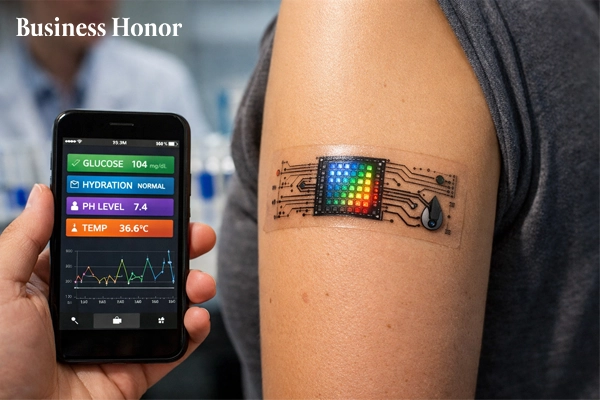
Tattoos have been a means of art and self-expression for thousands of years. From cultural symbolism to personal art, tattoos have conveyed stories on the human body and emotions for centuries. However, today tattoos are transforming into a new and much more advanced medium of art: smart tattoos for health monitoring. These advanced tattoos are not just for artistic expression, it can also monitor a person’s health in real time.
What are Smart Tattoos?
Smart tattoos are temporary or semi-permanent tattoos that are capable of detecting changes in the human body. They are made with special ink that responds to the changes. Smart tattoos are different from regular tattoos because they are also capable of detecting the levels of blood sugars, the temperature of the human body, and the brain’s activity. Dr. Ali Yetisen of Imperial College London states that for smart tattoos to be made, science, engineering, and design should be combined. Dr. Yetisen and his team replaced the normal ink used for tattoos with special ink that changes color in response to the changes in the human body.
In 2017, Ali Yetisen and the other researchers from Harvard Medical School and MIT designed a project called Dermal Abyss, which are tattoos that can detect multiple biomarkers, changing colors in the process, giving the user a clear view of the health status. Other researchers from the Technical University of Munich have designed tattoos that change colors in response to glucose, albumin, or pH levels. For example, the tattoos turn green in response to low albumin levels, indicating possible kidney or liver disease.
How do Smart Tattoos Work?
Smart tattoos use chemical sensors, flexible electronics, or conductive ink to function. Some smart tattoos use pigments that alter color depending on chemicals present in the skin or sweat. Others use electronic skin patches to measure electrical signals, temperature, or UV light. The data can be viewed directly on the skin or through a smartphone app. For instance, temporary smart tattoos being developed at UC San Diego use electrodes to extract glucose from the skin, which is then measured without a painful finger prick method. Smart tattoos do not require batteries, unlike other wearable devices such as smart watches, making them more effective for long-term use.
Dr. Carson Bruns at the University of Colorado Boulder has developed “solar freckles,” which are smart tattoos that use UV light to inform users that their sunscreen has run out. They are invisible to the naked eye but can help protect against skin damage as well as skin cancer prevention tattoos.
Applications in Healthcare
Smart tattoos have numerous applications in the field of medicine and in everyday life. For people suffering from diabetes, tattoos that track glucose levels will be very helpful. For athletes, tattoos that track the amount of water and salts in the body will be very helpful in preventing heat strokes. In the field of radiation therapy, Bruns’ tattoos will be very helpful in replacing permanent tattoos. The tattoos will only appear when the patient is in need, making the patient feel more comfortable and the therapy less stressful. It will even be able to track the brain’s activity. The University of Texas has created a transparent electronic tattoo that will be able to track the brain waves and eye movements of a person. This will be very helpful in jobs that require a lot of concentration, like pilots and surgeons. However, it is a matter of ethics and the privacy of one’s mind.
Advantages over Traditional Wearable’s
Smart tattoos have various advantages compared to other smart devices such as smartwatches or glucose monitors. It is slim and flexible and feels like a part of our skin. It is also battery-free, and therefore there is no need to worry about running out of power. Smart tattoos are also discreet in nature. Some smart tattoos are not visible under normal lighting conditions or look like a normal tattoo, and therefore users can keep a tab on their health without appearing odd in front of others.
Challenges and Limitations
However, smart tattoos also have challenges. For instance, the current designs are effective for a matter of weeks or months. Their accuracy for people with different skin tones also needs more research. In addition, the safety of the ink and the tattoos needs to be determined. Another challenge associated with smart tattoos is the aspect of public perception. Some people may feel that tattoos are not culturally acceptable. On the other hand, some people may feel uncomfortable with the idea of injecting something into the skin. Yetisen’s tattoos have been tested on pig skin and are expected to be tested on human subjects in a controlled environment in hospitals.
The Future of Smart Tattoos
The potential of smart tattoos is quite exciting, especially if these tattoos could help monitor various chronic diseases, infections, or even environmental factors such as exposure to radiation. It could even help astronauts monitor their health while traveling through space. In public health, smart tattoos could offer a viable option for providing health monitoring solutions, especially in remote or underserved communities.
Dr. Daniel Kraft, founder of NextMed.Health, refers to smart tattoos as a "check engine light" for humans, which could potentially alert individuals to possible health issues before serious problems arise. Magic Ink is one company that is making smart tattoos a reality, creating UV-activated, color-changing tattoos that have both cosmetic and medical uses.
Conclusion
Smart tattoos are changing the way human beings are able to track and monitor their health. Smart tattoos are comfortable, convenient, and fashionable. They do not require batteries and are not cumbersome. There are challenges that have to be addressed. These include issues of public perception, longevity of the tattoos, and regulatory approval. The potential for smart tattoos is enormous. In the next ten years, human skin could become an interactive health screen. This could give people information in real-time regarding such issues as glucose levels, hydration levels, exposure to the sun, and brain activity. Smart tattoos could become an integral part of human life. They could become the fusion of science and art that science fiction has always talked about. With continued research and development, it could become an important part of health prevention and management. They could show the world that the next generation of tattoos is not just for art; they are for health, safety, and well-being.































.webp)

.webp)




.webp)