
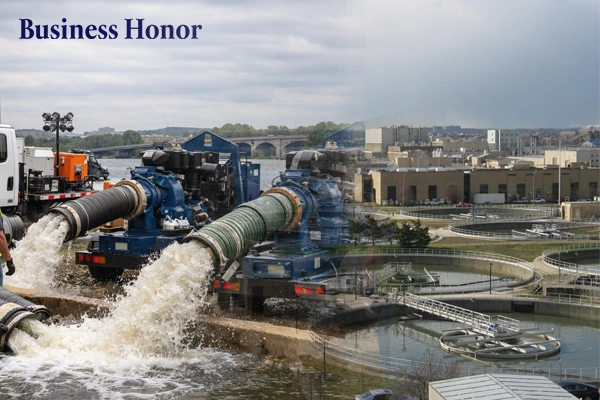
Emergency wastewater management highlights modern pumping systems and rapid-response infrastructure in the United States.
The installation of bypass pumps has been initiated by D.C. Water to manage a significant overflow of sewage into the Potomac River, located near Washington, D.C. This wastewater treatment technology intervention aims to divert the sewage, protect public health, and facilitate urgent repair work on the damaged sewer pipes.
The bypass pumps will divert the water around a collapsed section of the Potomac Interceptor, which normally carries 60 million gallons per day. Each pump has the capacity to handle almost seven million gallons per day while flowing through temporary channels. In addition, authorities are installing a cofferdam and barriers, which highlight emergency sewer overflow containment systems for rapid deployment with minimal environmental impact.
The authorities highlighted the significance of response activities. “This operation demonstrates our dedication to safeguarding public health while restoring critical infrastructure,” stated DC Water. Experts have highlighted the importance of modern wastewater bypass pumping technology used in the US for efficiently managing large-scale events.
The overflow was caused by the collapse of a pipeline in a 72-inch sewer line. This has raised concerns regarding the aging infrastructure. Such events taking place in various parts of the US have highlighted the need for effective urban wastewater infrastructure failure response solutions and modernization of sewer infrastructure to prevent environmental contamination. The project is expected to help manage wastewater while repair activities are conducted throughout the week.














.webp)

.webp)




.webp)

