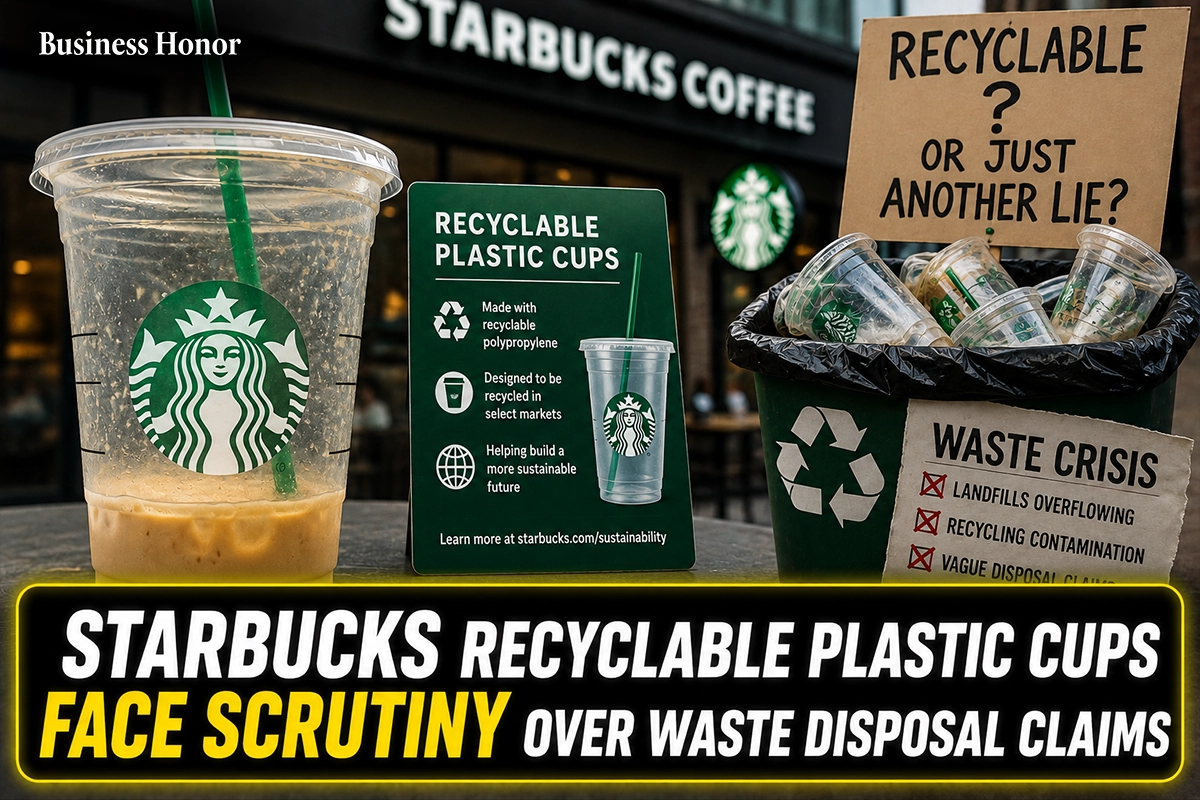
Starbucks recyclable plastic cups are facing scrutiny after an environmental nonprofit claimed that many cups placed in recycling bins across U.S. cafes ultimately ended up in landfills, incinerators, or waste sorting centers instead of recycling facilities.
Starbucks' recyclable cups have recently been scrutinized after a new report by the non-profit organization Beyond Plastics traced 36 individual polypropylene cups placed in recycling containers at various Starbucks branches across the U.S. All of these cups were found not to have been recycled.
Beyond Plastics Questions: Starbucks Recyclable Plastic Cups
According to Beyond Plastics, 33 of the 36 recyclable plastic cups made by Starbucks ended up in landfills, waste-to-energy plants, or waste transfer stations, whereas the other three were found only at sorting centers. The organization has expressed worries about the labeling of Starbucks single-use plastic cups as being recyclable.
The conflict became more prominent when Starbucks itself announced previously that its polypropylene cups could be labeled as widely recyclable using criteria defined by the labeling organization known as How2Recycle. Their cups contain recycling signs and also have a recycling message in-store. However, Beyond Plastics says that the U.S. lacks proper infrastructure to handle significant quantities of polypropylene waste.
Starbucks Defends Sustainability and Recycling Efforts
Starbucks argued against the methodology employed in the tracking study carried out by the non-profit group. Industry groups such as the Association of Plastic Recyclers have also raised concerns that attaching trackers to the cups can impede normal recycling processes, resulting in sorting variations.
Starbucks further noted that recycling effectiveness is significantly reliant on local waste management systems and recycling capabilities within the area. According to the company, it is currently working hand in hand with various recycling firms and environmental partners to enhance the availability of recycling facilities throughout the country.
As the disagreement rages on, Starbucks is currently trying to achieve its sustainability goals. The firm had earlier committed to ensure that its consumer packaging would be fully reusable, recyclable, or compostable within the decade. In addition, Starbucks has rolled out the use of reusable cups for its mobile and drive-thru orders within the United States.
President of Beyond Plastics, Judith Enck, advised Starbucks to consider transitioning to fiber-based alternatives for its cups, which are already used in other markets around the world. It was emphasized that plastic recycling in the United States is below 6%, and that recycling options for polypropylene are particularly inadequate.
This problem can be related to concerns about the sustainability of plastic packaging products due to the constantly changing prices of oil and natural gas on the global market, which affect the cost of plastics manufacturing. Business Honor views the Starbucks recyclable plastic cups controversy as a major development in the ongoing debate surrounding sustainability claims, recycling transparency, and single-use packaging practices.






























.webp)

.webp)


.webp)