
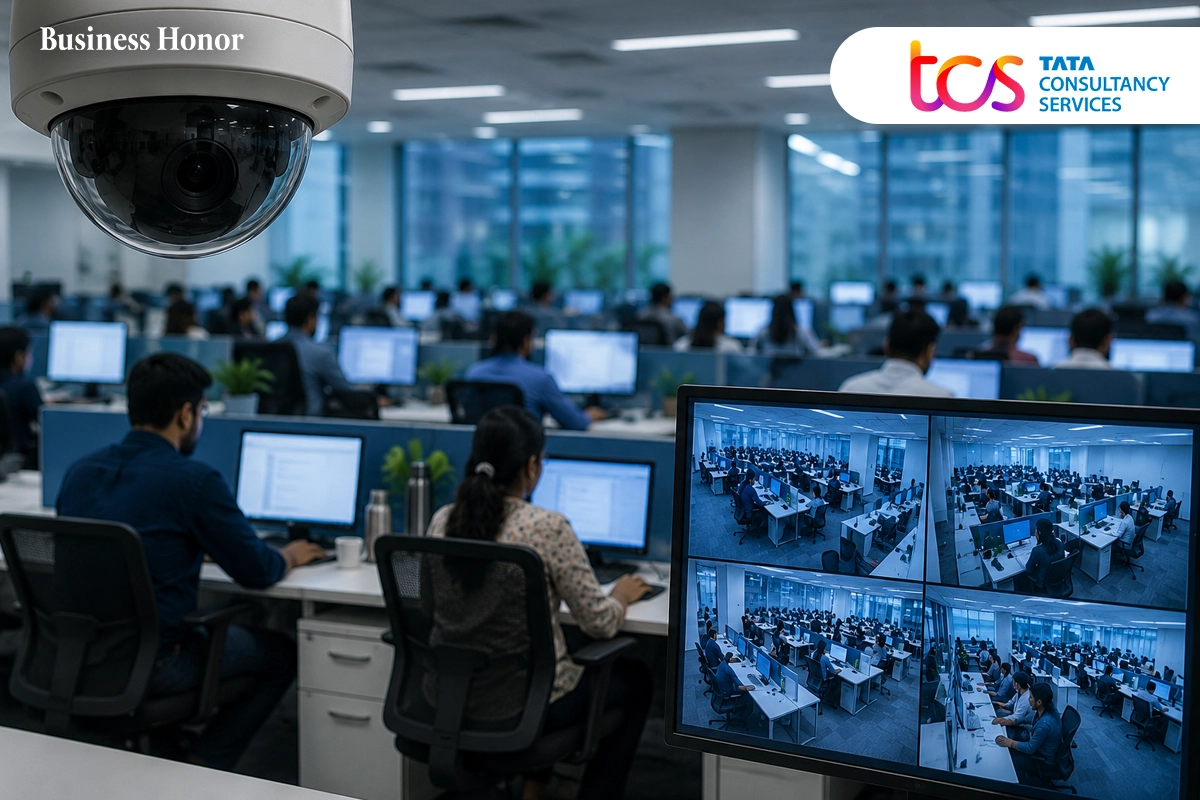
Workplace Surveillance is under scrutiny after the TCS controversy, raising questions over how far employers can monitor workers on company-issued devices.
|
The workplace surveillance debate has returned to the spotlight after reports that Tata Consultancy Services (TCS) used a “Digital User Experience Monitoring” tool on company-issued laptops. TCS rejected claims that it tracks individual employee activity, calling the reports baseless and saying its tools focus on network performance, security, availability and digital experience.
But the controversy has exposed a bigger issue for India’s digital workforce: how much can an employer actually see?
Indian law does not have one dedicated law setting out exactly what employers can monitor. Instead, the answer comes from privacy principles, data-protection rules, the IT Act, employment contracts and workplace policies.
A Company Laptop Is Not a Free Pass
Employers have legitimate reasons for employee monitoring. Cybersecurity, preventing data leaks, protecting intellectual property and meeting regulatory requirements can justify monitoring company systems.
That could include network traffic, application usage, login activity and security alerts. But the legal risk rises when monitoring becomes excessive or unrelated to the stated purpose.
Where does workplace monitoring cross the line?
Legal experts say continuous keystroke logging, indiscriminate screenshots, covert access to personal communications or tracking activity beyond work could raise serious privacy concerns. Device ownership does not automatically erase an employee’s expectation of privacy.
Employee consent also has limits. A clause in an employment contract saying systems may be monitored does not necessarily justify unlimited surveillance. Employers need to explain what they collect, why they collect it and how the information will be used.
Privacy vs Productivity
The Supreme Court’s privacy ruling in K.S. Puttaswamy v. Union of India provides an important legal backdrop, recognizing privacy as part of dignity, liberty and personal autonomy. However, applying constitutional privacy rights directly against private employers can be legally complex.
Can consent really justify every form of employee monitoring?
The bigger concern is the rise of tools that analyse browsing, idle time, keystrokes, screenshots, application use and behavioral patterns. Once such information can identify an employee, employee privacy and data-protection obligations become central.
The emerging principle is straightforward: monitoring should have a legitimate purpose, be transparent, collect only necessary information and remain proportionate.
Is the real issue who owns the laptop or how much power that ownership provides?
Business Honor examines that the TCS surveillance debate offers a clear warning. Technology may make monitoring easy, but that does not mean every available form of surveillance is justified. The sharper question now is whether employers can prove that their workplace surveillance is necessary, limited and fair.











.webp)

.webp)




.webp)


Comments
0 Comments