
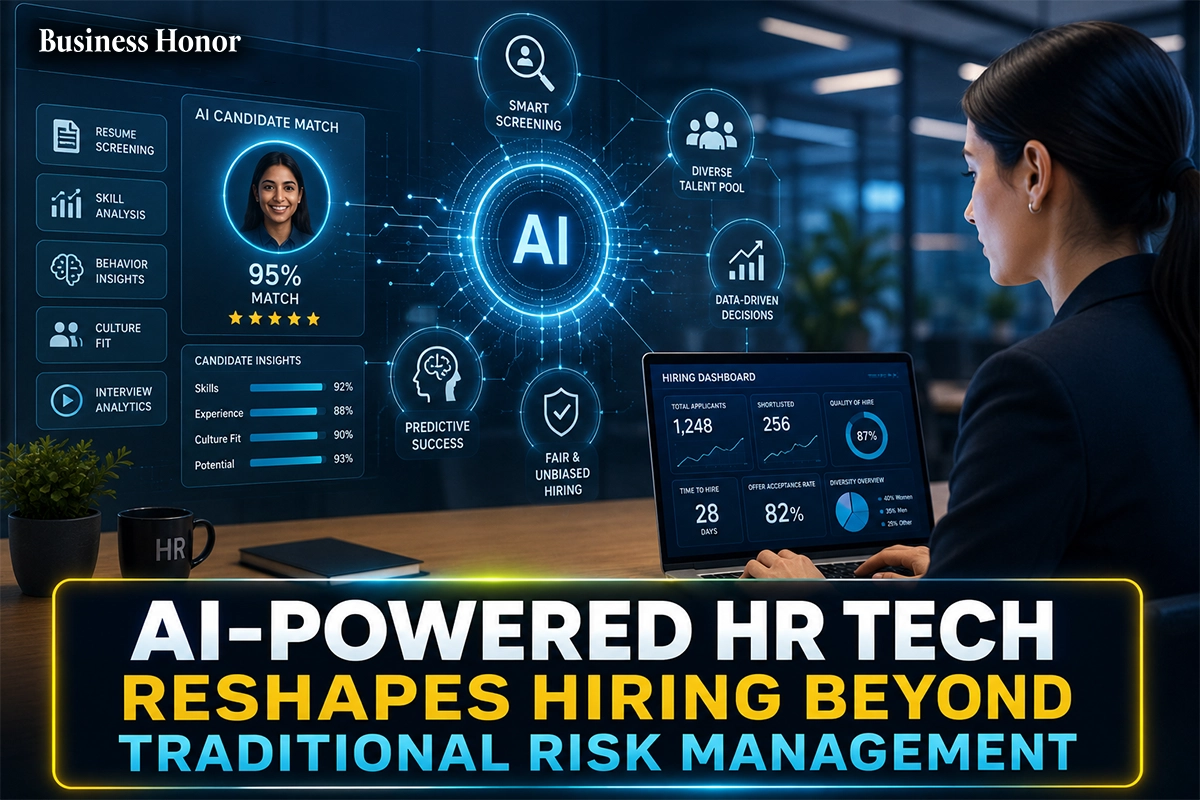
Prototype demonstrates how HR tech can prioritize candidate experience and career mapping over conventional sorting systems.
|
An experiment with artificial intelligence for a week by a software engineer is challenging some of the basic beliefs held about how technology in the human resources (HR) industry works. The AI project has led to the development of its first prototype, called Blueprint, showing that most software systems used for hiring were designed primarily to reduce risk to an employer from bad hires and not to help them understand people as individuals throughout their careers. There also seems to be a disconnect between predictions of AI-related job losses and the most recent patterns in employment and labor data. For example, many of the early estimates put forth predicted that AI would remove millions of coding jobs from around the world. However, based on an analysis conducted by Morgan Stanley as of this writing, it appears there will be an increasing number of skilled software development related jobs when comparing that to the past. Because with the help of AI tools, coding software will be created in less time and at a lower cost, thus increasing the total number of available customers looking for custom software solutions instead of reducing this customer base.
The same is true for HR. By using the same principles behind creating the prototype of Blueprint (i.e. using AI to create a prototype in 7 days), the creator of Blueprint developed a working prototype of hiring technology that is focused on how people actually work and build their careers, rather than simply reducing people to keywords, percentages, or static profile fields (the traditional approach). The prototype of Blueprint uses a career visualization tool that depicts careers as being fluid and provides a way to connect people with opportunities that reflect their work style and values. The representative stated, "Occupational data and classification frameworks represent professional value with a higher level of accuracy than a resume or general match score."
Beyond this one instance, the HR tech sector has been operating with internally focused priorities (placing little weight on the candidate experience) as a principle design problem for decades. Because of this enduring structural flaw, organizations’ systems have been designed to support organisational workflows and risk mitigation instead of how people really work, how people really learn, or how they really grow. With the introduction of AI-enhanced coding (sometimes referred to as 'vibe coding'), there is the potential to solve this problem more easily than ever before. When complex problems can be described in plain English and working prototypes can be created quickly, the gap between domain expertise and technical delivery will narrow significantly. This is an especially significant new opportunity for recruiters since they are already very familiar with the challenges associated with hiring, but traditionally have had little access to the technology required to deliver on those challenges. "Now an HR recruiter, operator or analyst can demonstrate what a better technology system will look like, instead of just requesting it," the developer said. This will change how recruiters are viewed from passive users of enterprise applications to proactive architects of workflow design.
Business Honor is of the view that Blueprint's emergence represents a fundamental shift in HR tech's design philosophy toward candidate-centric solutions.











.webp)

.webp)




.webp)

