
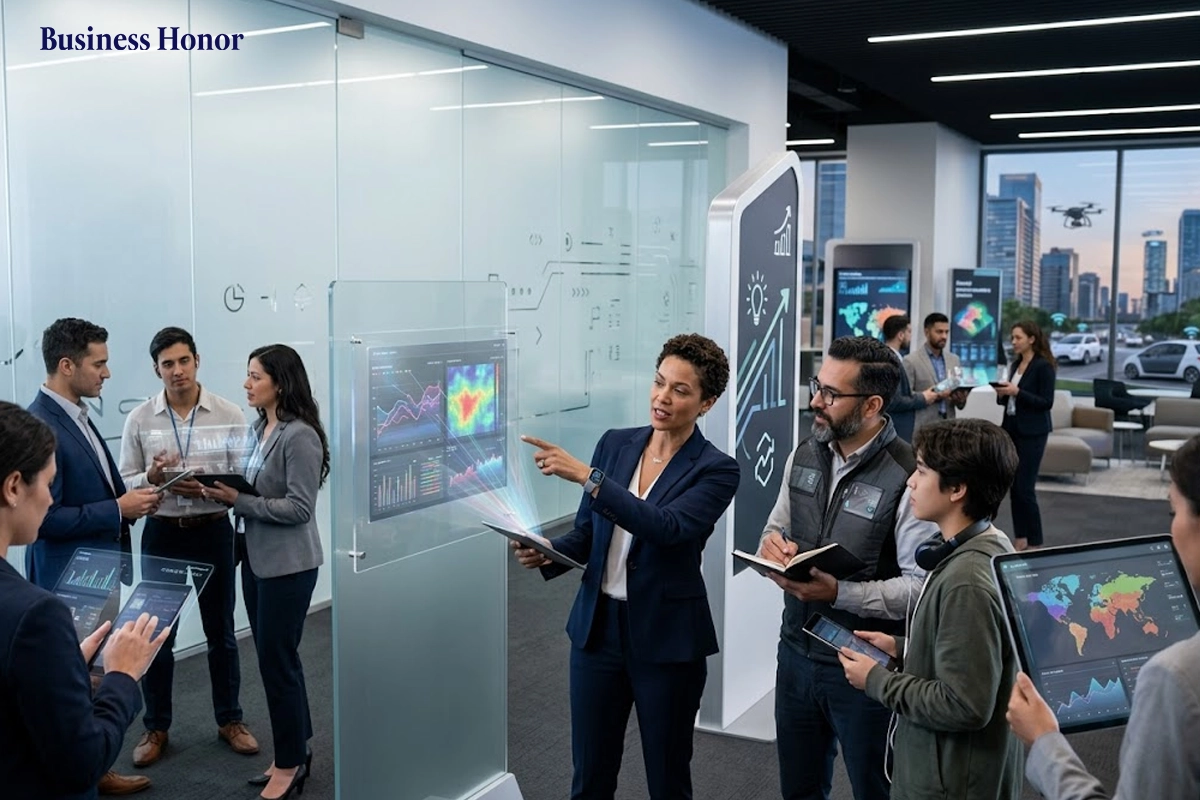
Traditional market barriers are falling as challenger brands in 2026 bypass massive competitor budgets to capture high-value customer segments.
For decades, market defense relied on a straightforward formula that is heavy advertising spend, total shelf control, and locked-in supply chains. When an industry leader dominated store shelves or enterprise procurement lists, smaller competitors were effectively shut out.
Today, that dynamic has completely shifted. Across technology, retail, and consumer products, brands disrupting established industries are steadily winning market share from legacy leaders. Instead of competing on sheer scale, these emerging challenger brands win through faster execution, transparent practices, and purpose-built products designed for specific customer needs.
Rather than spreading themselves thin, these new brands competing with big companies succeed by serving focused customer bases far better than legacy conglomerates can.
When focused teams take on corporate giants, the entire market moves. Business Honor examines the emerging brands to watch 2026 and how these brands challenging industry leaders are reshaping modern business through focus, execution, and trust.
The Artificial Intelligence Frontier: Enterprise Trust and Agent Workflows
The artificial intelligence market has shifted from basic model capabilities to specialized execution, governance, and workflow integration. Where traditional industry giants rely on broad mass appeal and ad-driven intermediaries, agile challengers win through hyper-focused utility and direct value delivery.
Anthropic
The competitive landscape between Anthropic and OpenAI or Google centers on corporate governance and reasoning depth. Led by Co-Founder and CEO Dario Amodei, Anthropic has prioritized enterprise safety, deterministic reliability, and complex problem solving over viral consumer utilities. Through its Claude suite, the company secures corporate contracts by addressing risk management and auditability requirements that risk-averse boards demand.
Anysphere (Cursor) & Cognition (Devin)
In software development, emerging challenger brands like Cursor and Devin are taking on established developer tools from GitHub and Microsoft. Led respectively by Michael Truell and Scott Wu, these companies build agent-first software engineering environments. Rather than offering basic inline code completion, their autonomous agents refactor full codebases, clear maintenance backlogs, and build software components directly from plain-language prompts.
Perplexity AI
Perplexity AI, under the leadership of Co-Founder and CEO Aravind Srinivas, addresses structural friction in search against Google. Traditional web search has grown increasingly cluttered with ad placements and search engine optimization fluff. Perplexity delivers direct, synthesized answers backed by inline citations, capturing professional knowledge workers who prioritize direct information retrieval over sponsored links.
“Historically, the concept of providing 10 blue links to deliver the right information was essentially a makeshift solution... The cardinal rule in academic research is to base your assertions on citable evidence rather than conjecture.” said Aravind Srinivas, Co-Founder & CEO, Perplexity AI
Enterprise Infrastructure: Modernizing Legacy Software
Enterprise software buyers are systematically replacing multi-year implementations and rigid vendor lock-in with modular, developer-friendly platforms.
Supabase & Neon
As brands challenging industry leaders, Supabase and Neon target cloud database incumbents like AWS RDS and Oracle. Led by Paul Copplestone at Supabase and Nikita Shamgunov at Neon, these open-source and serverless Postgres platforms focus on developer velocity, predictable cost structures, and instant scaling. They appeal directly to engineering teams seeking relief from complex cloud provisioning.
Rippling
Rippling, led by Co-Founder and CEO Parker Conrad, targets legacy human resources and enterprise planning suites like Workday, SAP, and ADP. Rather than forcing clients to manage disparate software tools across divisions, Rippling functions as an integrated employee operating system. The platform unifies payroll, hardware management, and application access, automating administrative workflows as soon as a new employee is onboarded.
Consumer Products & Retail: Community Culture over Mass Marketing
In physical retail and direct-to-consumer categories, emerging brands to watch 2026 are abandoning mass-market advertising in favor of cultural resonance and product transparency.
Bandit Running
Taking on global athletic giants Nike and Adidas, Brooklyn-based Bandit Running focuses on the growing global run club movement. Under Co-Founder and CEO Nick West, the company creates technical performance apparel designed by active runners. By relying on limited product drops and authentic community ties, Bandit achieves brand loyalty that traditional sports marketing rarely matches.
"Evolve Running follows us in every boardroom conversation. It means self-disruption in the name of doing things fresh, new, different, better... If we're going to build for the running community, we have to support the people who represent it best.” said Nick West, Co-Founder & CEO, Bandit Running
Lucy & Yak
Lucy & Yak, led by CEO Christopher Renwick and Co-Founder Lucy Greenwood, offers a direct alternative to fast-fashion leaders Zara and Shein. The company counters high-volume disposable apparel with circular product design, ethical manufacturing transparency, and trade-in programs that appeal to sustainability-minded consumers.
Botivo & TRIP
In the beverage sector, Botivo and TRIP compete against traditional spirits companies like Diageo and Pernod Ricard. Led by Botivo co-founders Imme Ermgassen and Sam Paget Steavenson alongside TRIP CEO Olivia Ferdi, these companies reframe non-alcoholic beverages as premium botanical choices focused on flavor complexity and stress management rather than simple alcohol substitutes.
Beauty & Clean Technology: Solving Functional Pain Points
When products solve practical end-user challenges rather than serving retail distribution goals, market adoption follows quickly. Modern market shifts reflect this evolution clearly across personal care, home appliances, and hardware distribution. In personal care, legacy liquid formulations packaged in single-use plastic bottles are giving way to solid, plastic-free concentrates. In appliances, high-voltage ranges requiring expensive home rewiring are being replaced by battery-buffered units that run on standard household outlets. Similarly, annual hardware upgrade cycles are losing ground to verified refurbished devices that extend component lifecycles.
Crown Affair & Ethique
Haircare incumbents like L'Oréal and Procter & Gamble face competition from specialized beauty platforms. Crown Affair, founded by CEO Dianna Cohen, treats scalp care with the intentionality of premium skincare routines. Concurrently, Ethique, founded by Brianne West, replaces plastic-bottled products with concentrated solid formulations, demonstrating that circular personal care can win market share without sacrificing quality.
Vacation®
Vacation® is led by Co-Founder and CEO Marty Bell, challenges sun care leaders Coppertone and Banana Boat. The company transforms sun protection from a routine utility into an engaging lifestyle brand by combining modern dermatological formulations with nostalgic 1980s resort branding.
Copper
In home appliances, Copper targets legacy range manufacturers like Whirlpool and GE. Led by Co-Founder and CEO Sam Calisch, the company addresses home electrification barriers by building high-performance induction stoves with internal battery systems. This design allows induction ranges to run on standard 120-volt outlets without requiring costly home electrical upgrades.
Back Market
Back Market, under Co-Founder and CEO Thibaud Hug de Larauze, challenges annual hardware release cycles from Apple and Samsung. By building a verified marketplace for refurbished technology, the platform offers consumers a practical, circular alternative to buying new hardware.
“Refurbished tech on Back Market meets standard customers can trust completely... 'End Fast Tech' which challenges the technology industry's culture of constant upgrades.” said Thibaud Hug de Larauze, Co-Founder & CEO, Back Market
Strategic Implications for Executives in 2026
Recent market shifts demonstrate that corporate scale alone cannot protect a company's market share. Market leaders lose ground when inflated margins and bloated product suites create friction for the end user.
In market after market, brands challenging industry leaders build trust by cutting out user friction, keeping pricing transparent, and focusing on actual product utility. Established leaders cannot count on store placement or traditional marketing to safeguard their turf. The advantage now belongs to companies that execute faster and deliver practical results.
Business Honor continues to track brands disrupting established industries as competition shifts from scale to speed, focus, and customer loyalty. As brands challenging industry leaders gain ground, traditional companies face a clear choice, which is to adapt faster, sharpen their strategy, or risk losing valuable market share to the emerging challenger brands setting the pace for the next phase of competition.






















.webp)

.webp)

.webp)


Comments
0 Comments