
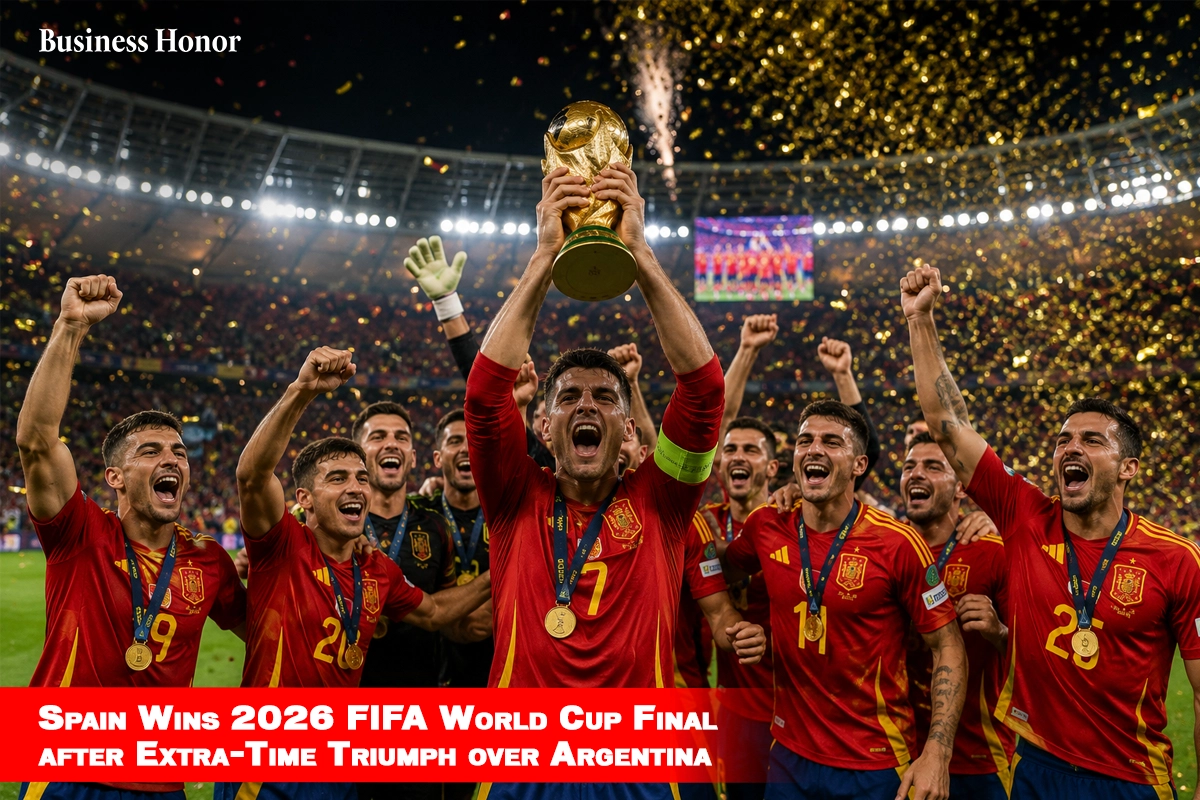
Spain claimed the 2026 World Cup final with an extra-time victory over Argentina, ending Lionel Messi's final World Cup campaign in a dramatic showdown.
|
Spain lifted their second FIFA World Cup title by beating Argentina 1-0 in a very close FIFA World Cup final, with the match-winning goal scored by Ferran Torres in extra time at MetLife Stadium. The eagerly anticipated Spain vs Argentina World Cup final analysis turned out to be a case of tactical discipline over offensive display, as Spain's tactics proved successful enough to crack the stubborn defense of the defending champions.
In the FIFA World Cup final, Spain took control of the ball possession from the get-go, constantly trying to break down the Argentine goal defended by Emiliano Martínez without giving too many chances to Argentina's attack. This constant offensive pressure led to the match-winning goal in extra time when Nico Williams nodded a cross from Pedro Porro to Ferran Torres for an easy tap-in goal. The result underlined how Spain won the 2026 FIFA World Cup through superior ball control, disciplined defending and consistent attacking pressure.
Most of Argentina's play revolved around Messi's inventive skills, yet the organization of the Spanish team's midfield and defense left Messi limited throughout the game. In the final World Cup clash between Spain and Argentina, the tactical struggle between the teams grew more and more one-sided, as Argentina failed to produce any good chances until the last minutes of extra time.
Although Argentina lost the match, their goalkeeper, Emiliano Martínez showed some of the best performances at the tournament, making great saves and holding out for quite some time before allowing a goal from Ferran Torres.
The team from Spain finished their superb performance by conceding just one goal in all eight games, while continuing their incredible streak without any losses. The tactical choices of the coach Luis de la Fuente, including rotation of players, were key to the success as Spain played with a great defense and technical skills.
For Argentina, the loss signified the last game in the FIFA World Cup for the legend Lionel Messi. Having assisted in eight goals for his country during the tournament, the player ended his amazing journey in the World Cup, having won the cup in 2022. Business Honor observes that Spain's triumph highlights how tactical discipline, squad depth, and long-term football development continue to shape sustained success on the world's biggest sporting stage.













.webp)

.webp)



.webp)


Comments
0 Comments