
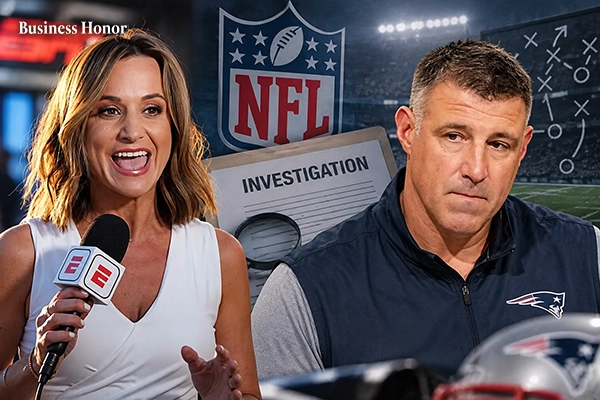
The Dianna Russini investigation found her relationship with Mike Vrabel breached The Athletic’s standards, despite finding no clear evidence of biased reporting.
-
Dianna Russini’s relationship with Mike Vrabel was found to violate The Athletic’s newsroom standards.
-
The Athletic’s investigation found no clear evidence that Russini deliberately favored Vrabel or his teams in her reporting.
-
Russini resigned from The Athletic on April 14 following the controversy over photos of her and Vrabel at an Arizona resort.
-
The five-month review examined 903 stories, 77 videos and more than 200 podcasts involving Russini’s work.
-
The case has renewed debate over NFL reporter ethics, source relationships and newsroom independence
The Dianna Russini investigation has reached a clear conclusion on one point: her relationship with New England Patriots coach Mike Vrabel violated The Athletic’s newsroom standards.
The Athletic published the findings after a five-month review of Russini’s work. Mike Semel, the outlet’s editorial director for standards and quality, said the review could not establish the exact nature of their relationship or find a clear link showing that Russini used her reporting to benefit Vrabel or his teams.
Still, Semel said the relationship created the appearance of a conflict of interest and should have been disclosed.
if there was no clear evidence of biased reporting, how serious was the breach?
The review began after photos showed Russini and Vrabel together at an Arizona resort around the time of the NFL owners meetings in March. Some images appeared to show the pair embracing and holding hands. Both said their interaction was platonic.
Russini later resigned from The Athletic on April 14. She had joined the publication in 2023 after nearly a decade at ESPN.
The Athletic investigation examined 903 stories, 77 videos and more than 200 podcast episodes involving her reporting. The review found that most of her work had little to do with Vrabel, the Patriots or players the team was pursuing.
That finding complicates the Dianna Russini scandal. The review did not accuse her of deliberately shaping coverage for Vrabel. Instead, it focused on how the relationship could affect readers’ trust in her independence.
Is public trust just as important as proving actual bias?
The NFL did not investigate Vrabel’s conduct. The coach later said the situation led to difficult conversations and that he would seek counseling.
For an NFL reporter, the case raises a wider issue about newsroom boundaries. Reporters depend on close relationships with sources, but those relationships can become a problem when the source is also a subject of coverage.
Could the Mike Vrabel controversy change how sports newsrooms handle personal relationships?
Business Honor believes the case shows why disclosure rules matter even when direct evidence of biased coverage is absent. The Mike Vrabel controversy may fade from headlines, but the underlying question will remain: where should a newsroom draw the line between access and independence?





































.webp)

.webp)



.webp)



Comments
0 Comments