
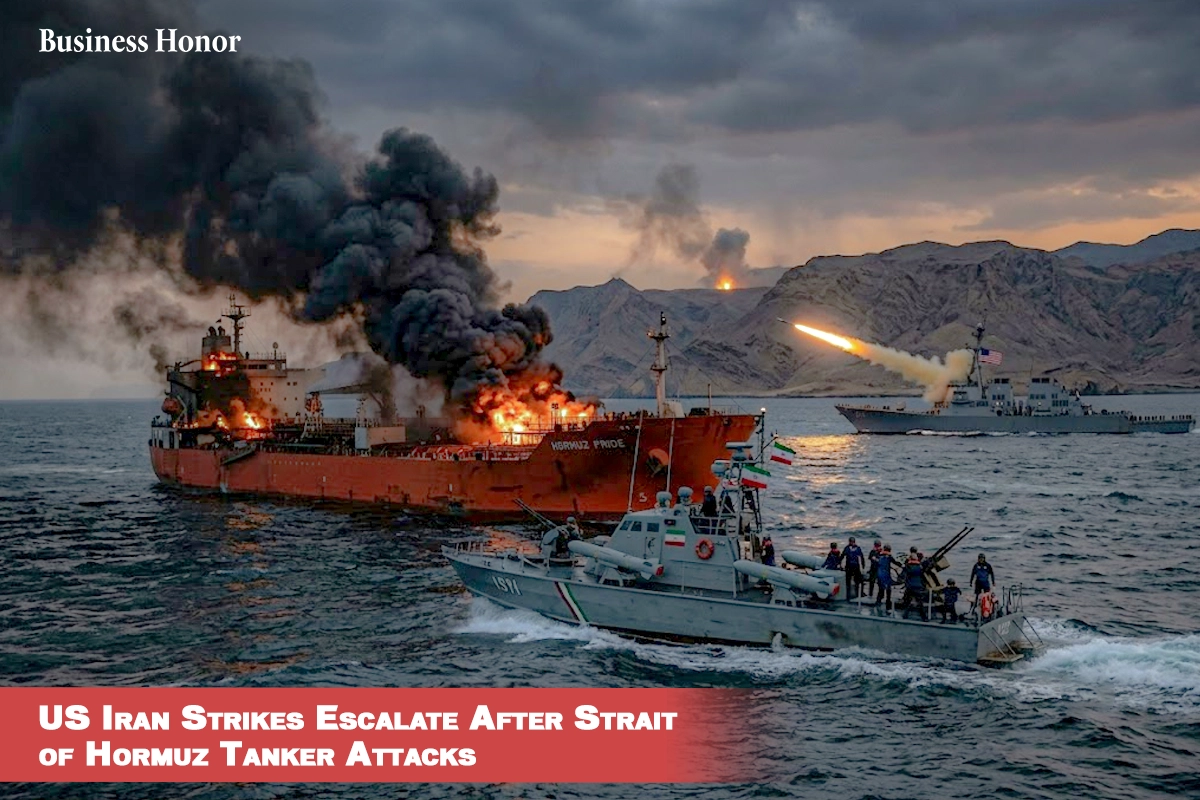
US Iran strikes intensified after tanker attacks in the Strait of Hormuz, prompting military retaliation, regional security concerns and renewed fears over global energy supplies.
|
The attacks on several oil tankers in the Strait of Hormuz marked the rise in US-Iran tensions, giving rise to yet another military showdown in the Gulf area. The recent events have increased worries about the Strait of Hormuz oil shipping crisis and the broader Middle East maritime security tensions, with the international markets watching closely.
As a result of attacks on three commercial tankers, the US Central Command declared the launching of attacks on over 80 targets linked to Iran. While Iran has not admitted its involvement in those incidents, it later announced the launch of missiles and drones at U.S. military bases in Bahrain and Kuwait, which has become another stage of the conflict in US-Iranian strikes.
According to NATO Secretary General Mark Rutte, the response of the U.S. military has been necessary because attacks on commercial shipping tankers contradicted the recently agreed-upon ceasefire agreement. On the other hand, Iran has accused Washington of violating last month's memorandum of understanding regarding oil sanctions and military attacks.
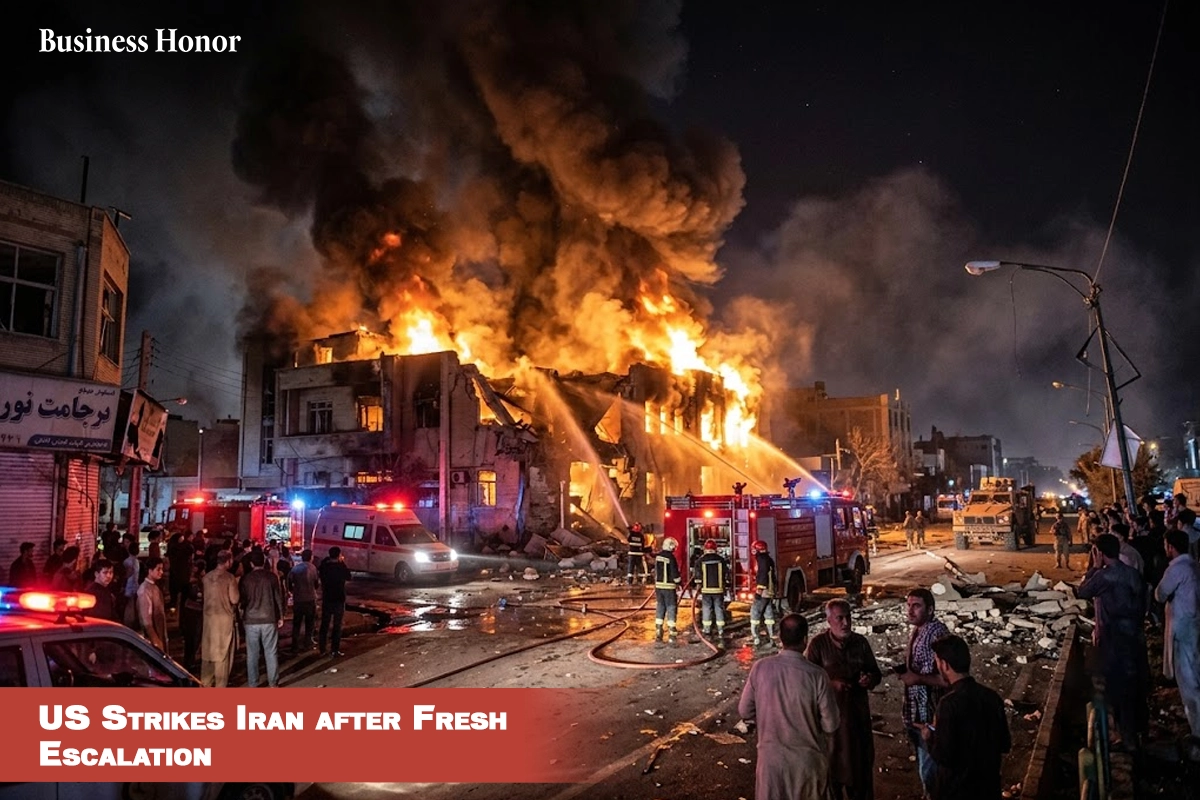
The Iranian state press reported that the U.S. air strikes hit targets in Qeshm Island, Bandar Abbas, and Sirik, resulting in injuries to several individuals due to falling shrapnel. According to Iran's Islamic Revolutionary Guard Corps, the country responded to these strikes with missiles and drones at 85 U.S. military sites in Bahrain and Kuwait.
CENTCOM reported that not only missile sites and command centers but also about 60 small attack boats were destroyed for the sake of protecting international shipping corridors. The Pentagon called the whole operation a retaliatory measure on behalf of the USA regarding attacks on merchant ships sailing along one of the busiest trade marine routes in the world.
The situation became even tenser in the region after Qatar and Saudi Arabia accused Iran of targeting their oil tankers transiting close to the Strait of Hormuz. However, Iran rejected these accusations and emphasized that it is still committed to maintaining navigation safety despite some vessels violating the procedures of maritime coordination.
Despite all these military measures, U.S. officials noted that negotiations with Iran continued through the memorandum signed last month. Business Honor believes sustained diplomacy, secure maritime trade routes and regional cooperation remain essential to protecting global energy markets and preventing further escalation across the Gulf.

















.webp)


Comments
0 Comments