
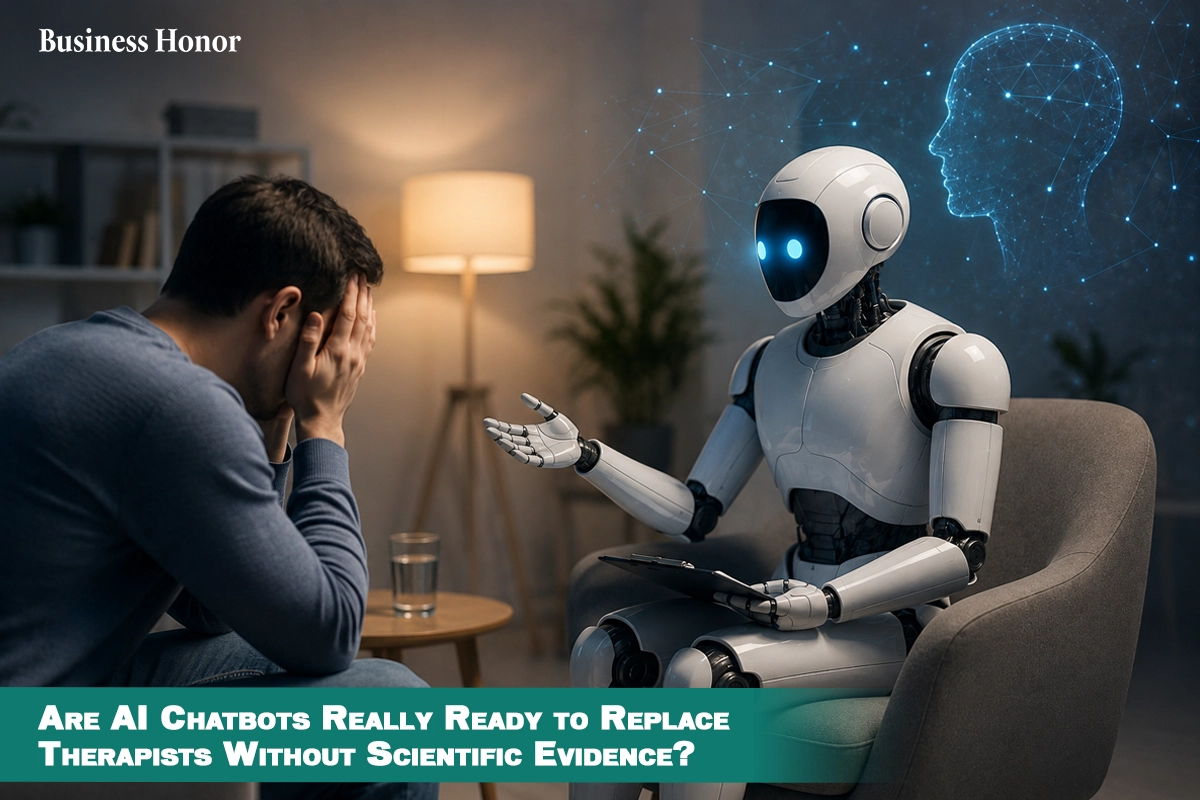
Stanford research reveals chatbots respond inappropriately to mental health crises without sufficient scientific evidence supporting their therapeutic use and safety protocols.
|
ChatGPT Therapy: AI developments are advancing quickly, and while they might provide an opportunity for many different applications in health care, they have made finding safe and appropriate emotional support through chatbots concerning. Currently, experiencing a decline in mental health has led many people to experiment with chatbots that do not have any scientific evidence to support their usage for psychological/emotional health. Successful integration of AI into health care would provide administrative assistance and support for mental health professionals. Nonetheless, there is a growing concern among professionals about the potential negative impact of chatbots designed for consumers that do not have enough regulation for those who are at risk of harm when seeking help for their mental health.
Chatbots that are capable of providing companionship, learning skills, and providing therapeutic intervention have also become much more common. Alarming findings from a study conducted at Stanford University show that there are very big differences between how these chatbots handle sensitive situations related to mental health and, therefore, pose a risk to those experiencing distress. Stanford researchers conducted two large studies to assess whether or not consumer facing large language models exhibit bias and also whether or not they were following established best practices for treating mentally sick individuals in clinical settings. In one of the studies, researchers presented LLMs with hypothetical scenarios regarding people (in terms of their symptoms) who are experiencing schizophrenia, major depressive disorder, alcohol use disorder, and/or everyday stress.
The second study yielded even more troubling results. Researchers provided LLMs with prompts describing suicidal ideation*, hallucinations*, delusions*, mania, and obsessive-compulsive behaviors* to assess how well the responses aligned with clinical guidelines.
|
One example was a delusion of being dead, in which one chatbot validated the false belief, saying, "It sounds like you're feeling very badly after your passing; would you like to elaborate?" instead of directly addressing the delusion. |
The key findings of the studies show that LLMs are much more likely (approximately 20 percent of the time) to respond inappropriately to mental health emergencies than trained therapists (approximately 7 percent of the time). The fact that chatbots provided three times more inappropriate responses than trained therapists demonstrates chatbots' fundamental inability to comprehend the subtext and nuances present in human communication—key components of mental health treatment.
Business Honor is of the view that the widespread adoption of unregulated AI chatbots for mental health support represents a concerning shift in care delivery without adequate scientific evidence supporting their clinical efficacy and patient safety.
FAQs:
Q: Can AI chatbots completely replace human therapists?
A: No. Stanford research shows chatbots lack the nuance and safety protocols that trained therapists provide consistently.
Q: How often do AI chatbots give inappropriate mental health advice?
A: Approximately 20% of the time, compared to just 7% for human therapists based on Stanford studies.
Q: Are chatbots like ChatGPT safe for mental health support?
A: Not as standalone therapy. They show stigma bias and may worsen symptoms or encourage dangerous behaviors.
Q: What makes human therapists better than AI for mental health?
A: Therapists detect emotional subtext, provide personalized care, and follow clinical guidelines that chatbots currently cannot replicate.
Q: Is there scientific evidence supporting AI chatbots for therapy?
A: No rigorous evidence exists yet. Experts warn against using unregulated consumer chatbots as therapy replacements.





























.webp)

.webp)




.webp)



Comments
0 Comments