
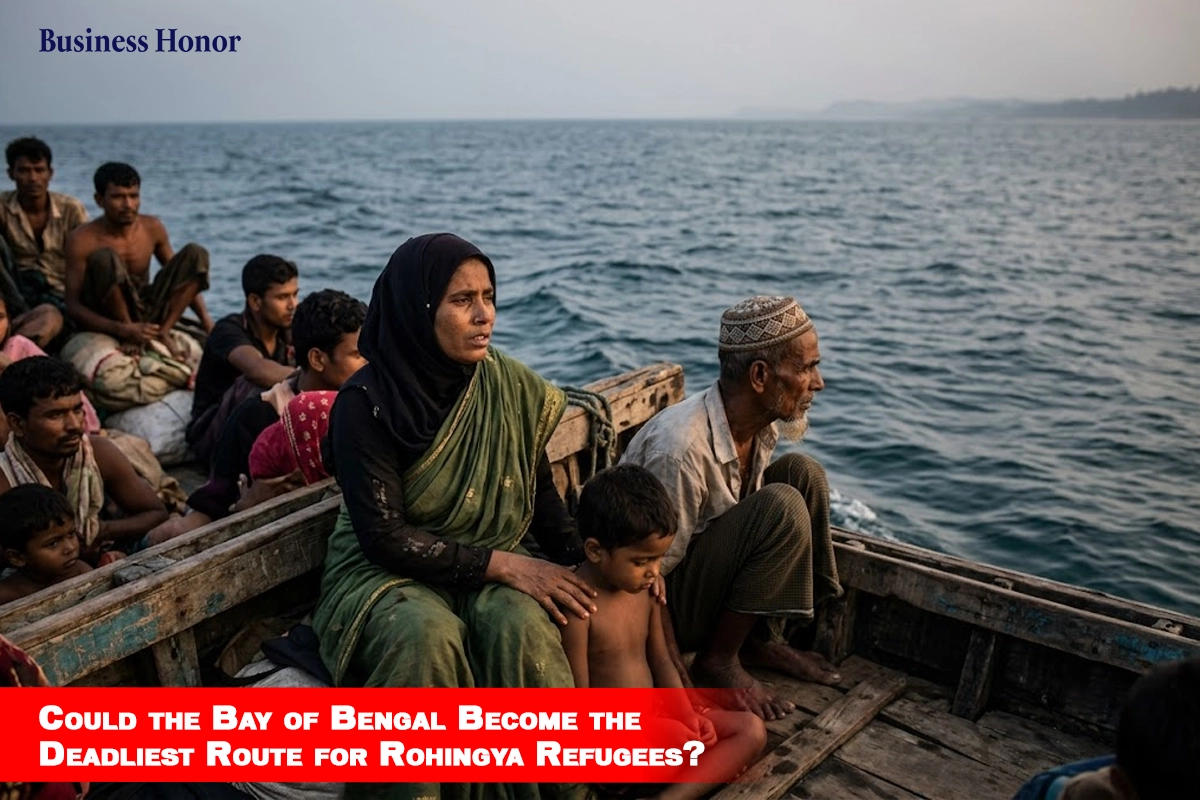
The disappearance of two refugee boats has intensified concerns over the worsening Rohingya humanitarian crisis in the Bay of Bengal.
|
More than 500 Rohingya refugees are feared dead after two overcrowded boats carrying an estimated 530 asylum seekers disappeared in the Bay of Bengal, in what is said to be one of the most tragic cases of the Myanmar Rohingya refugee crisis of 2026. According to reports, the boats left Myanmar's war-torn Rakhine State on June 29 and have had no communication since then; hence, there are speculations that the two boats sank due to the harsh monsoon.
The incident has attracted worldwide attention amid the Rohingya refugee boats missing in the Bay of Bengal, as human rights activists have found out that the overcrowded fishing boats had taken the refugees towards Malaysia via human trafficking networks from Myanmar to Malaysia. It is suspected that poor weather, overcrowded boats, and faulty engines led to this tragedy.
Researchers at the Arakan Project have found that both boats departed on the same day, although there were minimal communication reports from Rakhine State, where fighting between Myanmar's army and the Arakan Army has led to the isolation of communities. Reports of numerous deaths found near the coasts of Bangladesh and southern Myanmar have made people increasingly worried about how more than 500 Rohingya are believed to have died at sea.
Another example of the deteriorating humanitarian condition for the Rohingya communities is the Bay of Bengal refugee boat disaster. There are more than one million refugees in overcrowded camps in Bangladesh, while almost 600,000 still live in Myanmar in conditions of insecurity and displacement without access to necessities. With little choice available for migration through legal routes, Rohingya refugees missing after fleeing Myanmar wanted to reach Malaysia, where there exists a thriving community of Rohingya people.
Although the United Nations has constantly asked the regional government to set up safe migration routes and increase the security of refugees, the increasing number of border restrictions and ongoing conflict have families to rely on dangerous smuggling networks and life-threatening sea crossings. Business Honor notes that the disappearance of hundreds of Rohingya asylum seekers reflects the urgent need for coordinated international action against human trafficking and forced migration.





















.webp)


Comments
2 Comments