
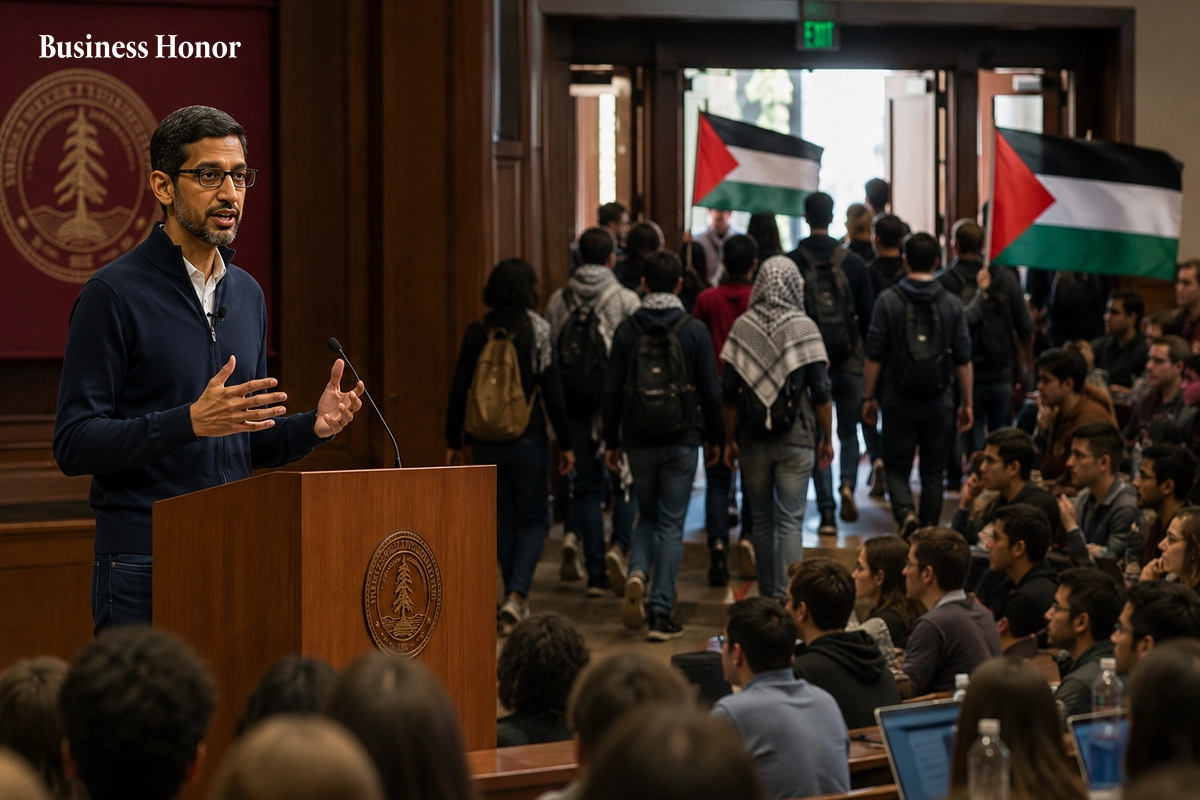
Sundar Pichai faces major walkout at Stanford as students protest Google's controversial Israeli government contract involvement.
|
The Stanford University commencement ceremony for 2026 became the site of a major student protest as Google CEO Sundar Pichai gave his keynote speech. A little over 100 students got up from their seats at Stanford Stadium after Pichai walked up to the podium, left to a coordinated protest, and shouted “Free, Free Palestine” as they exited the stadium. This was a major disruption to what is usually a celebratory event for graduates and their families. The protest was based on Google's involvement in Project Nimbus - a $1.2 billion cloud and artificial intelligence contracting project with Amazon, two of the largest tech companies in the world. Both were awarded this contract by the Israeli government, and student activists believe that this project directly supports the Israeli defense during the continuing fight in Gaza. The walkout was organized by Stanford Students for Justice in Palestine, who announced their plans for this protest publicly weeks before the commencement ceremony, giving participants time to organize and prepare for the walk out. Pichai appeared to have taken extra time to prepare for the speech.
In his speech, Google CEO Sundar Pichai made a conscious decision to avoid mentioning artificial intelligence, in stark contrast to recent technology executives at graduation ceremonies, who received boos and criticism for their AI-related comments. This indicates the disconnect between Pichai and the significant portion of Stanford's student body who hold grievances regarding Google's business practices. The lack of student representation at these types of events raises broader concerns about corporate partnership and government contracting complicity in geopolitical issues. Project Nimbus, the cloud computing and direct data pipeline project between Google and Amazon, has become increasingly controversial among activist groups, who claim that Google and Amazon are providing the technological infrastructure necessary for surveillance and military activities. The presence of Project Nimbus at other universities and the protests against Google from their own employees point to ethical questions regarding Google's involvement with the project. The students attending are not the only ones who appreciate having a voice. The vast majority of the attendees participated in enough ways to include their dissenting opinions while also maintaining their level of respect for the students who were going to receive their degrees and all that have previously received their degrees.
The collective manner in which the students left shows how deeply concerned Stanford's activist community has become about these issues. Over the past several years, graduation ceremonies have become a venue for political expression through protest by students who are trying to raise awareness about the issues they care about. The Stanford walkout is an example of this trend where corporate executives, regardless of how diligently they may prepare their speeches, may find themselves on the receiving end of student activism. The protest posed a continuing challenge to the reputation of Google and Pichai's ability to address issues of international business practices and ethically conduct business relationships. Regardless of how publicly the ceremony continued after the incident, the message is that a significant number of students in the graduating class at Stanford are very concerned with corporate accountability with regard to supporting international conflicts.
Business Honor is of the view that Sundar Pichai's commencement appearance represents a significant reputational challenge for Google's corporate positioning.














.webp)

.webp)




.webp)

