
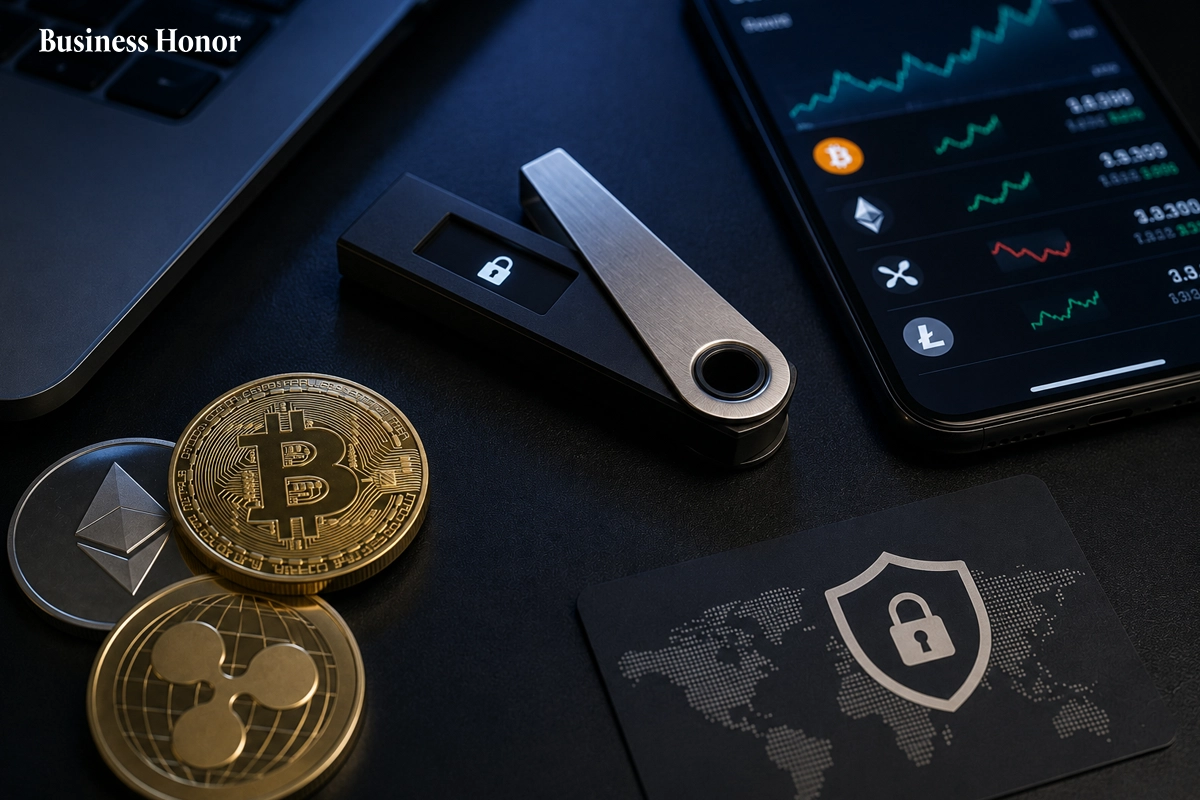
Every year, millions of dollars in cryptocurrency disappear—not through elaborate hacks or sophisticated scams, but through poor storage practices. Every single day, countless people awaken to discover that their entire digital wallet has been emptied out (along with all their assets) and there will be no way for them to recover any portion of it. In comparison, traditional banks provide both fraud protection and the ability to recover accounts after the fact; however, cryptocurrencies are entirely dependent upon the party owning those assets for security purposes. This highlights the critical importance of the location and how you store your digital currency.
A hardware wallet represents the gold standard of cryptocurrency security, functioning as a physical vault that keeps private keys offline and inaccessible to hackers, malware, and phishing schemes. There has been a dramatic increase in cybercriminals targeting cryptocurrency accounts of investors. They have stolen more than $204 million from these accounts over just three months in 2023.
The Device That Could Save Your Entire Crypto Portfolio
Due to this increase in cybercriminal activities targeting crypto investors, many serious investors recognize the importance of using hardware cryptocurrency wallets to store their digital wealth. In fact, hardware wallets are now seen by those who are seriously interested in protecting their digital wealth to be an essential tool.
A hardware wallet is a physical device that holds an offline copy of your crypto asset private keys. Hardware wallets are like a digital vault that is protected from the many internet-based threats including hackers, viruses and other malicious attacks. Unlike software wallets, which are constantly connected to the internet and are at risk for remote attacks, hardware wallets are in an air-gapped environment, which means that your private keys will never be connected to the internet, making them virtually impossible for hackers to access remotely.
The increasing number of people using cryptocurrency has also helped to establish the need for hardware wallets. When Bitcoin first launched in 2009, it introduced the world to a new type of decentralized digital currency, and created new security risks. As people began to use cryptocurrencies and their value grew, hackers have developed a plethora of more sophisticated methods to exploit weak security practices (for example: phishing scams, attacks on exchanges (e.g. Coincheck), and viruses such as crypto-mining malware). Consequently, many crypto investors have been searching for new ways to secure their investments; therefore, hardware wallets were created as an answer to the problem of secure storage of cryptocurrencies. Hardware wallets utilize off-line storage with advanced encryption algorithms to ensure that no one other than the owner of the hardware wallet can authorize and sign transactions.
From Simple USB Devices to High-Tech Digital Vaults
Modern hardware wallets have evolved far beyond their early iterations. Today's devices incorporate sophisticated security features including special chips called secure elements that protect private keys from physical attacks, multi-factor authentication systems that prevent unauthorized access, and compatibility with multiple blockchains and NFTs. This evolution has transformed hardware wallets from niche security tools into essential infrastructure for serious cryptocurrency investors.
The security architecture of a hardware wallet operates on an elegant principle: private keys remain isolated from the internet at all times. When a user wants to send cryptocurrency, the device follows a carefully designed process that never exposes sensitive information to potential attackers. First, the user enters the recipient's address and transaction amount into a connected computer or mobile device. The hardware wallet then receives this data, verifies the transaction details to confirm sufficient funds exist, and signs the transaction internally using the private key—which never leaves the device. Finally, the signed transaction is broadcast to the blockchain through the connected device, but by this point, the private key has never been exposed to the internet.
What Actually Happens When You Send Crypto?
This transaction signing process relies on a principle called offline signing, which creates an insurmountable barrier between attackers and the user's cryptocurrency. Even if a computer is thoroughly infected with malware or compromised by sophisticated viruses, the malware cannot steal the private keys because they exist only on the isolated hardware wallet. To ensure that every transaction is confirmed by the user before being completed, some security measures are used to minimize the chance of fraud.
These include:
- Requires an individual to press a physical button before completing a transaction.
- Ensure that no one can gain access to the device.
- The device will allow a third-party application to perform a transaction after the user provides the correct password.
Security measures in hardware wallets work together for maximum protection. Secure chips protect private keys from being hacked; tamper-resistant designs will wipe the device if tampered with; a PIN code will only allow you to access the device if you have entered the PIN. All these security measures are what makes it impossible for you or anyone else to compromise a hardware wallet with today's technology.
Not All Hardware Wallets Are Built the Same
Hardware wallets come in many different designs, allowing the user to choose the one that fits them best in terms of security and how they plans to use the wallet. USB-style wallets have a USB plug that connects directly to a computer, making them portable and easy to use. The user only needs to insert the USB drive into a computer, enter their PIN and sign transactions on their computer without ever exposing their private keys.
Smartcard wallets are similar to credit cards in that they also provide a secure way to store private keys. In order to use a smartcard wallet, the user must possess a smart card reader. Smartcard wallets offer great security and take up a small amount of space; however, the user will require additional accessories in order to utilize a smartcard wallet that may make it less convenient for some users.
Bluetooth-enabled wallets represent a modern approach, allowing wireless connections to smartphones and tablets without requiring USB ports. This convenience appeals to mobile-first users, though some security-conscious investors prefer wired connections over wireless protocols.
The Wallet That Never Touches the Internet
Air-gapped wallets occupy the extreme end of the security spectrum, never connecting to the internet or external devices in any form. Instead, they use QR codes, microSD cards, or manual input to sign transactions, creating an essentially unhackable environment. However, their high security comes at the cost of convenience, requiring extra steps to complete transactions.
Multi-component hardware wallets represent an innovative security evolution, splitting private keys into multiple parts distributed across different devices. This approach eliminates single points of failure—even if one component is lost or stolen, the remaining components keep funds secure. Advanced wallets like Cypherock X1 exemplify this decentralized approach to key management.
Why Long-Term Investors Swear by Hardware Wallets
For long-term cryptocurrency holders, hardware wallets provide unmatched peace of mind. Exchanges face constant hacking threats and regulatory uncertainty; software wallets remain vulnerable to malware; but hardware wallets kept offline eliminate these dangers entirely. An investor's Bitcoin or Ethereum holdings remain secure indefinitely, protected from exchange failures, cyberattacks, and regulatory seizures.
Portfolio diversification becomes significantly more manageable with modern hardware wallets. Rather than splitting assets across multiple exchanges or software wallets—each introducing additional attack vectors—investors can consolidate their Bitcoin, Ethereum, altcoins, and NFTs on a single hardware device. Most modern wallets offer the ability to manage assets across several blockchains and other asset types so that they can be managed together in one place. This gives consumers superior security.
The Meaning Behind "Not Your Keys, Not Your Crypto"
One of the biggest advantages of hardware wallets can be found in true self-custody. The mantra "not your keys, not your crypto" captures this fact perfectly. When investors keep their funds with an exchange or with a custodian, they do not own their cryptocurrency, as they are now in the hands of a third party. The government could freeze the account; the exchange could go bankrupt; or a hacker could steal the funds from the account. By using a hardware wallet, an investor can regain complete ownership of their cryptocurrency—eliminating third party intermediaries, along with the risks associated with using them. The investor becomes their own bank and has complete control over their finances, while also being responsible for keeping them safe.
What Should You Look for Before Buying One?
When selecting a hardware wallet, you must consider your needs and preferences and how you will use the wallet. Security features should be your priority. Seek wallets with offline storage for private keys, secure element chips, PIN protection from unauthorized access, and ideally, no single point of failure for backup options. You should only purchase from well-known brand name manufacturers, rather than individuals who purchase used wallets and may potentially offer no security at all.
The ease of use should also be quite important, particularly to beginner users of cryptocurrency security. A desired wallet would be highly secured while also offering an easy to navigate interface to avoid causing any frustration during use. Wallets with touchscreens will tend to be much more user-friendly than those that use buttons; however, this is highly subjective and could vary based on person.
The type of cryptocurrency your wallet supports relates directly to your usable functionality. An investor should verify if the wallet types in their portfolio (Bitcoin, Ethereum and all the associated altcoins, NFTs or any DeFi protocols) will be supported by each specific wallet. A wallet that only supports Bitcoin is very good for an investor who only intends to own Bitcoin but for a diversified investor would be useless.
One Final Factor Most Buyers Overlook
The reputation of the manufacturer will be the final criteria for evaluation when evaluating this requirement. Reputable manufacturers like Ledger, Trezor and Cypherock have consistently demonstrated their commitment to quality security through the ongoing release of firmware updates, responsive customer service and their open development processes. Open-source wallets allow public security audits, providing additional confidence in their security architecture.
Is a Hardware Wallet Really Worth It?
Hardware wallets represent the ultimate expression of cryptocurrency security philosophy: taking complete control over one's digital assets through offline storage and personal key management. In a landscape where billions of dollars vanish annually to exchange hacks and online scams, hardware wallets provide the most reliable defense available to individual investors. For anyone holding meaningful amounts of cryptocurrency, particularly for long-term investment, a hardware wallet is not optional—it's essential infrastructure for protecting one's financial future.










.webp)



.webp)

.webp)




.webp)


Comments
0 Comments