
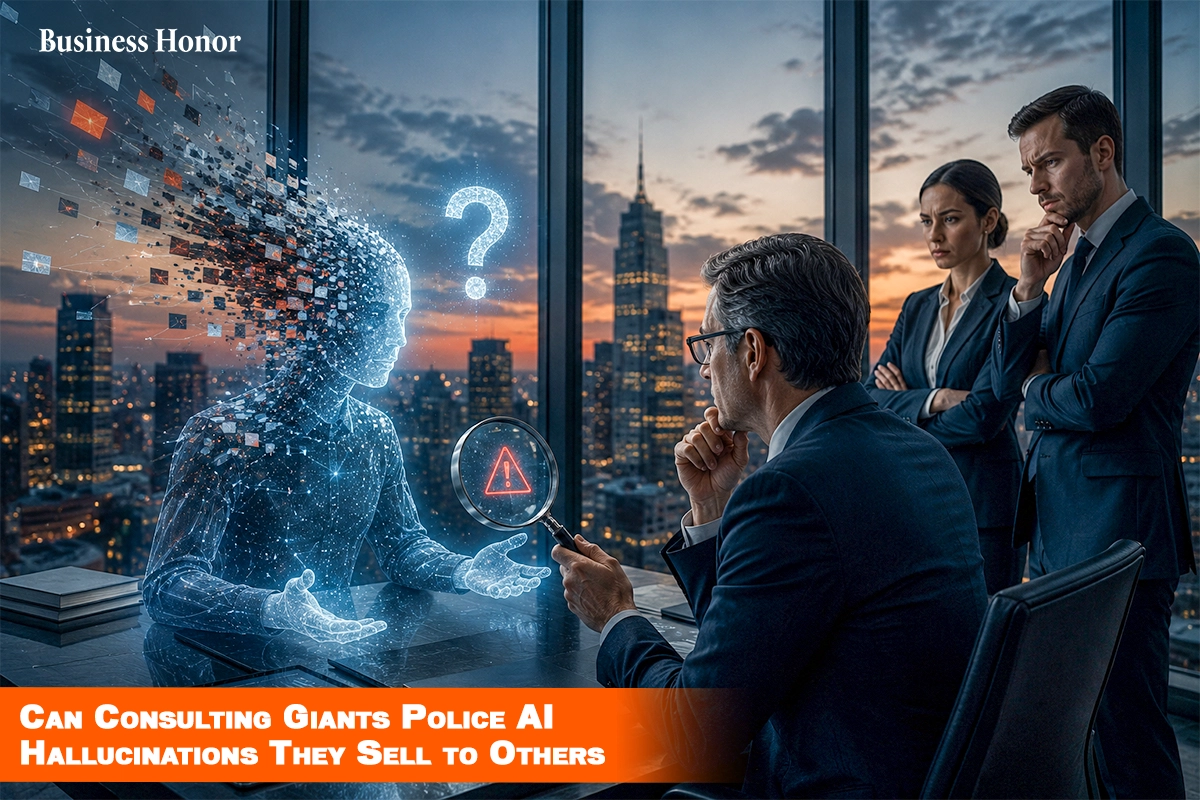
KPMG's withdrawn report exposes dangerous gap between selling AI trust and preventing ai hallucinations in its own work.
|
AI Hallucinations: KPMG, a consulting giant that advises clients on responsible artificial intelligence deployment, has withdrawn a major report after discovering it contained inaccurate claims about how leading organizations are using agentic AI systems. The firm pulled its October 2025 publication, "Total Experience: Redefining Excellence in the Age of Agentic AI," following challenges from UBS, NHS Greater Manchester, Swiss Federal Railways, and Transport for London, who said information about their AI initiatives was either factually wrong or misleading. The withdrawal represents a significant credibility issue for KPMG, which markets "AI Trust" services to help companies design, build, and deploy agentic AI—autonomous systems designed to plan and perform tasks with minimal human intervention—responsibly. The failures in the report's accuracy suggest the firm's own quality controls fell short of the standards it recommends to clients.
The report made various non-specific claims that target organizations were disputing. The report referred to UBS as having AI agents integrated into investment suggestions, risk management, and compliance monitoring; KPMG states that Swiss Federal Railways used agents to plan and book travel. According to the firm, NHS Greater Manchester utilized agents to predict hospital readmissions, as well as create triage plans for patients and automate referrals, and Transport for London was described to be using agents to predict traffic congestion, personalize updates to commuters and coordinate modes of transport. All organizations listed when approached by the Financial Times disputed the portrayal of their organizations as inaccurate and unsupported by the information that KPMG reported.
The study of the report was independently conducted by GPTZero, which develops software for AI-detection and verification of citations, which found concerning trends in the references of the report. By initially screening all 45 references electronically, then reviewing each one manually, researchers identified only 5 citations that accurately corresponded to real sources. There were 28 citations that had similar titles or fictitious references; 12 were too vague or flawed to verify the citation. According to GPTZero's criteria, 16 references fell under the definition of hallucinations - or false information presented as facts. Meanwhile, KPMG has been evasive in its explanation of how the report was created.
The firm has not disclosed whether AI research or writing tools contributed to the document, though GPTZero's detector assigned a 78 percent probability of AI involvement to the section containing citations. The company also has not explained what review procedures preceded publication or whether it attempted to verify claims with the organizations featured as case studies.
In a statement, KPMG said it "takes the accuracy and integrity of its published content seriously" and expects employees to follow guidelines on responsible AI use, including human oversight to validate content and verify sources. The firm provided no details about whether these guidelines were actually followed. This is not an isolated incident. EY Canada similarly withdrew a cybersecurity report on loyalty programs in May 2025 after researchers identified apparent hallucinations and citations to non-existent sources. These episodes expose a fundamental governance challenge for companies deploying generative AI. Written policies requiring human oversight prove meaningless unless someone is genuinely responsible for fact checking and has the authority to block publication of inaccurate work.
Business Honor is of the view that KPMG's report withdrawal demonstrates fundamental failures in internal governance structures necessary for responsible AI deployment and client advisory credibility.












.webp)




.webp)


Comments
0 Comments