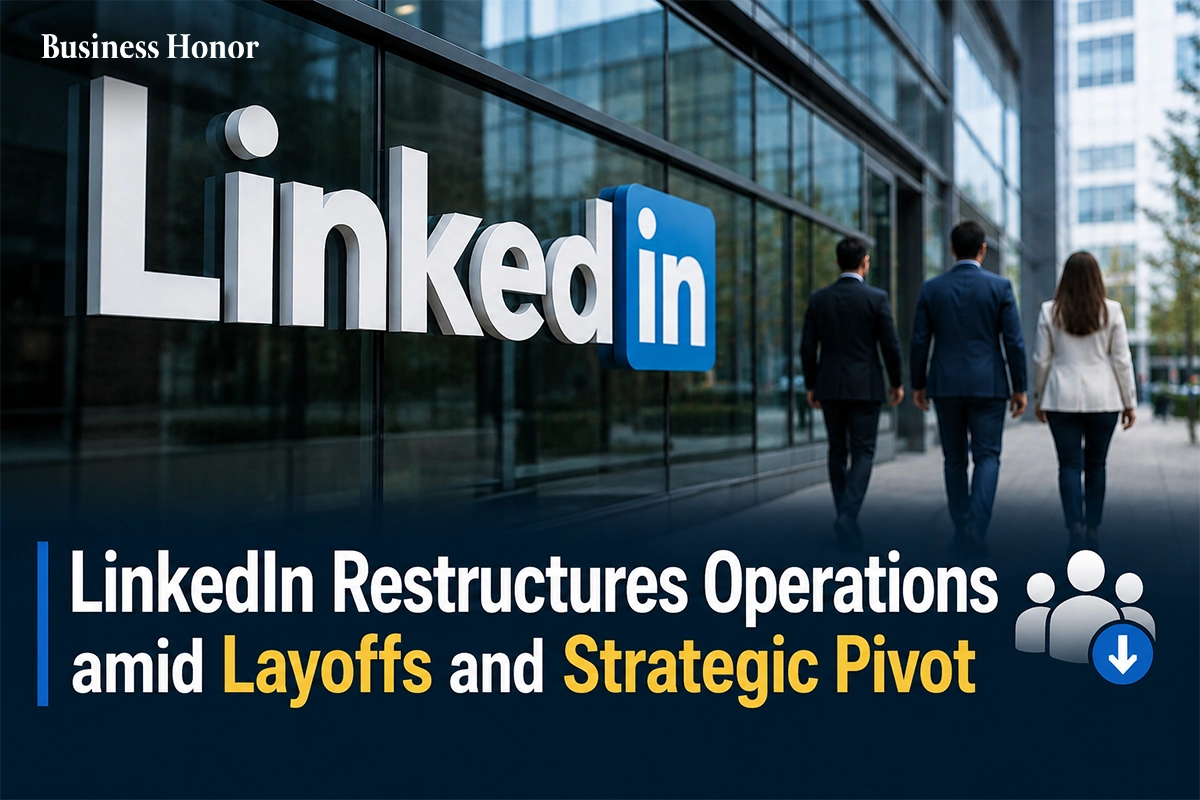
LinkedIn Restructures workforce and operations to accelerate product innovation, centralizing design resources and shifting content monetization strategy globally.
|
According to one of LinkedIn's executives, the company has made some major changes to its operations and cut more employees as part of its product development strategy. As LinkedIn's chief product officer, Hari Srinivasan described the company's recent changes in a memo to the entire LinkedIn workforce after CEO Daniel Shapero announced on Wednesday that they would be making major changes to LinkedIn's operations.
What is driving LinkedIn’s latest restructuring and job cuts?
One of the most significant LinkedIn restructures to take place is to make their product development process more efficient and to cut costs by reorganizing the manner in which they design and research new products. LinkedIn is now restructuring how the company will develop products by moving towards "more future-focused" working teams that have minimal or no layers of management and use artificial intelligence tools to rapidly go through the development cycle. LinkedIn layoffs are also becoming real alongside operational restructuring to boost organizational agility and efficiency.
Hari Srinivasan stated in his memo to all employees, "The changes we're making in our product organization are about creating more agile teams in our product organization." This is indicative of the overall transformation LinkedIn is making to operate differently in a restructuring environment during a time of workforce downsizing. In addition to creating more agile working teams, LinkedIn is changing how they will be supporting their product development through how they will design and research new products.
How are “agile teams” and AI changing LinkedIn’s product development model?
To consolidate all user experience design resources into a central design resource pool for LinkedIn is an important step in order to maximize efficiency by allowing companies to manage and execute the basic level of design work within the respective product teams, while allowing an expert user experience researcher to focus on smaller amounts of more complex type projects. This will enable the distribution of responsibilities to ensure that everyone can continue to produce great strategic design work while still maintaining a consistent level of quality and sophistication.
Furthermore, as part of this transition, LinkedIn is completely revamping its learning content strategy. Instead of producing education content internally on a large scale through the company’s internal team, LinkedIn will begin moving toward a freelance model for independent educators. This will enable educators to produce, distribute and monetize their education directly through the LinkedIn platform. Last year, LinkedIn introduced their first monetization strategies for creators through allowing creators to create revenue from their video content; The transition to this new model for producing education content continues the expansion of monetization opportunities.
Why is LinkedIn shifting from in-house content to freelance educators?
As Hari Srinivasan describes it, the previous in-house model for producing content is no longer responsive to changing learner needs or economic efficiency in producing the content desired. The new direction will allow independent educators to build their own professional identity across multiple LinkedIn applications while licensing and monetizing their educational materials on their own. However, engaging the internal content management team to build “high-impact, distinctive education experiences that are most effectively built in the company,” will also allow the LinkedIn platform to remain current with relevant and diverse content, as well as continue to decrease the cost of production.
How does LinkedIn’s restructuring reflect broader Microsoft strategy?
This reorganization is in line with Microsoft's broader company-wide strategic direction as well. Microsoft, like LinkedIn, has been undergoing similar transformations in part to remove hierarchies from their organizations, as well as to create more direct, focused, and accountable teams. Microsoft Chief Financial Officer Amy Hood has communicated to employees the company's commitment to accelerating operational velocity with a greater concentration on developing agile and accountable organizational units.
Business Honor views that LinkedIn's operational restructuring represents a strategic pivot toward organizational agility, cost efficiency, and accelerated product innovation capabilities.




































.webp)

.webp)



.webp)