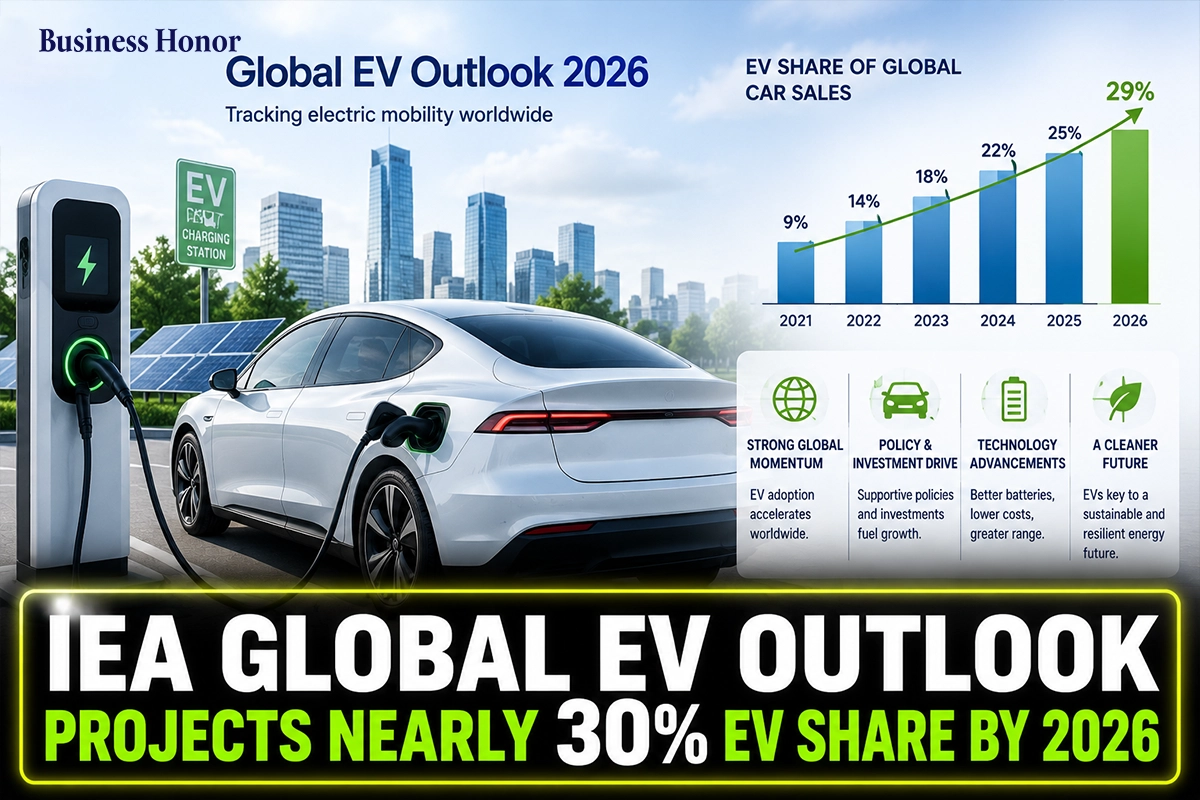
The IEA Global EV Outlook highlights strong global momentum in electric vehicle adoption, with EVs projected to reach nearly 30% of total car sales worldwide by 2026. The growth is driven by falling battery costs, expanding infrastructure, and rising demand amid ongoing global energy crisis conditions.
|
As noted by the IEA Global EV Outlook, the adoption of electric mobility has transitioned from being an emerging practice to becoming mainstream. In 2025, worldwide sales of electric vehicles increased by 20% to exceed 20 million, making one out of every four new cars on the road in the world an electric vehicle. In 2026, growth is expected to continue despite market volatility.
IEA Global EV Outlook Highlights Market Acceleration and Regional Shifts
The IEA Global EV Outlook demonstrates that China still leads the world in terms of EVs manufactured, accounting for about 75% of the global share of electric cars sold. Europe and North America have equal shares of about 15% each in terms of sales across the globe. China also dominates battery cell manufacturing by supplying over 80% of the batteries.
Despite the drop in sales figures of EVs in early 2026 due to some regulatory adjustments in China and the USA, many parts of the world experienced significant growth rates. Europe witnessed almost 30% growth while the rest of Asia Pacific (excluding China) recorded an 80% rise in sales. The latter witnessed a record growth in Latin America of 75%. In total, approximately 90 countries recorded yearly increases in their EV sales with many of them registering record monthly figures.
The IEA Global EV Outlook further highlights how there was a fast-paced growth of electric trucks, which more than doubled globally during the year 2025. Two and three-wheeler electric vehicles dominate the market among all types of EVs, especially in Asia.
Energy Crisis, Policy Support, and Future EV Adoption Trends
The IEA Global EV Outlook ties the growth in EVs to global energy instability and changes in policy frameworks. Inflation in fuel prices has stimulated consumers’ preference for electric vehicles, while at the same time, the government keeps increasing incentives for their adoption and building supportive infrastructures.
Another region with significant growth potential is Southeast Asia, where the market share of EVs accounted for almost 20% and may reach 60% by 2035 with appropriate supportive policies. In countries like Vietnam, there is an increase in tax breaks as incentives for EV adoption.
In general, the IEA Global EV Outlook identifies electric vehicles as key factors in the global energy transition. Business Honor views this transformation as a defining shift in mobility, where EV adoption is reshaping automotive manufacturing, energy systems, and global sustainability strategies.





































.webp)

.webp)




.webp)