CEO acknowledges operational difficulties, pivots from trillion-dollar commitments to revenue-aligned compute spending targets.
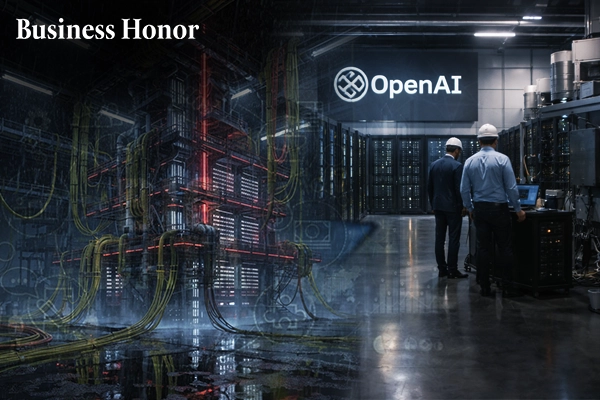
OpenAI is fundamentally recalibrating its approach to artificial intelligence infrastructure, acknowledging that massive data center buildouts present formidable operational and financial challenges. CEO Sam Altman publicly conceded at BlackRock's U.S. Infrastructure Summit that scaling computational capacity at the company's magnitude creates systemic vulnerabilities, citing a severe weather event at the Abilene, Texas facility—flagship site of the $500 billion Stargate project—that temporarily disrupted operations.
The strategic pivot reflects investor demands for fiscal discipline. Valued at $730 billion following a record fundraising round, OpenAI faces pressure from public market fund managers expecting demonstrated revenue growth justifying extraordinary spending commitments. "The market wants to see OpenAI's revenues rolling at a pace in which the spending can be justified," said Daniel Newman, CEO of Futurum Group. "The pivot has been to try to show a little bit more fiscal responsibility."
OpenAI's infrastructure ambitions have historically dwarfed operational reality. In November, Altman disclosed commitments of approximately $1.4 trillion over eight years for computational capacity, prompting investor concerns about potential AI bubble dynamics reminiscent of dot-com era vendor financing. The company's most significant partnership—a $100 billion Nvidia investment agreement—commits to deploying at least 10 gigawatt of AI data centers, with initial $10 billion arriving upon completion of the first gigawatt.
Recent months have witnessed substantial expectation management. OpenAI informed investors in February that it is targeting approximately $600 billion in total compute spend by 2030, a figure more directly aligned with projected revenue growth rather than speculative infrastructure maximization.
Operational focus has intensified across the organization. In December, OpenAI declared "code red" to prioritize ChatGPT improvements amid competition from Google and Anthropic. Fidji Simo, CEO of applications, emphasized in an all-hands meeting that the company is "orienting aggressively" toward high-productivity use cases, stressing about "what really matters for us right now is staying focused and executing extremely well."
Business Honor views OpenAI's shift will strengthen the company's path to public markets while maintaining competitive viability.






































.webp)

.webp)



.webp)