
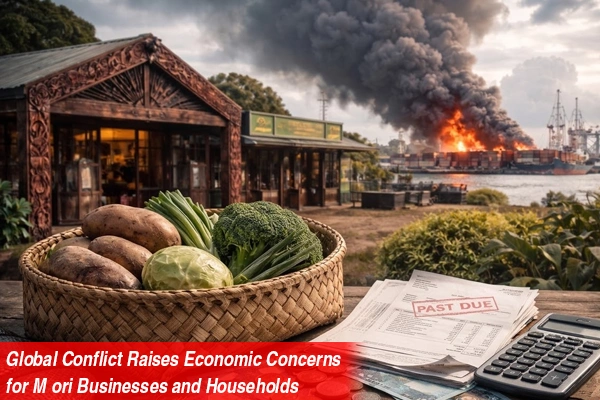
Rising geopolitical tensions threaten export industries, supply chains, and household budgets for Māori communities.
Global Conflict Economic Impact, Māori businesses and households alike are becoming increasingly concerned due to the rising global conflicts between the United States, Israel, and Iran. Economists believe that the increasing geopolitical risks have the potential to impact the country's export industries in the near future. Experts have explained that the increasing geopolitical risks have the potential to create volatility in oil prices worldwide. Such factors have the potential to increase the cost of doing business for Māori businesses that operate export-oriented businesses, including the forestry, agriculture, fishing, and tourism sectors.
Professor Jason Mika explained that the ripple effects of the global conflicts have the potential to impact the local economies earlier than expected. He said, “Conflict on this scale has the potential to disrupt international energy markets, shipping routes, and global trade flows. For export-driven industries, even small increases in fuel and freight costs can significantly affect profitability.”
The primary industries are vulnerable to fluctuations in global shipping costs. The forestry, agricultural, and fishing industries use a lot of diesel oil, while the forestry and agricultural industries use it to run their machinery. The fishing industries face a rise in the cost of marine fuel oil, while the forestry, agricultural, and fishing industries face uncertainty regarding their export markets. The tourism industry could also face the brunt if the international tensions affect the number of tourists.
This situation also poses a concern regarding Māori families who are already struggling with the cost of living. When the cost of fuel rises, it usually reflects in the prices of goods, especially transportation costs, food, etc. Economists state that this situation shows how easily international situations can affect local economies, thus emphasizing the need to be economically resilient, especially when it comes to investing in Māori businesses.




















.webp)

