
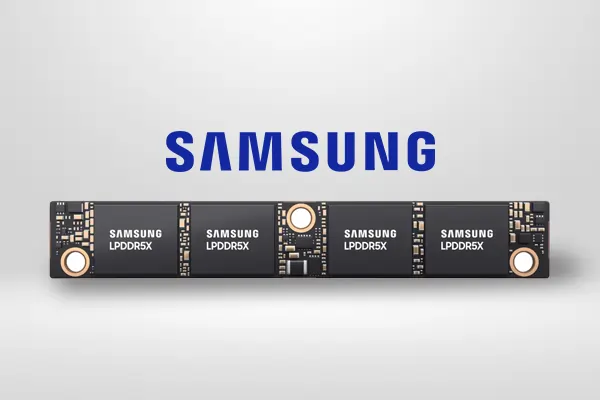
SOCAMM2 offers high-performance, energy-efficient memory for AI servers, allowing compact, fast, and flexible data center designs.
Samsung introduced SOCAMM2, a new LPDDR5-based memory module designed mainly for AI-focused data center platforms. SOCAMM2 is a new memory form factor developed on Dell's CAMM (Compression Attached Memory Module) technology, which was originally developed for laptops. JEDEC has since approved the standard, offering broad industry support and ensuring high level reliability.
SOCAMM2 uses LPDDR5 memory, which is found in smartphones and tablets to offer DDR-level performance with lower power consumption. According to Samsung, SOCAMM2 offers twice the bandwidth of typical DDR5 RDIMMs used in servers while using less energy. Analysts believe that it provides 1.5x to 2x the performance of DDR5 while using just 55% of the power, making it ideal for data centers that value efficiency.
SOCAMM2's main feature is its size. A layered memory chip is used in the model to take up less motherboard space while allowing for large capacity setups. They can be used with normal DDR memory or as independent system memory, offering data center designers greater architectural options. SOCAMM2 includes business-class features like ECC and advanced error correction. This allows AI and cloud applications that require high speed, quick response times, and energy efficiency.
Industry backing is high. Nvidia, server CPU makers and memory vendors like SK Hynix and Micron support SOCAMM2. The modules are expected to be available in the second quarter of 2026, alongside Nvidia's Vera Rubin AI platform is marking a new era in server memory technology. SOCAMM2 is set to change data center memory architecture. Allowing for denser, quicker and more sustainable systems. This speaks to a future in which memory design is as important as processing ability, allowing the next generation of AI and cloud computing while also transforming the context of powerful data centers.













.webp)

.webp)





.webp)

