
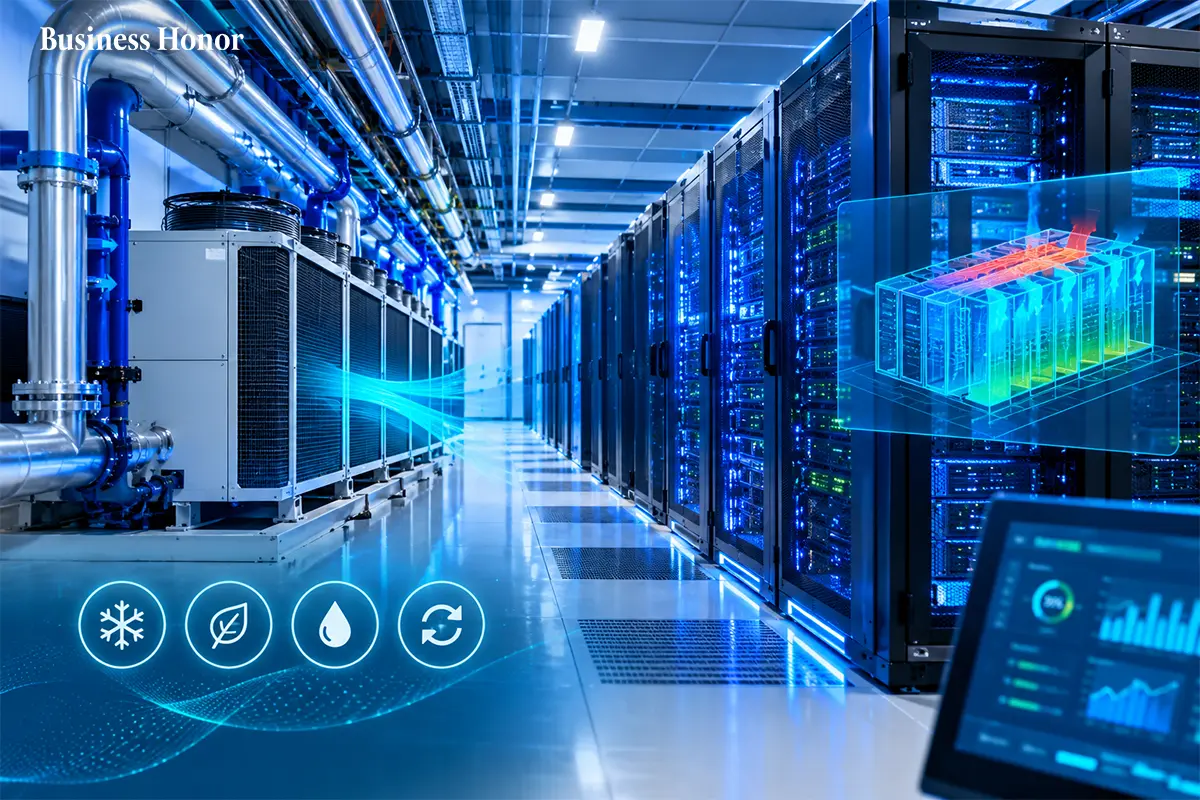
As businesses expand, top data center cooling innovations help manage heat and energy use. Digital Realty and NTT (Nippon Telegraph and Telephone), are two companies looking for ways keep their facilities up and running while managing energy use and heat. As a result, data centers are handling more demanding workloads. Innovations in data center cooling such as liquid cooling, heat reuse and smarter monitoring are becoming important.
The top 10 data cooling center innovations include AI-driven optimisation, renewable energy, edge computing, advanced cooling technologies, modular design, green building, heat re-use, immersion, hyperscale and software-defined data centers.
According to Data Centre Magazine, cooling is one of the largest consumers of power in a data center. The publication cites the Digital Realty’s estimate that cooling accounts for 40% of the power used in an average modern facility.
1. AI-driven Optimisation
AI-driven optimisation is one of the top 10 data center cooling innovations that helps data centers save electricity and keep servers cool. It monitors the temperature and server activity helping the operators to make changes when needed. It can help prevent servers from getting too hot and save on the amount of power they waste.
Digital Realty cooling solutions help to prevent servers from getting too hot and keep them running properly. When servers handle lots of data, they can get hot. Cooling keeps them from getting too hot so they can continue to run without issues.
2. Renewable Energy
Data centers consume power all day to keep their servers running and cooled. Renewable energy from the sun and wind can help them meet some of the power requirements of their facilities. They can get some of the power they need from the sun and the wind rather than rely on just the other energy sources. It also helps to reduce the use of fossil fuels and reduce carbon emissions.
Cooling uses a lot of electricity so data centers need to be careful with it. NTT data center cooling focuses on energy efficiency to maintain equipment at the right temperatures. Better cooling systems and renewable energy can also help data centers save on electricity and produce less pollution.
3. Edge Computing
Edge computing allows devices to work with data close by instead of sending them to a far data center. For example, a smart camera can process video in place without sending the recordings anywhere. This helps devices to be able to respond faster and save time. It helps to get results faster.
Hospitals can find out patient details faster, while factories can detect machine issues early. It helps to get things done with less waiting.
4. Advanced Cooling Technologies
Servers get hot when they are in use, so data centers need to cool them down. Advanced cooling technologies such as liquid cooling, take the heat away from the servers and keep them running properly.
An advanced data center cooling systems helps to keep servers cool and reduce power bills. It also helps to prevent equipment from getting damaged or breaking down. Since data centers run day and night their servers need to work without frequent issues.
5. Modular Design
Modular design allows data centers to start with less equipment and add to it as needed. They can do it step by step instead of building everything at once and saving time and money.
They can also use liquid cooling technology for data center equipment to keep servers cool. If they need more space, they can add in sections instead of rebuilding the entire facility.
6. Green building
Green building design helps data centers to use less electricity. Good insulation works to keep the servers in a data center at a stable temperature while energy efficient equipment helps in reducing power consumption. A well planned building design can also aid in maintaining cool temperature for the servers.
Data center thermal management helps keep servers at optimal temperatures. Data centers can also conserve water and reduce waste by making sure they are using resources wisely. This can ultimately help in minimizing costs and conversing the environment.
7. Reuse Waste Heat
Servers give off heat while running, and some data centers reuse waste heat to warm nearby homes and offices instead of letting it go to waste. This can help people spend less on heating. It also puts the heat from servers to good use rather than wasting it.
Nearby buildings can use this heat instead of relying as much on their own heating systems. Data centers need special pipes and equipment to move the heat, but it helps put the heat from their servers to use.
8. Immersion Cooling
Immersion cooling suggests that computer parts can be cooled from within by placing them in a liquid that conducts heat away from hot components. In such a case, there is no need to use fans to cool the processors.
For immersion cooling, data centers need to use specialized liquids and equipment. At the same time, this technology allows reducing the number of fans and, possibly, the consumption of electricity.
Immersion cooling requires highly organized and specialized equipment and ongoing maintenance. Data centers need to spend money on the development of the appropriate technology.
9. Hyperscale
Hyperscale data centers host thousands of servers that operate continuously. For proper functioning, these servers require air or liquid cooling to dissipate the heat that they produce.
However, an increase in the number of servers requires additional resources for cooling, and specialists control and monitor the temperature of these servers.
10. Software-defined
Software-defined cooling allows data centers to utilize a software system that manages and controls the servers’ cooling. Such systems monitor the temperature of the servers and make adjustments when necessary.
The software also helps staff spot cooling problems early. They can see which areas need attention and fix issues before they affect the servers. This can help avoid downtime and make repairs easier.
Business Honor observes that better cooling systems are becoming important as data centers use more power and run more servers.
FAQs
What are the top data center cooling innovations?
Top data center cooling innovations include liquid cooling, immersion cooling, AI-driven cooling and waste heat reuse.
How do Digital Realty cooling solutions improve efficiency?
Digital Realty cooling solutions help manage heat and support efficient data center operations.
What cooling methods does NTT use in data centers?
NTT data center cooling can include advanced cooling systems designed to manage heat and support reliable operations.
Why are advanced data center cooling systems important?
Advanced data center cooling systems help control heat, reduce power use and protect server equipment.
How does liquid cooling technology for data center equipment support thermal management?
Liquid cooling technology for data center equipment removes heat from servers, while data center thermal management helps maintain safe operating temperatures.





































.webp)



.webp)



Comments
0 Comments