
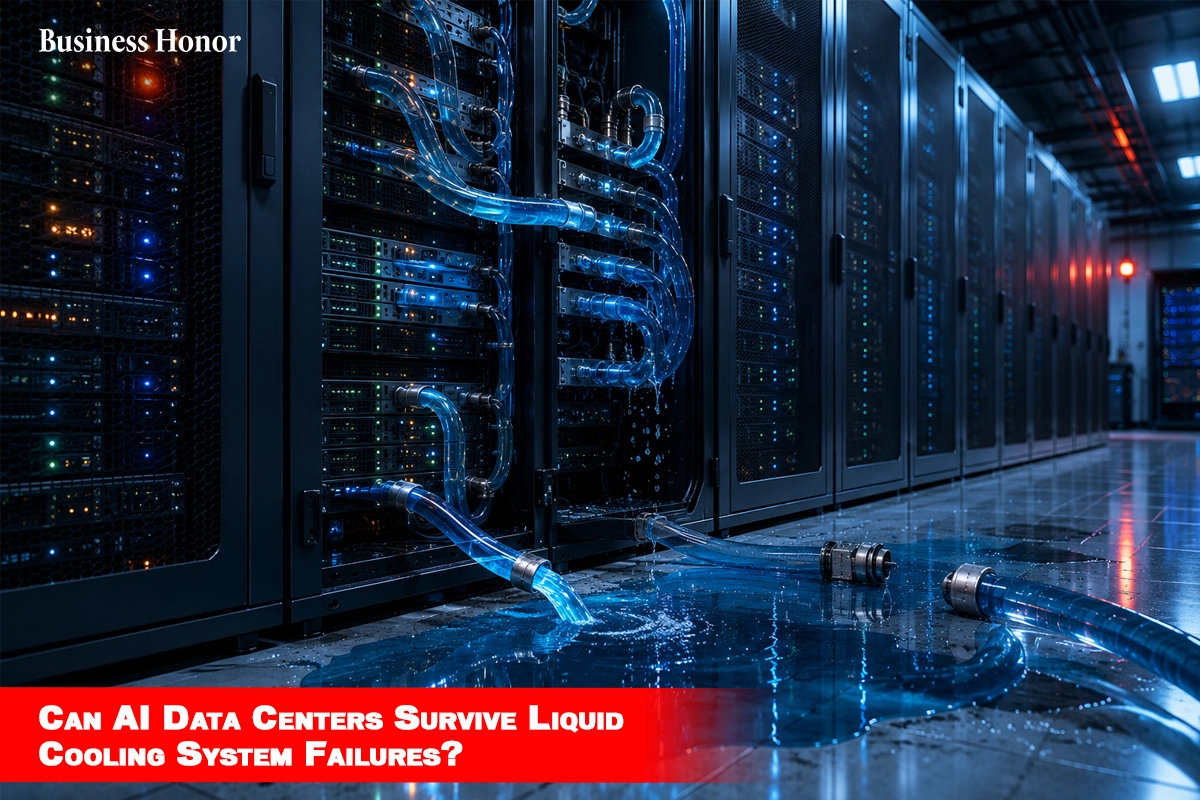
Liquid cooling reliability emerges as critical operational risk factor for rapidly expanding AI data center infrastructure investments worldwide.
|
The artificial intelligence industry faces a mounting infrastructure challenge as data centers expand to support massive computational demands. Liquid cooling system failures are emerging as a critical threat to operational continuity at AI facilities, where the financial stakes have reached unprecedented levels. Individual AI data center racks now exceed $3 million in cost, with some facilities approaching a 1-gigawatt capacity threshold representing approximately $38 billion in total investment. These astronomical figures underscore why cooling reliability has become a paramount concern for operators worldwide.
Graphics processing units and AI servers generate intense heat that legacy air-cooling systems cannot adequately manage, forcing operators to adopt liquid cooling infrastructure. However, this dependence introduces new vulnerabilities. Pump malfunctions, coolant degradation, coolant leaks, and sensor failures represent the primary causes of system breakdowns, each capable of triggering cascading failures across high-density computing environments.
The consequences of such failures extend far beyond equipment damage. When cooling systems malfunction, temperatures can spike rapidly in dense GPU clusters, leaving operators minimal time for intervention. Shutdown protocols may activate automatically to protect hardware, resulting in immediate service interruption and potential violation of service level agreements. In severe cases, coolant leaks necessitate environmental cleanup operations, while contract terminations have occurred at facilities unable to maintain promised uptime levels. Failures can originate at multiple points within cooling infrastructure, including the Facility Water System and Technology Cooling System loops. Problems with power supply, parts corrosion, poor coolant maintenance, and designs that have no redundancy requirements are some of the common reasons for errors in cooling systems.
-
The experts propose the approach that will combine thorough planning, good monitoring, and timely maintenance.
-
The existing design process guarantees that redundancy is utilized in some significant parts of the system.
-
The launch of flushing operations during the initial period of the system's functioning is necessary to remove potential contaminants.
-
The checking of robots, amount of coolant, and components of the system is the basis of the maintenance program.
-
With the increase of AI workloads and global distribution of data centers, the liquid cooling system should be reliable.
Companies that apply redundant design, advanced monitoring methods, and strict maintenance procedures will be able to protect their money as investments and offer stable services to their clients. In conclusion, we can say that in order to use cooling systems, it is necessary not only to understand the need to use them from a technical point of view.
Business Honor is of the view that comprehensive liquid cooling system redundancy represents a strategic necessity for AI data center operational sustainability and investment protection.












.webp)

.webp)





.webp)


Comments
0 Comments