

In today's environment of rapidly-changing business technology, System Application Product (SAP) integration has become important for the organization in search of better productivity and innovation. SAP is an all-in-one enterprise software solutions consisting of the entire range of Software packages that deal with major business operations like finance, supply chain, human resources, and customer relations. Modern Technology Integration that is increasingly taking place within companies’ offers new possibilities to the effective optimization of business processes and resultant productivity.
Technologies like artificial intelligence (AI), machine learning (ML), and the Internet of Things (IoT) have completely changed the dynamics in which businesses operate. In this view, large business software systems need to be integrated with these emerging technologies to improve effectiveness that already exists with the software and also gear up organizations in preparation to confront the challenges of a digital-first economy. Combining SAP's powerful capabilities with the modern technological tools, creative solutions to drive growth and agility for business are evolved. In this article, we explore many advantages of System Application Product (SAP) integration with modern technology, focus in on the integration with the ERP system, and make this approach beneficial for operations and workflow smoothing and the culture of continuous improvement.
About System Application Products (SAP)
Generally, SAP refers to a variety of software applications that are generally used in the management of business operations and customer relations. From finance to human resource matters, SAP provides efficient solutions that can make many functions in a business simple. With the System Application Product (SAP) integration with modern technology, its system application product features may be applied to organizations to boost their existing flows of systems and activities.
Advantages of Implementing SAP
1. Innovation in Business Systems-Integration:
SAP with emerging technologies will promote an innovation culture in businesses. After System Application Product (SAP) integration, these firms can grip onto the emerging solutions that provide the best sustainable competitive advantage and improve service delivery.
2. Better Data Management:
Probably one of the most important benefits a firm gets from System Application Product (SAP) integration is improved data management; it enables collection and analysis of the data to be used for better decisions, consequently leading to strategic planning with proper data.
3. Automation within Business Operations:
Repetitive work needs automation and is also critical in reducing operation cost and efficiency; exactly what a business can do with System Application Product (SAP) integration-through automating workflows for more strategic pursuits.
4. Streamlined Business Workflows:
Integrated systems help an organization establish streamlined workflow processes between departments. The end result produces more collaboration and enables a quicker response by the market.
5. Improved IT Infrastructure:
More thorough modern technology implementation will often improve the IT infrastructure to ensure that systems are stronger, more secure, and scalable. This is always important to a business in making sure business operations future-proofed.
Modern Technology Integration and SAP
Advanced technologies such as AI, ML, and IoT get assimilated into an already existing business process with modern technology integration. When these technologies are applied, many things can take new heights with System Application Product (SAP) integration.
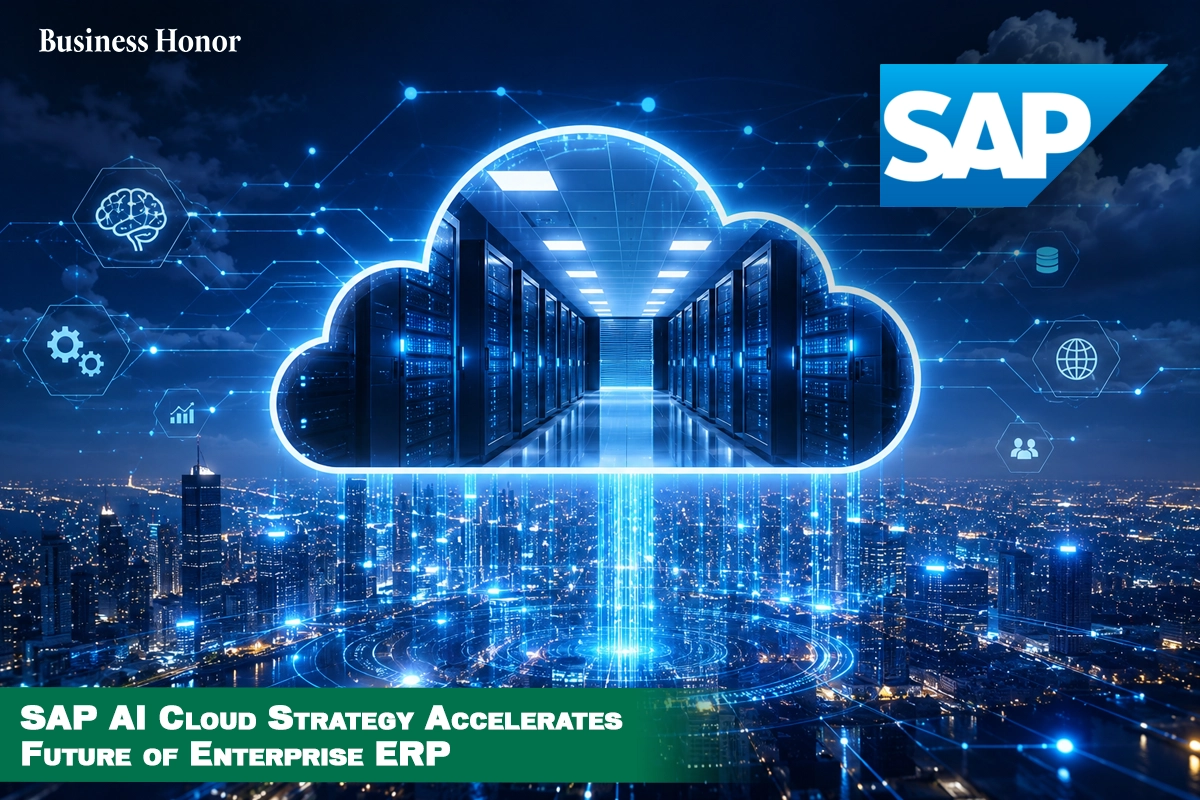
The Role of Cloud Computing
The SAP solution has cloud-based access, from which one can share real-time data in collaboration. A number of enterprises would use this as a platform to enjoy the benefits of lower IT costs and improved scalability to adjust to the changes in market conditions. Cloud-based System Application Product (SAP) integration software enables teams to work from anywhere; it is efficient for that very reason-that it has flexibility.
With AI and ML, systems using SAP can be highly developed. For example, one might predict demand and balance it with better inventory management using predictive analytics. This kind of streamlining of operations by integrating the same supports business technology up-gradation that contributes to growth.
Internet of Things
The data aggregation and processing will receive the SAP system a revolution as these devices of the Internet of Things will be integrated into it. For example, the IoT sensors will be used by manufacturers for real-time monitoring of the equipment performance to minimize the equipment downtime through the preventive maintenance aspect.
Achievement of Business Process Optimization
Business process optimization is one of the System Application Product (SAP) integration cores. Companies can ensure a constant improvement of their processes for more efficiency and fewer costs with the superior quality of software applications and up-to-date technology.
Hypothetical Examples- SAP Integration
1. Manufacturing:
A major manufacturing organization adopted an integrated SAP solution with Internet of Things sensors in the equipment, cutting down equipment downtime by 20%. The real-time data obtained facilitated prompt action for proactive maintenance.
2. Retail:
A top retail organization adopted cloud-based SAP solutions that enabled smooth integration of their online and offline sales channels hassle-free. It resulted in better management of their stock, but it enhanced the experience of the customer using customized marketing policies.
Benefits Gained
These examples clearly showcase all the advantages in store when system application product integration takes place. Successful integration strategies can save an organization drastically on cost, satisfy customer needs, and improve operational performance.
Challenges in SAP Integration
Though there are various advantageous reasons why organizations should integrate System Application Product (SAP) with current technology, organizations face some key issues in this process.
1. Resistance to Change:
Perhaps the largest challenge often is people's unwillingness towards change. Their training and changing management strategies must be provided in order for smooth integration of the systems.
2. Data Safety Issues:
Improved connectivity goes along with the risks of data breaches. Organization has to focus on data safety during the integration of SAP with modern technologies.
3. Difficulty of Integration:
This could be very complex and demands careful planning and execution since it involves integrating diverse technologies. Experienced IT professionals might help avoid most of the risks, making the integration successful.
Conclusion
System Application Product (SAP) integration with latest technology is not a trend; it is a strategic need for businesses in order to succeed within today's digital economy. The system application product integration allows for driving innovation, streamlining of operations, and optimization of business processes within the organization. With SAP as a platform, the integration of AI, IoT, and Cloud Computing becomes a pathway to an unparalleled platform for better growth and efficiency.
Continued SAP integration among the growing number of companies embarking on their business digital transformation is liable to bring about greater IT infrastructure improvements and better data management systems through a more agile model of business. SAP software integration solutions are necessary investments for any company that wishes to thrive as a viable entity in the market.
In final words, use of modern technology, the understanding of the importance that forms the base for application of the system product, and benefits for the organizations involved open new dimensions and levels for efficiency and effectiveness in operations. Indeed, this journey comes with many challenges; however, these rewards in terms of innovation, optimization, and greater performance make it worthwhile for survival. The future of business lies in effective integration of System Application Product (SAP).
FAQ’s
What is System Application Products (SAP)?
SAP refers to a range of software applications designed to manage business operations and customer relations. It encompasses various functionalities; including finance, supply chain, human resources, and customer relationship management, offering efficient solutions that simplify many business processes.
Why is integrating SAP with modern technology important?
In today's fast-paced business environment, integrating SAP with modern technologies like artificial intelligence (AI), machine learning (ML), and the Internet of Things (IoT) enhances productivity and innovation. This integration allows organizations to optimize business processes, improve decision-making through better data management, and prepare for the challenges of a digital-first economy.
How do advanced technologies like AI, ML, and IoT enhance SAP?
These technologies can be integrated with SAP to enhance existing business processes. For example, AI and ML can provide predictive analytics for better inventory management, while IoT devices can enable real-time monitoring of equipment performance, thereby reducing downtime and improving operational efficiency.
What role does cloud computing play in SAP integration?
Answer: Cloud computing enables cloud-based access to SAP solutions, allowing real-time data sharing and collaboration. It reduces IT costs and improves scalability, facilitating flexible work arrangements for teams and enabling businesses to adapt to changing market conditions.
How does SAP integration support business process optimization?
Answer: SAP integration allows for the aggregation and processing of data through modern technologies, leading to streamlined operations. This results in improved efficiency, reduced costs, and better resource allocation, ultimately driving growth and operational excellence.











.webp)

.webp)




.webp)

