

In 2024, artificial intelligence (AI) will no longer be seen as a sci-fi concept, but rather as an independent force that will change industries all over the world. As developments in automation, data analytics, and machine learning, artificial intelligence (AI) is currently leading the way in innovation, bringing new opportunities and efficiency to a wide range of industries. This quick development is transforming not just how companies run but also how customers engage with goods and services. Artificial intelligence (AI) technologies are having a significant impact on various industries by facilitating the development of more intelligent and efficient solutions as they advance in sophistication. This article will examine the ways in which artificial intelligence (AI) is transforming industries like healthcare, banking, manufacturing, and retail, as well as the prospects for both consumers and businesses in an AI-powered future.

AI in Healthcare: Modernizing Patient Care
In the last several years, AI has advanced significantly in the healthcare industry. By 2024, AI-powered solutions will significantly improve patient outcomes, optimize operational efficiency, and increase diagnostic accuracy. AI algorithms are now capable of analyzing large amounts of medical data to predict disease outbreaks, suggest personalized treatment plans, and even facilitate robotic surgery.
A major advancement has been made with the use of AI in medical imaging. When finding issues with scans, AI-driven diagnostic systems typically outperform human radiologists in terms of accuracy. In addition to speeding up the diagnostic process, this reduces the likelihood of errors. Healthcare providers are also benefiting from AI-powered predictive analytics, which helps them better manage chronic conditions and anticipate patient needs.
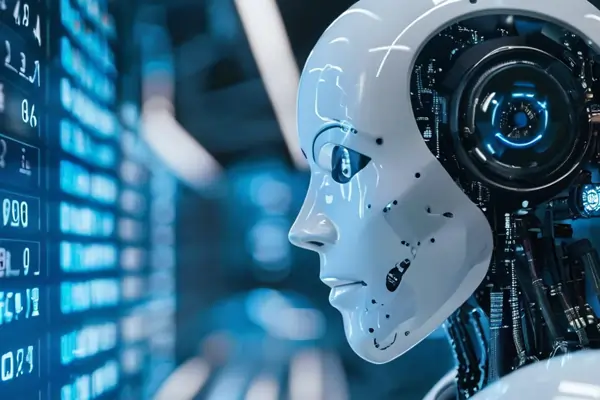
AI in Finance: Enhancing Security and Efficiency
Another field that is being greatly impacted by AI is banking. By 2024, AI will have streamlined processes, improved security, and spurred financial innovations. Fraud detection systems employ AI algorithms to instantly spot questionable activity, lowering the likelihood of financial crimes. Financial institutions gain an extra degree of security from machine learning models that examine transaction patterns and flag irregularities and possible threats.
Financial customer service is likewise being revolutionized by AI-driven automation. AI-powered chatbots and virtual assistants answer a range of consumer questions, complete transactions, and offer financial guidance. This lowers operating expenses for financial organizations while simultaneously increasing client happiness.
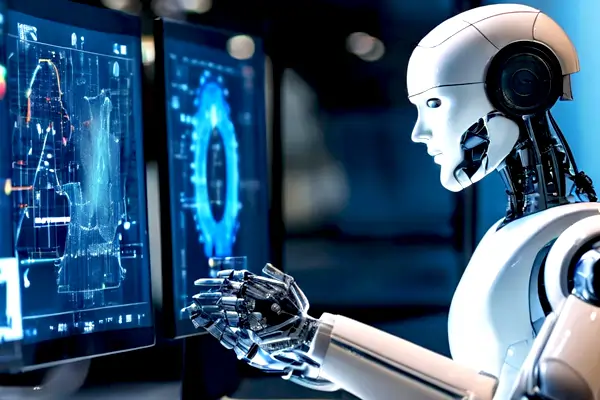
AI Automation: Transforming Workplace Dynamics
Automation powered by AI is transforming corporate operations in a number of industries. By taking over monotonous and repetitive jobs, AI-powered automation is improving productivity and efficiency in 2024. AI systems can do a variety of jobs quickly and accurately, from data input to basic maintenance, freeing up human workers to concentrate on more intricate and strategic work.
AI-driven robotics and machinery, for instance, are improving production lines, decreasing downtime, and raising total output in the manufacturing sector. Administrative tasks like scheduling and reporting are frequently automated by AI, which reduces human error and streamlines procedures.
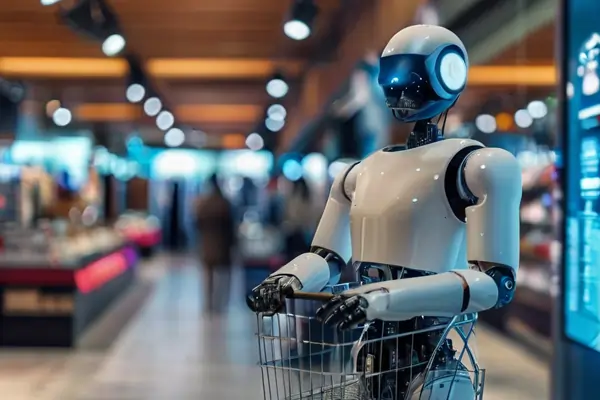
AI in Retail: Personalizing the Shopping Experience
AI has significantly changed the retail industry. By 2024, AI-powered retail systems will be improving customer engagement, streamlining inventory management, and offering individualized shopping experiences. AI systems examine customer behavior and preferences to make product recommendations that are specific to each user's preferences, making shopping more enjoyable.
AI-enabled solutions also help with inventory management by optimizing stock levels and forecasting demand patterns. Retailers benefit from increased operational efficiency and customer satisfaction as a result of reducing excess inventory and preventing stockouts.
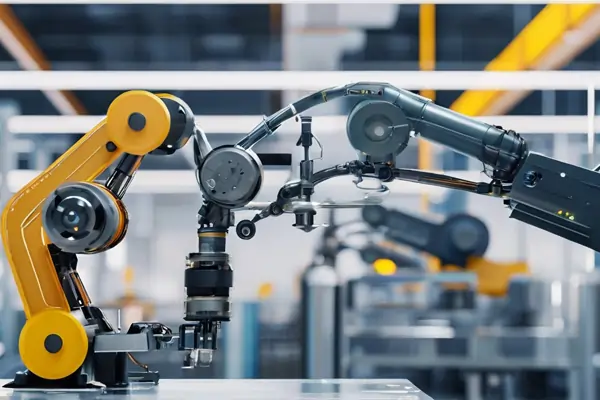
AI in Manufacturing: Driving Innovation and Efficiency
One of the industries that stand to gain the most from AI-driven breakthroughs is manufacturing. By 2024, the use of AI will have improved production procedures, raised product quality, and decreased operating expenses. Predictive maintenance systems driven by artificial intelligence (AI) examine machine data to identify possible problems before they arise, reducing maintenance expenses and downtime.
In order to ensure high standards of quality, AI-driven quality control systems also employ computer vision to scan products for flaws. This degree of accuracy and productivity is spurring manufacturing innovation and establishing new benchmarks for standards throughout the sector.

AI in Logistics: Streamlining Supply Chains
AI will change supply chain management and logistics by 2024. AI-driven technologies are increasing supply chain efficiency overall, expediting deliveries, and optimizing routes. Algorithms for machine learning examine data from several sources in order to forecast variations in demand, detect possible disturbances, and maximize stock levels.
Through automation, AI is also enhancing warehouse management. Predictive analytics optimizes storage and retrieval procedures, while AI-driven robots handle sorting and packaging duties. This results in quicker processing times and lower logistical operating expenses.

Ethical Considerations of AI: Ensuring Responsible Innovation
As AI develops, ethical questions are becoming more and more significant. In 2024, maintaining the ethical and responsible use of technology will require a strong emphasis on AI issues. Concerns about algorithmic bias, data privacy, and transparency are at the center of the conversation around AI advancement.
To address these issues, organizations and developers are attempting to establish frameworks and ethical standards. In order to preserve public confidence and optimize the benefits of artificial intelligence, it is imperative that AI systems are developed and executed with equity and responsibility in mind.
The AI-Powered Future: What Lies Ahead
The future driven by AI is full with possibilities and difficulties. AI will continue to have an increasing impact on a variety of businesses as it develops. Companies that use AI technologies will see increases in productivity, creativity, and market share. But it's crucial to consider ethical implications and make sure AI developments are applied appropriately.
By 2024, the use of AI to a variety of industries will have significantly changed everything from healthcare to logistics, from supply chain optimization to patient care improvement. AI has a huge capacity to completely transform sectors, and the future holds even more exciting advancements.
Looking at the future, legislators, business executives, and AI developers must work together to shape a future where AI not only promotes innovation but also maintains moral principles. The benefits of AI will be realized while resolving the difficulties it presents if we embrace the AI-powered future with an emphasis on ethical use.
In short, AI will be altering industries in 2024 and promoting efficiency and innovation in all areas. Artificial Intelligence is poised to continue its disruptive impact, whether it is by improving healthcare, streamlining financial operations, or transforming manufacturing and retail. We will be able to confidently navigate the future and use AI to bring about positive change if we solve ethical issues and embrace its possibilities.
FAQ’s
1. What impact will AI have on the healthcare sector in 2024?
By enhancing operational effectiveness, boosting patient outcomes, and raising diagnostic accuracy, artificial intelligence is transforming the healthcare industry. Large-scale medical data is analyzed by AI algorithms to predict disease outbreaks, suggest individualized therapies, and enable robotic surgery.
2. How does artificial intelligence help the finance industry?
AI improves fraud detection and streamlines procedures, which increases security and efficiency in the financial sector. Artificial intelligence (AI) algorithms identify suspicious activity in real time, and AI-enabled chatbots respond to consumer enquiries while cutting expenses and increasing customer happiness.
3. What effects is AI automation having on the dynamics at work?
By taking over monotonous jobs and freeing up human workers for more complicated positions, AI automation increases productivity. AI-driven robots improve production lines in manufacturing, but in administrative functions, AI streamlines processes like scheduling and reporting.
4. How is artificial intelligence affecting the retail sector?
AI makes customized product recommendations by examining consumer behavior and interests to personalize the buying experience. By anticipating demand and maximizing supply levels, it also aids in inventory management, which boosts customer satisfaction and operational effectiveness.
5. What role does AI play in manufacturing innovation?
AI is boosting production methods and product quality, which is improving manufacturing. While AI-driven quality control systems assure high standards by detecting product defects, predictive maintenance solutions identify possible issues before they exist, minimizing downtime and maintenance costs.












.webp)






.webp)

