
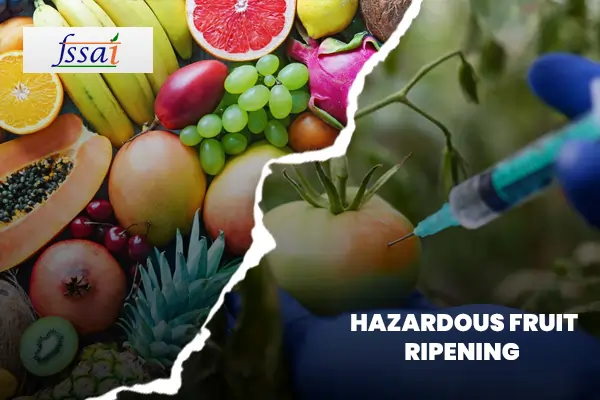
FSSAI has also called on state and union territory Food Safety Departments to maintain vigilance
The Food Safety and Standards Authority of India (FSSAI) has issued a stern warning against the use of calcium carbide for fruit ripening, highlighting serious health risks associated with this chemical compound. Widely used by fruit vendors and farmers in India due to its affordability and effectiveness, calcium carbide facilitates the rapid ripening of fruits such as mangoes, bananas, and papayas. However, its application poses significant health hazards.
Calcium carbide, a colorless and odorless substance, reacts with moisture to produce acetylene gas, a known carcinogen. Exposure to this gas can result in respiratory issues, eye irritation, and skin burns. Moreover, calcium carbide often contains arsenic and phosphorus, both toxic substances that can lead to severe health complications. In response to these dangers, the FSSAI has urged traders and food business operators to cease the use of calcium carbide for ripening fruits. The agency emphasized compliance with this prohibition, especially during the ongoing mango season, and warned that violations would attract stringent actions as per the Food Safety and Standards Act of 2006.
FSSAI has also called on state and union territory Food Safety Departments to maintain vigilance and take decisive actions against individuals engaging in these unlawful practices. The regulatory body’s directive aims to safeguard public health by ensuring that fruit ripening processes adhere to safe and legal methods. This crackdown by the FSSAI reflects its commitment to food safety and public health, urging a shift away from harmful chemicals towards safer alternatives for fruit ripening.













.webp)






.webp)

